Last updated: August 23, 2026
The nursing pillow sits on every registry checklist, usually near the top, usually with no explanation of what it is for. It is also one of the items most likely to end up in the back of a closet with the tag still on, which is a strange combination for something described as essential.
This page is the version without a sales angle. It covers who tends to get real use out of one, who does not, what you can improvise instead, and why waiting is a reasonable strategy in a category where you cannot know your own answer in advance.
This article contains affiliate links. If you buy through them, we may earn a commission at no extra cost to you. Learn more.
Quick Answer
Do you actually need a nursing pillow?
- No, it is a comfort tool rather than a requirement, and plenty of people feed without one.
- It earns its place most clearly if you are recovering from a C-section, feeding twins or feeding for long stretches.
- Ordinary pillows work in a pinch, they just slide and need rebuilding every feed.
- Waiting until after birth costs you almost nothing, because it is a next day purchase.
Bottom line: useful, not essential, and easier to judge once you know how feeding is actually going.
What the Pillow Is Solving
It solves a load problem for the adult. Holding a newborn at chest height for a long feed puts the weight on your wrists, forearms and shoulders, and repeating that eight or more times a day is what makes people ache. The pillow parks the weight on your lap instead.
Notice that none of that is about the baby. It is a piece of equipment for your arms, which is why the answer to whether you need one depends almost entirely on your body, your chair and how long your feeds run.
Why the Category Is Shrinking
Interest in nursing pillows has been sliding for a few years, and the pattern is easy to explain. Safe sleep messaging has become far more prominent, the loungers and multipurpose versions have been pulled back into a stricter regulatory frame, and a product that can only be used awake and supervised is a narrower proposition than it once looked.
Who Tends to Get Real Use From One
Four situations come up repeatedly in owner reviews. Recovering from a C-section, where keeping weight off the incision area is the point. Feeding twins, where two babies cannot be held without help. Long feeds, where the arm fatigue compounds. And larger cup sizes, where the height gap between lap and breast is bigger.
Height matters too. Shorter torsos often find the gap between lap and chest is exactly what a pillow closes, while taller torsos sometimes find the same pillow puts the baby too low to help.
Who Usually Does Not
People who mostly feed side lying in bed, people who settle into a football hold with a rolled blanket and never look back, and people whose feeds are short. If the first two weeks pass without your arms complaining, a pillow is unlikely to change your life later.

What You Can Use Instead
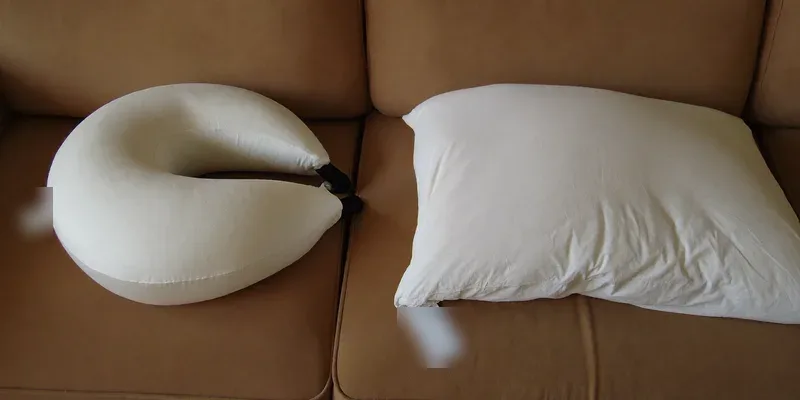
Two firm bed pillows stacked on your lap, or a folded comforter, will get the baby to roughly the right height. What you lose is stability: ordinary pillows compress under weight, slide as you shift, and need rebuilding at every feed, usually one handed while holding a baby.
A pregnancy pillow you already own is often the better improvisation, because the fill is firmer and a wedge or C shape holds position. Our comparison of the two goes through what changes in practice.
Deciding for Your Situation
| Your situation | Likely benefit | Alternative worth trying | Verdict |
|---|---|---|---|
| C-section recovery | High, keeps weight off the incision area | Firm cushion under the arm | Worth buying |
| Twins | High, tandem feeding needs a wide surface | Nothing improvises well | Worth buying |
| Long or frequent feeds | Moderate to high | Armrest plus a folded blanket | Buy if your arms ache |
| Short feeds, side lying | Low | Ordinary bed pillows | Skip it for now |
If you land in the bottom row, skipping it is a genuinely reasonable decision rather than a compromise.
The Case for Waiting
You cannot know before birth whether feeding will be short and easy or long and difficult, whether you will end up with a C-section, or which hold will suit you. All of those change the answer, and none of them is knowable in the third trimester.
A nursing pillow is widely stocked and arrives quickly, so the cost of waiting is a day or two. That is a better trade than buying a shape that turns out not to fit your torso, which is the most common way this purchase is wasted.
If It Is a Gift or a Registry Item
Different calculation. If someone else is buying, put a widely available model on the list and keep the receipt, or ask for a gift card instead and choose after birth. Our nursing pillow guide covers which shapes suit which situations.
What It Is Not For
It is not a place for a baby to sleep, lounge or be left, even for a moment. That limitation is not fine print, it is the reason the product has its own federal safety standard, and it removes most of the extra uses people imagine when they add one to a registry.
If your mental picture of the pillow involves putting the baby down in it while you eat, that picture is the one to let go of, and our safety page explains why. Judge the purchase purely on whether it makes feeding more comfortable for you.
Frequently Asked Questions
Is a nursing pillow necessary for breastfeeding? No. It is a comfort tool that takes weight off your arms. Feeding works without one, and many people stop using theirs once the baby has more head control.
How long do people use one? Commonly through the early months, until the baby is big enough that the pillow puts them at an awkward height. Some keep using it for bottle feeds afterward.
Can I use a pregnancy pillow instead? Often yes, particularly a wedge. It is firmer than a bed pillow and holds shape, though it is bulkier to position. Our pregnancy pillow guide covers the shapes.
Is it worth it if I am bottle feeding? It can be, for the same arm fatigue reason, with the baby held a little more upright. See our page on nursing pillows for bottle feeding.
What if I buy one and it does not suit me? That is common enough that keeping the packaging is sensible. Before returning it, try raising it with a folded blanket, since too low is the usual complaint and it is fixable.
Does it help with latch problems? It helps you hold a position steadily, which is not the same thing. If the latch itself is the problem, that is a conversation with a lactation consultant rather than a purchase.
If feeding is painful, if your baby is not feeding well, or if you are unsure whether a position is working, ask a lactation consultant or your pediatrician. No pillow substitutes for that.
The Bottom Line
Useful for some people and quietly ignored by others, which makes it a poor candidate for a must buy list and a good candidate for waiting. Buy it if your arms are complaining, if you are recovering from surgery or if there are two babies. Read next: which shape suits which situation and the small gear that makes more difference than people expect.