Last updated: August 23, 2026
Water is the one place in late pregnancy where you stop feeling heavy, which is why so many people who never swim start swimming in the third trimester. The obstacle is the swimsuit. Regular suits cut across the bump, ride up at the back, and offer nothing at the bust at exactly the point where the bust has changed the most.
Maternity swimwear fixes those three things and introduces a sizing question of its own. This guide covers what actually differs from a regular suit, how to size when you are buying for a body that is still moving, and which style suits a pool, a beach, and a babymoon respectively.
This article contains affiliate links. If you buy through them, we may earn a commission at no extra cost to you. Learn more.
Quick Answer
Which maternity swimsuit should you buy?
- A one piece with a ruched side panel is the most useful single buy, because it adjusts as the bump grows.
- Check the bust construction before anything else. Adjustable straps and a shelf bra do more for comfort than the print does.
- Buy your pre pregnancy size unless the bust has already outgrown it, in which case follow the bust measurement.
- A tankini is the practical choice for pool changing rooms and toilet trips, which matter more than they used to.
Bottom line: ruched one piece for swimming, tankini for convenience, and size on the bust rather than the bump.
What Makes a Swimsuit Maternity
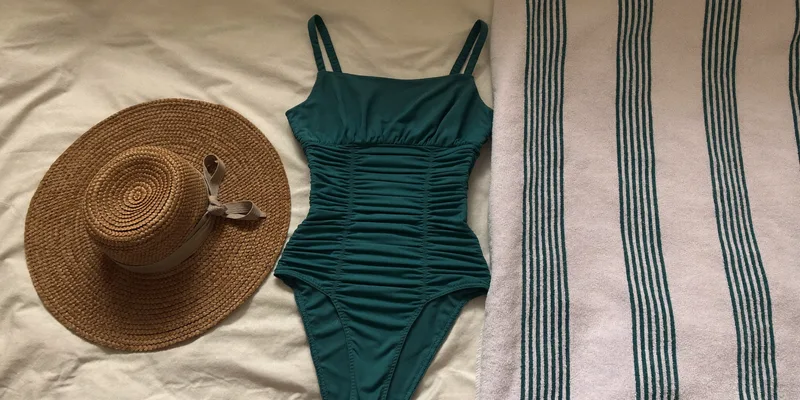
Three construction changes. Extra fabric and ruching through the middle so the suit follows the bump instead of cutting across it, a longer body so the crotch does not pull upward as the front stretches, and more bust support than a standard suit, usually adjustable.
The longer body is the detail people notice by omission. A regular suit sized up for the bump becomes too short in the torso as the bump grows forward, and that is what causes the dragging and the constant readjusting at the shoulders.
One Piece, Tankini, or Two Piece
A one piece with side ruching gives the most support and the smoothest fit for actual swimming, since there is nothing to shift when you push off a wall. It is the choice if you plan on lengths rather than sitting in water.
A tankini separates the top and bottom, which makes changing rooms and bathroom trips far less awkward late in pregnancy. Two piece maternity bikinis leave the bump uncovered, which many people want for the beach and the photographs, and provide the least support.
Bottoms: Over the Bump or Under It
The same distinction as the rest of the maternity wardrobe applies here. Under the bump bottoms sit low and stay out of the way; over the bump bottoms come up higher and stay put better in moving water. Our maternity underwear guide explains the trade in more detail, and it holds in swimwear too.

Sizing for a Body That Is Still Changing
Start with your pre pregnancy size, since maternity swimwear builds the bump room into the cut. Then check the bust measurement against the brand chart, because bust size usually changes earlier and more than expected and it is the measurement that makes a suit unwearable.
If you are buying early in pregnancy for a trip later on, ruched styles have far more range than smooth ones. Adjustable straps and a tie back give you another few weeks of fit, which is why so many maternity suits have them.
Fabric, Chlorine, and Sun
Chlorine resistant fabrics hold their shape and color much longer if you are swimming regularly at a pool. Standard swim fabric is fine for a holiday and starts to bag out with frequent chlorine exposure, particularly around a stretched front panel.
For sun, look for the UPF rating printed on the label rather than assuming a dark fabric is protective, and remember that a suit only covers what it covers. A rash guard or swim shirt is the easier answer for a long beach day, and pregnancy skin can be more sensitive to sun than usual, so shade and a hat do more than any garment.
Maternity Swimwear by Situation
If You Are Actually Swimming Lengths
A chlorine resistant one piece with a high back and adjustable straps stays where you put it and lasts a season of pool visits. Ruched sides let the same suit work across several months of growth.

If Changing Rooms Are the Problem
A tankini splits the suit in two, which makes bathroom trips and getting changed with a bump much easier. Look for a top long enough to still cover the bump when you raise your arms.

If You Want the Bump Visible
A high waisted maternity bikini keeps some coverage at the bottom while leaving the bump out, which is what most people want for a babymoon or a photo. Support is limited, so check the top construction.

If You Want More Coverage in the Sun
A maternity rash guard or swim shirt over a simple bottom covers your shoulders and back for a long beach day and takes the whole styling question off the table.

The Four Options Compared
| Option | Support | Convenience | Suits |
|---|---|---|---|
| Ruched one piece | Highest | Awkward to change | Swimming lengths, pool visits |
| Tankini | Moderate to high | Best | Changing rooms, frequent trips |
| High waisted bikini | Lowest | Good | Beach days and bump photos |
| Rash guard and bottoms | Moderate | Good | Long days in the sun |
Whichever row you pick, the bust construction is what decides whether you enjoy wearing it, so read that part of the listing before you look at the print.
What Owners Complain About
Straps digging into the shoulders is the most common complaint, and it comes from a torso that is too short for the bump rather than from the straps themselves. Adjustable straps buy you time; a longer body solves it. Reviewer photos taken later in pregnancy tell you far more than the product shots.
The second is a suit that goes see through when wet, which is a thin fabric problem and shows up in reviews rather than in the listing. The third is bagging after a few weeks of pool use, which is what chlorine resistant fabric exists to prevent. If you are unsure whether swimming suits your particular pregnancy, that is a question for your midwife or OB-GYN rather than a swimwear decision.
Frequently Asked Questions
Can I just size up in a regular swimsuit? For a while, yes, and a stretchy one piece a size up works in early pregnancy. It stops working when the bump pulls the body of the suit upward, because a regular suit is not cut long enough in the torso.
What size maternity swimsuit do I buy? Your pre pregnancy size, unless your bust has already outgrown it, in which case go by the bust measurement. Ruched styles have the most range if you are buying ahead.
One piece or tankini? One piece for swimming, tankini for convenience. Most people who swim regularly own a one piece; most people going to a pool with a toddler own a tankini.
Will a maternity swimsuit work afterward? Ruched styles often do, since the gathering simply relaxes, and many people keep wearing them. Suits with a very pronounced bump panel look empty afterward.
Do I need chlorine resistant fabric? Only if you are swimming often. For a holiday, standard swim fabric is fine. For weekly pool visits, chlorine resistant fabric keeps the shape and the color for far longer.
What about sun protection? Check the UPF rating on the label rather than judging by color, and treat a swim shirt, shade, and a hat as the main protection. Pregnancy skin can react more to sun than usual.
The Bottom Line
Buy a ruched one piece if you are swimming, a tankini if convenience matters more, and size on the bust rather than the bump. Chlorine resistant fabric is worth it only if the pool becomes a habit. Read next: what you actually need in maternity clothes, and maternity underwear for the over or under the bump question.