Last updated: August 23, 2026
There is a pile somewhere in the house. The first scan image, the appointment card, the little congratulations note, the tag off the first thing anyone bought. It grows for nine months in a drawer or a kitchen basket, and then a newborn arrives and nobody looks at it again until it is being moved.
A pregnancy scrapbook is the answer to that pile, and it is a different product from a journal. A journal holds writing; a scrapbook holds things. Which one you need depends on whether your pile is made of words or of paper, and plenty of people end up with a small version of both.
This article contains affiliate links. If you buy through them, we may earn a commission at no extra cost to you. Learn more.
Quick Answer
What do you need to make a pregnancy scrapbook?
- An album that lies flat and takes thickness. Post bound or D ring albums expand as pages fill; a cheap glued album splits.
- Page protectors and acid free paper, since scan images and receipts fade and yellow faster than photos do.
- A holding place for the pile now, so the album can be assembled later without hunting for anything.
- Printed photos. The scrapbook that never gets made is almost always the one waiting on a phone.
Bottom line: buy the box first and the album second, because collecting is the part that has to happen during pregnancy and assembling can wait.
Scrapbook, Journal or Memory Book
The three overlap and solve different problems. A journal is for writing and has little room for objects. A memory book is a printed template with slots to fill in. A scrapbook is an empty album you build yourself, which gives you total freedom and total responsibility for making it happen.
Pick by honesty about effort. If the idea of choosing a layout appeals to you, a scrapbook will be satisfying. If it sounds like a chore, buy a memory book with printed pages and let the format do the work, which is the same logic behind the formats in our pregnancy journal guide.
The Hybrid That Suits Most People
A guided memory book with a few blank pages and a pocket at the back covers the ninety percent case: printed structure where you want it, empty space where the pile goes. It is far more likely to be finished than an album that starts as forty blank pages.

Choosing the Album
The mechanical detail that matters is the binding. Post bound and D ring albums let you add pages and absorb the extra thickness that glued in objects create; a sewn or glued album cracks at the spine once the pages stop lying flat. Twelve by twelve inches is the standard scrapbook size, and eight by eight is the manageable one.
Size drives whether the project finishes. Large pages look impressive and demand more material per page, which is why half finished pregnancy albums are almost always the big ones. A smaller album fills faster and looks deliberate rather than sparse.
If You Want Room to Grow
A post bound album with refill pages lets the book keep going into the first year rather than stopping at birth, which is the point most people wish they had planned for.

What Goes In Beyond Photos
The items people are gladdest to have kept are rarely photographs. Scan images, the appointment card with the due date written on it, the note that came with the first gift, a printout of the announcement message, the hospital wristband, and the tag off the going home outfit all turn up in the lists.
Thin paper items need protection more than photos do. Thermal scan printouts and receipt paper fade badly with light and handling, so a sleeve or a photocopy alongside the original is worth the two minutes. Scanning the scan image and printing it on ordinary paper is the low effort insurance.
The Pile Needs Somewhere to Live Now
The single biggest predictor of a finished album is a box that everything got dropped into as it arrived. A keepsake box with a lid solves the collecting problem, and the album can then be assembled in one weekend whenever that weekend appears.

Supplies Worth Buying and Supplies to Skip
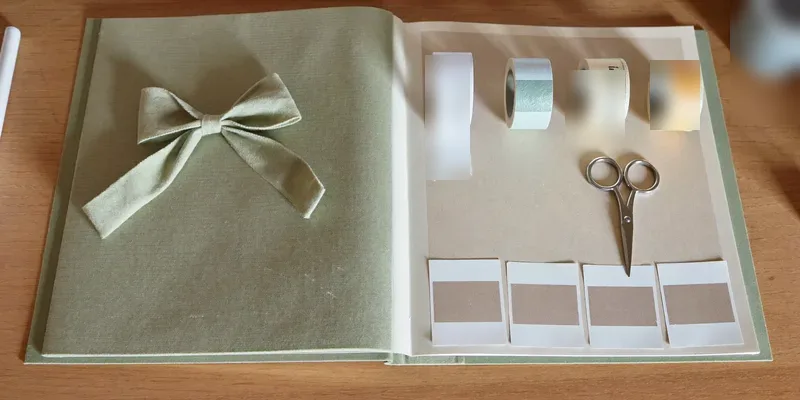
Buy acid free and lignin free paper and photo safe adhesive, since ordinary glue sticks and tape yellow and let go within a few years. Photo corners are the reversible option for anything you might want to remove intact, which includes every scan image.
Skip the enormous sticker and embellishment kits. They are the part of the hobby that gets bought first and used least, and pages built around bought decoration date faster than pages built around handwriting. A pen you like and a small set of labels covers most of it.
The One Kit That Earns Its Space
A basic set with photo corners, acid free adhesive and plain labels is enough to build the whole album. Anything beyond that is a hobby purchase rather than a scrapbook requirement.

Formats Compared
| Format | Effort | Holds objects | Suits |
|---|---|---|---|
| Blank scrapbook album | High, you design every page | Yes, anything you can attach | People who enjoy making things |
| Guided memory book | Low, fill in the boxes | Some, via pockets | Most people, most of the time |
| Keepsake box only | Almost none | Yes, including bulky items | Collect now, decide later |
| Photo book printed later | Low, done in one sitting | No, photos only | Phone photographers |
The box and the printed photo book together cover a lot of ground for very little work, which is worth knowing before committing to an album.
Getting It Actually Made
Scrapbooks fail at the printing step, not the crafting step. Photos stay on a phone, the album stays empty, and the project quietly becomes a source of guilt. Ordering prints once per trimester breaks that chain, and three small orders are far more likely to happen than one big one at the end.
Set the assembly date somewhere in the second trimester if you want it done before the birth, because energy and free evenings both get scarcer later. If it slips, it slips; a box of labeled material is a perfectly good outcome and can be turned into an album years afterward.
Working With What You Photograph Anyway
Weekly bump photos give the album its spine and cost nothing extra if you are already taking them. The props and signs that make those photos readable later are covered in our bump photo prop guide.
Frequently Asked Questions
Should I use my scan images or copies? Use copies and keep the originals flat in a sleeve. Ultrasound printouts are usually thermal paper, which fades with light, heat and handling, so the version glued into an album is the one you can afford to lose.
Is twelve by twelve too big? For most people, yes. Eight by eight fills faster, stores more easily and looks finished with less material. Buy the large size only if you already scrapbook and know you will fill it.
Can I just do it digitally? Yes, and a printed photo book at the end is the least effort route to something physical. What it cannot do is hold the wristband and the appointment card, so a small box alongside covers the gap.
When is the best time to make it? Collect throughout and assemble in the second trimester if you want it finished before the birth. Assembling afterward is normal, and doing it with the baby asleep on you is a well established scrapbooking method.
Is a scrapbook a good gift? An empty album is a mixed gift, since it hands someone a project. A keepsake box, a set of prints or a guided memory book gives the same sentiment without the homework. Our gifts for a pregnant friend guide covers the alternatives.
What about keeping a hospital bracelet or similar items? They store fine in a box or a sleeve. Keep anything with adhesive or plastic away from photos, since it can mark them over time, and use a pocket page rather than gluing bulky items directly to a page.
The Bottom Line
Buy a lidded box now and start dropping things into it, choose a smaller album with a post bound or ring spine when you are ready to assemble, and use acid free adhesive with photo corners for anything you want to keep intact. Print in three small batches rather than one heroic order. Read next: pregnancy journals compared, and bump photo props for the pictures that give the album its structure.