Last updated: August 23, 2026
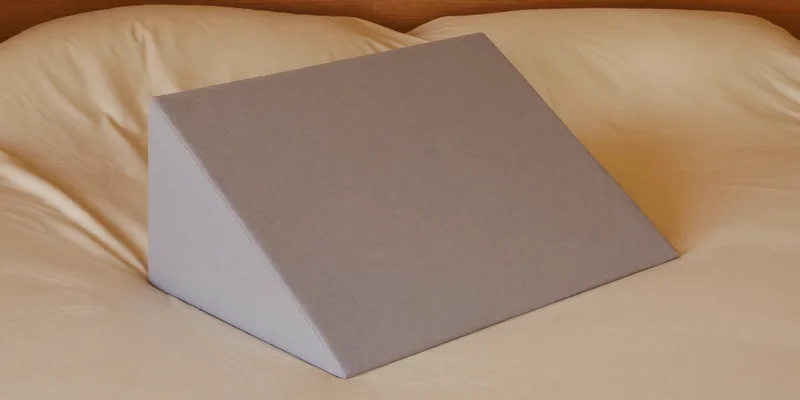
The wedge is the least impressive looking product in this category and the one owners recommend most often to each other. It is a firm triangle about the size of a couch cushion. You slide it under the bump so that side stops pulling, or behind your back so you cannot roll flat, and that is the whole product.
It exists because the big pillows solve one problem and create another. A full size U supports everything and takes half the bed. A wedge supports one thing and takes almost no space, costs a fraction of a body pillow, fits in a suitcase, and can be used alongside the pillows you already own. For a lot of people that turns out to be the better deal.
This article contains affiliate links. If you buy through them, we may earn a commission at no extra cost to you. Learn more.
Quick Answer
What does a pregnancy wedge pillow do?
- Under the bump, it takes the downward pull off the side you are lying on.
- Behind the back, it stops you rolling flat while you sleep.
- Under the knees or the ankles, it changes the angle of your legs when they feel heavy at the end of the day.
- It is the one option that works in a full bed, on a couch, in a hotel and in a car.
Bottom line: buy a wedge if space is tight, if you travel, or if you want to test whether extra support helps before committing to a body pillow.
What a Wedge Is For
A wedge is a targeted support rather than a whole sleeping system. It props one part of you at an angle: the bump, the lower back, the knees or the upper body. Because it is small and firm, it stays where you put it instead of migrating down the bed the way a folded blanket does.
That focus is the point. You are not replacing your pillows, you are adding the one piece that ordinary pillows cannot do, which is a firm slope that holds under weight. Everything else in your bed stays as it is.
The Three Positions Worth Trying
Most owners settle on one of three placements. Under the bump on the side you are lying on. Behind the back as a stopper. Or under the top knee, in place of a separate knee pillow. It is worth trying all three across a week, because which one helps is personal and not obvious in advance.
A fourth use comes up later. Propped under the shoulders and upper back, a wedge raises your top half slightly, which many pregnant people find more comfortable when lying flat has stopped being pleasant. Position it under the shoulders rather than under the head alone, so your neck is not bent forward.
Under the Bump, Specifically
The bump wedge is what the shape was designed for. Lying on your side, the weight of the bump hangs toward the mattress, and a wedge under it fills that gap so the pull is supported rather than carried. Owners often describe the difference as noticeable within a night or two, and it is the reason a small foam triangle competes with pillows many times its size.
Firmness, Height and Cover
Three specifications matter and none of them are complicated. Firmness decides whether the wedge holds under the bump or squashes flat. Height decides how much of a gap it fills. Cover fabric decides how warm and how washable it is.
Firm foam is the usual right answer under the bump, since a soft wedge compresses and stops doing anything. Height is more personal: a low profile wedge is subtle and stays put, a taller one gives more lift but can tip you slightly forward. Look for a removable cover, because this is a product that lives against skin on warm nights.
Wedge Pillows by Situation
If You Want the Standard Bump Wedge
The classic double sided wedge has a firmer face and a softer face, so you can turn it over depending on whether you want support or cushioning. It is small, it stays put, and it is the version most people mean when they say wedge.

If You Want More Height Under the Bump or the Back
A taller memory foam wedge fills a bigger gap and works better for people with a longer torso or a higher bump. It is also the version that doubles as a back support when you are sitting up in bed, which is most of the third trimester.

If Your Legs Feel Heavy at the End of the Day
A leg elevation wedge is longer and lower, made to sit under the calves rather than the bump. It changes the angle of your legs while you rest, and it is a small comfort measure many pregnant people use in the evening. Persistent or one sided swelling is a question for your midwife or OB-GYN, not for a pillow.

If You Want the Wedge Plus a Knee Pillow
The wedge and knee pillow combination is the cheapest way to get most of what a body pillow offers. The wedge handles the bump, the knee pillow keeps your hips level, and the two together take up less room than a C shape.

Where a Wedge Fits Against the Bigger Shapes
| Option | Space needed | What it supports | Travels |
|---|---|---|---|
| Bump wedge | Almost none | Bump or lower back | Yes, fits a suitcase |
| Wedge plus knee pillow | Very little | Bump and hips | Yes, two small pieces |
| C shape | One side of the bed | Head, front, knees | No |
| U shape | Both sides of the bed | Head, front, back, knees | No |
The top two rows are also the low risk way to find out whether extra support helps you at all before spending more on a body pillow.
What Owners Report
The positive theme is consistent: it is small, it works, and it did not start an argument about bed space. Owners who returned a large pillow very often mention buying a wedge afterward and being satisfied, which is a pattern worth knowing before you order the big one first.
The complaints are also consistent. Cheap wedges compress and stop supporting. Some slide on a slippery fitted sheet. And a wedge only does one job at a time, so if you want your head, bump and knees all supported at once, this is not the product. That is the case for a full body pillow instead.
Comfort Support, Not a Fix
A wedge changes the angle at which part of your body is resting, and many pregnant people find that makes a side lying position easier to hold. It does not treat anything. If back or hip pain is waking you, worsening, or changing how you move, that belongs with your midwife, OB-GYN or a pelvic floor physical therapist rather than with a shopping list.
Frequently Asked Questions
Is a wedge enough on its own? For a lot of people in the second trimester, yes. Later on, many owners add a knee pillow so the hips stay level as well. If you find yourself adding a third and a fourth pillow, that is the signal to look at a body pillow.
Under the bump or behind the back? Try both. Under the bump supports the weight hanging toward the mattress; behind the back stops you rolling onto it. Some owners use two small wedges for exactly this reason.
Will it work on a couch or in a car? Yes, and that is one of the strongest arguments for the shape. It is the only pregnancy pillow that travels without a discussion. See also pregnancy travel pillows.
Does the wedge slide around at night? It can on smooth sheets. A cover with a textured or jersey outer grips better than a slick one, and tucking the thin edge slightly under your own body helps.
Can I keep using it after the birth? Many owners do, as a back support while sitting up. Note that a wedge is not sleep equipment for a baby, and infant positioners are a separate question with their own safety guidance.
The Bottom Line
The wedge is the sensible first purchase in this category. It costs less than a body pillow, it fits any bed, it travels, and it tells you quickly whether targeted support is what you needed. Buy firm rather than soft, choose a removable cover, and add a knee pillow if your hips want leveling too. Read next: wedge versus full body pillow, and the full shape guide.