Last updated: August 23, 2026
A toddler does not understand a due date. What they understand is a story read at bedtime forty times, which is exactly how a two year old learns that a baby is coming, that the baby will cry, and that they will still be read to afterward. The right book does more preparation than any amount of explaining, mostly because it can be repeated without anyone getting tired of saying it.
The trick is matching the book to the age, and the age bands here are narrow. A book that lands perfectly with a four year old is wallpaper to an eighteen month old, and a board book that a toddler adores will bore a five year old within a page. Here is what tends to work at each stage, and the two mistakes that make a big sibling book backfire.
This article contains affiliate links. If you buy through them, we may earn a commission at no extra cost to you. Learn more.
Quick Answer
Which big sibling book should you buy?
- Under two: a sturdy board book with photographs or simple pictures and almost no text.
- Two to four: the classic big brother and big sister titles, read on repeat for weeks.
- Four and up: a story with a real plot, ideally one where the older child is allowed to be annoyed.
- Start reading it a couple of months ahead, not the week the baby arrives.
Bottom line: match the age band, start early, and choose one that admits the new baby is sometimes irritating.
Under Two: Board Books and Repetition
At this age the words matter less than the object. A chunky board book that survives being chewed, with clear pictures of a baby doing baby things, does the job. The child is learning to associate a picture with a word and an idea, and that association needs dozens of readings, not a clever plot.
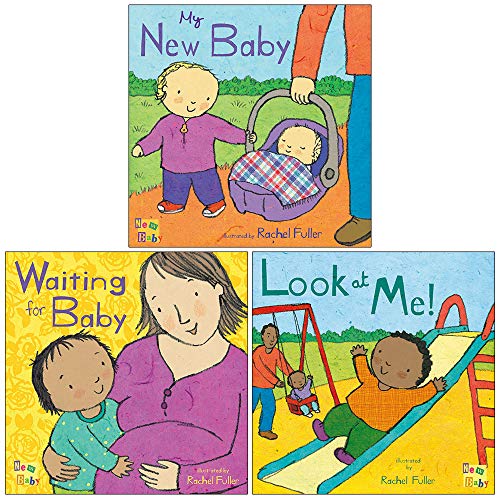
Rachel Fuller’s board books are the usual recommendation here because they are short, illustrated simply, and built for exactly this age. Look for a small format with rounded corners, since it will be carried around and dropped.
Two to Four: The Classic Big Sibling Titles
This is the sweet spot and the age most of these books are written for. Joanna Cole’s I’m a Big Brother and I’m a Big Sister are the best known: short, reassuring, and written to be read many times, with a straightforward message that the older child is still the older child.
Why Repetition Beats Explanation
A toddler processes change through repetition, not through a single conversation. Reading the same book nightly for two months means the ideas are old news by the time the baby arrives, which is the entire point. Buy one book and read it a lot rather than four books read once each.
![By Joanna Cole I'm a Big Brother Lap Edition [Board book]](https://m.media-amazon.com/images/I/51+TZokBO8L.jpg)
Four and Up: Stories With a Plot
Older preschoolers see through the reassuring ones. What works instead is a story where something actually happens and the older sibling has feelings about it. John Burningham and Helen Oxenbury’s There’s Going to Be a Baby follows a child imagining the baby’s future, which lets a four year old rehearse the idea without being lectured.
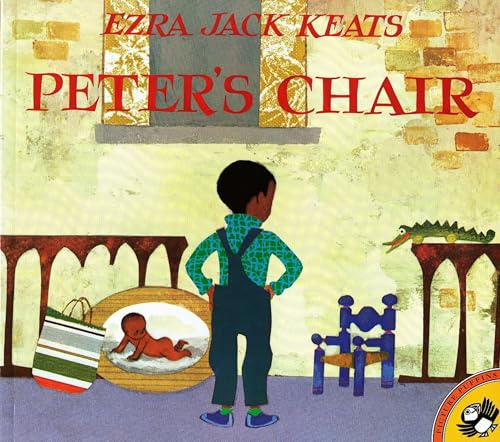
Ezra Jack Keats’ Peter’s Chair is the other classic in this band, and it is the honest one: a boy whose furniture is being painted for the new baby and who decides to leave home with his chair. It ends well, but it takes the resentment seriously first, which is why it has lasted.
The Two Mistakes That Make These Books Backfire
The first is buying only relentlessly cheerful books. A child who has been told six times that the baby will be wonderful, and then meets a baby that screams through dinner, learns that books lie. At least one title in the pile should let the big sibling be annoyed.
The second is timing. Handing over the book in the same week the baby comes home turns it into an explanation of something that already happened. Start a couple of months out, when the idea is still abstract and there is time for it to become ordinary.
The Books That Matter After the Baby Arrives
Preparation books stop being interesting the moment the baby is real. What gets used in the weeks afterward is different: books where a big sibling is simply a fact of the story rather than the subject of it, and books the older child can look at alone while you have both hands full.
Lift the flap books and busy picture books earn their place here, because they occupy a three year old within arm’s reach during a feed. That is a genuinely useful function, and it has nothing to do with what the book is about.
Keep One New Book Back
An unopened book held in reserve for the first difficult afternoon is worth more than four given at once. Parents of second children mention this repeatedly: novelty is the resource that runs out, so ration it rather than spending it in week one.
The Age Bands Compared
| Age | Format | What it should do | What to avoid |
|---|---|---|---|
| Under two | Board book, few words | Link the word baby to a picture | Paper pages, long text |
| Two to four | Short picture book | Reassure through repetition | Complicated plots |
| Four and up | Full picture book with a story | Let the older child be annoyed | Relentless cheerfulness |
| Any age | A book given as a present | Arrive before the baby does | Handing it over in week one |
Age bands here follow how these books are usually published and read, not a developmental rule. Questions about how your child is handling the change belong with your pediatrician.
The Book as the Gift From the Baby
The present the new baby supposedly brings for the older sibling is a well worn tradition and a book is one of the better versions of it, because it can be read together in the hospital or on the first afternoon at home. It also costs less than the toy version and does not need batteries.
If you are packing for a second birth, put it in the bag rather than leaving it at home. Our guides to the big brother or sister gift and the hospital bag for a second baby cover the rest of that plan.
Frequently Asked Questions
When should we start reading it? A couple of months before the due date is the common approach, so the idea becomes familiar rather than sudden. For a child under two, earlier is fine, since it is the repetition that does the work.
How many books do we need? One that gets read constantly plus one honest one. More than that and none of them get the repetition that makes them useful.
Should the book mention where babies come from? Only if you want it to. Most big sibling titles skip it entirely and stay on what changes at home, which is what a toddler is actually asking about.
What if my child seems upset by it? That is worth noticing rather than pushing past, and it is a normal reaction to a big change. If it worries you, your pediatrician is the person to raise it with.
Are personalized versions worth it? They are fun and they photograph well, but they take weeks to arrive and cannot be replaced when destroyed. Buy the classic first and the personalized one as the present.
The Bottom Line
Match the age band, start a couple of months early, and include one book that lets the older child be annoyed about the whole thing. One title read forty times beats four read once. Read next: our big sibling gift guide and books for second time moms, which is the other half of preparing for a second baby.