Last updated: August 23, 2026
Side sleeping sounds simple until you have to do it for months. All of your weight rests on one hip against a mattress, the top leg falls forward across your body, and after a couple of hours the hip underneath is aching enough to wake you. You turn over, and the same thing happens on the other side.
Two things change that arrangement: something between your knees so your hips stay stacked, and a surface that lets the hip underneath sink in rather than pressing back. Both are cheap, both are easy to try, and neither is a treatment. This guide covers what a pillow setup can do for comfort and where the answer stops being a pillow.
This article contains affiliate links. If you buy through them, we may earn a commission at no extra cost to you. Learn more.
Quick Answer
How do you set up a pregnancy pillow when your hips ache?
- Put something firm between your knees so your top leg stops dropping across your body and your hips stay stacked.
- Support the bump as well, so you are not rotating forward from the waist.
- Add something behind your back so you do not roll flat during the night.
- Consider what is underneath you. A very firm mattress gives the hip nowhere to sink, and a topper often does more than another pillow.
Bottom line: pillows change the angle of your hips, and that is a comfort measure. Persistent or worsening hip pain belongs with your midwife, OB-GYN or a pelvic floor physical therapist.
Why One Hip Takes All of It
Lying on your side puts your body weight through a small area at the hip, and pregnancy adds to that weight. At the same time the top leg swings forward and down, which rotates the pelvis and twists the joint that is already carrying the load. The combination is what wakes people up.
Both parts are addressable with positioning. Keeping the legs stacked stops the rotation, and giving the bump support stops you rolling forward from the waist. What remains is the pressure itself, which is a question about the surface you are lying on rather than about pillows.
The Knee Pillow Does the Heavy Lifting
If you buy one thing for aching hips, buy something to go between your knees. A firm cushion there keeps your top leg level with the bottom one, so your pelvis stays square instead of twisting forward, and it is the single change most owners describe as making the biggest difference.
Firmness is the specification that matters. A soft cushion flattens within minutes and your knee ends up on the mattress again, which is why folded blankets and spare pillows disappoint. A contoured foam knee pillow holds its height all night, and it is the least expensive item in this whole category.
Between the Knees or Between the Ankles
Most people put the pillow between the knees, which is right for keeping the pelvis square. Some find that the lower leg still rotates and that adding a smaller support between the ankles helps as well, and a long body pillow does both at once because it runs the full length of the leg. That is a good reason to look at a full body pillow if a knee pillow alone is not enough.
What You Are Lying On Matters Too
A very firm mattress gives your hip nowhere to sink, so the joint presses against a hard surface all night. This is a common and overlooked cause of a sore hip in pregnancy, and it explains why some people find that no pillow arrangement helps at all.
A soft mattress topper spreads that pressure. It is more expensive than a pillow but cheaper than a mattress, and it addresses something no pillow can. If your hip aches most in the first hour after lying down rather than after several hours, the surface is the more likely culprit.
Setups by Situation
If You Only Want to Change One Thing
A contoured knee pillow keeps your legs stacked and your pelvis square. Small, cheap, works in any bed, and travels. Start here before spending more.

If You Want the Legs and the Bump Handled Together
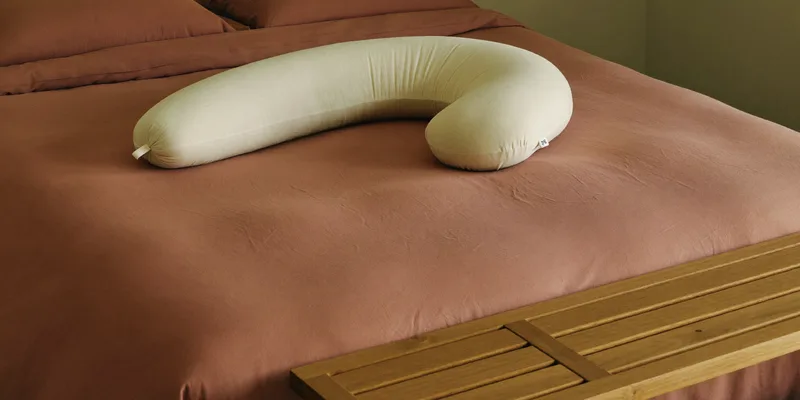
A C or J shaped body pillow runs from your head down past your knees, so the bump is supported and the top leg is held in one piece. It removes the problem of separate cushions drifting apart during the night.

If You Turn Over Often and Want Both Sides Covered
A U shape supports you whichever way you face, so when the hip underneath has had enough you can roll to the other side without rebuilding anything. It needs the bed space, and it is the most complete arrangement.

If the Mattress Is the Problem
A soft foam topper lets the hip sink in rather than pressing back at you. If you have tried pillows and the ache starts almost as soon as you lie down, this is the change worth making.

What Each Change Addresses
| Change | What it does | Cost and space | Try it when |
|---|---|---|---|
| Knee pillow | Keeps hips stacked | Lowest, fits anywhere | Always, start here |
| Bump support | Stops rotating forward | Small if a wedge | Bump pulls you over |
| Body pillow | Both, in one piece | Half the bed or more | Loose pillows drift apart |
| Mattress topper | Spreads pressure at the hip | Highest, no bed space | Ache starts within the hour |
Work down the table rather than across it. The cheapest rows solve the most common causes, and the last row is the one people reach for too late.
What Owners Report
The most common story is that a knee pillow alone made a noticeable difference, and that adding bump support extended how long a single side stayed comfortable. The second most common is that a large pillow was bought first, helped somewhat, and the knee section turned out to be the part doing the work.
The honest counterweight is that some owners report no change at all. In those reviews the mattress usually comes up, or the discomfort turns out to be something that positioning was never going to address. A pillow is worth trying because it is cheap and quick, not because it always works.
When to Stop Adjusting Pillows
Hip discomfort while side sleeping is a common part of later pregnancy, and arranging a better position for yourself is reasonable. It is a different situation when the pain is sharp, when it wakes you repeatedly, when it is getting worse week by week, when it makes walking or standing on one leg difficult, or when it does not settle once you are up and moving. Please raise hip pain in pregnancy with your midwife, OB-GYN or a pelvic floor physical therapist, who can look at what is actually going on rather than at your bedding.
Frequently Asked Questions
Is a knee pillow enough on its own? For many people early on, yes. As the bump grows, most owners add support in front so they are not rotating forward, which is where a wedge or a body pillow comes in. See the shape guide.
How firm should the knee pillow be? Firm enough that it does not flatten under the weight of your leg. Soft cushions and folded blankets compress within minutes, which is why they disappoint.
Should I switch sides during the night? Most people do, naturally, and there is no reason to fight it. A U shape makes switching easier because nothing has to be rebuilt on the other side.
Would a mattress topper be better than a pillow? If the ache starts soon after you lie down, quite possibly. Pillows change your angles, a topper changes the pressure at the contact point, and those are different problems.
Will this carry on after the birth? That varies a great deal between people, and it is not something to predict from a website. If discomfort continues after the birth, a pelvic floor physical therapist is the person to ask.
The Bottom Line
Start with a firm knee pillow, then add support in front so the bump does not pull you over, then add something behind your back so you do not roll flat. If none of that changes anything, look at the mattress before you look at another pillow. And take a persistent or worsening ache to a professional rather than to a product page. Read next: setting up for side sleeping, and back support in bed.