
Last updated: August 23, 2026
Books for expectant fathers fail for one of two reasons. Either they are jokey to the point of saying nothing, or they are a full pregnancy reference with the pronouns changed and they never get opened. The useful ones sit between those, and picking correctly is mostly a question of tone and length.
This page sorts the main options by who they suit: the person who will read a manual, the person who needs it short and funny to start at all, and the person who mainly needs to know what to do during labor. Buy for the reader you actually have.
This article contains affiliate links. If you buy through them, we may earn a commission at no extra cost to you. Learn more.
Quick Answer
Which pregnancy book should you buy for a dad to be?
- For a reader: a month by month guide written for fathers, with real detail.
- For a reluctant reader: a short, funny handbook he will finish in a weekend.
- For the delivery room: a labor manual written for the support person.
- For after: a first year guide, which is where most dad books are weakest.
Bottom line: match the tone to the reader, because an unread book helps nobody.
Tone Is the Whole Decision
Dad books cluster into three registers: the straight guide, the comedic handbook and the practical manual. They cover overlapping material, so the choice is not about content coverage. It is about whether he will pick it up more than once.
Ask yourself what he reads normally. Someone who reads nonfiction will be irritated by a book built around jokes about cravings, and someone who reads nothing will not get through four hundred pages of month by month detail regardless of how good it is.
Length Is the Second Filter
Short books get finished. If you are buying as a gift and you are not sure, the shorter option is the safer bet, because a finished light book beats an abandoned thorough one every time.
The Standard Month by Month Guide
The Expectant Father by Armin Brott and Jennifer Ash Rudick is the long running default in this category. It works through the pregnancy month by month from the father’s point of view, covering what is happening physically, what tends to happen emotionally, and the practical side of preparing, with sections on labor and the first months.
It is the most complete option and the most reference like, which is both its strength and its limitation. Brott has a companion volume for the first year, so it is easy to continue with the same voice if it lands well.

The Short, Readable Handbooks
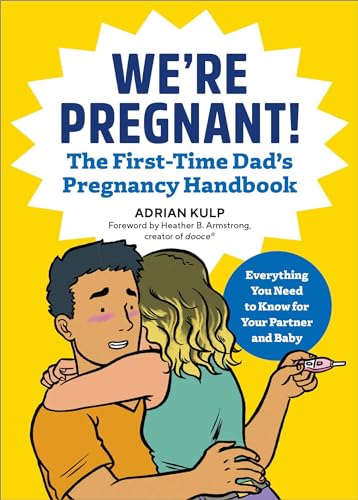
We’re Pregnant! The First Time Dad’s Pregnancy Handbook by Adrian Kulp is written conversationally and organized in short pieces, which makes it easy to read a bit at a time. It is the common recommendation for someone who is not a natural reader of guides.
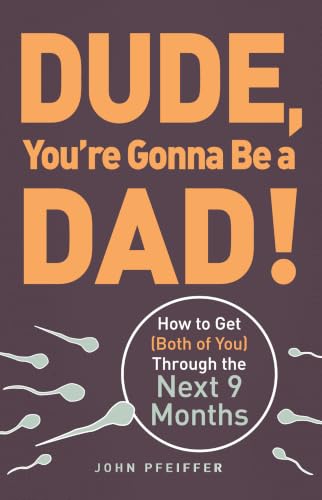
Dude, You’re Gonna Be a Dad! by John Pfeiffer sits in the same space with a lighter, more comedic register. Both are quick, both are practical enough to be useful, and neither pretends to be a reference.
Where the Funny Ones Fall Short
Humor carries a reader through a book and it does not help much at three in the morning when there is an actual question. Pair a light handbook with a reference in the house, or with the labor manual below, rather than making it the only book he owns.
Matching the Book to the Reader
| If he is | Register | Typical pick | Watch out for |
|---|---|---|---|
| A nonfiction reader | Straight guide, month by month | The Expectant Father | Length can stall a casual reader |
| Not much of a reader | Short, conversational | We’re Pregnant! | Thin on the harder questions |
| Nervous and joking about it | Comedic handbook | Dude, You’re Gonna Be a Dad! | Not a reference |
| Going to be in the room | Practical manual | The Birth Partner | Dry, but that is the point |
The bottom row is the one most people leave out and most partners later say was the useful book.
The Book for the Delivery Room
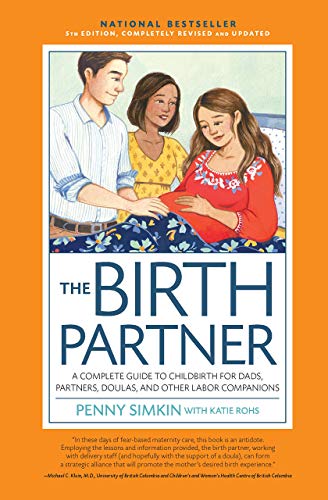
The Birth Partner by Penny Simkin is written for whoever is supporting the birth, and it is organized as a manual: what happens at each stage, what helps, what to say and what to do with your hands. Doulas and childbirth educators use it as a working reference themselves.
It is not a fun read and it is not trying to be. For a partner who wants to be useful rather than to be informed in general, it is the most practical book in this whole category.
Do Not Forget After the Birth
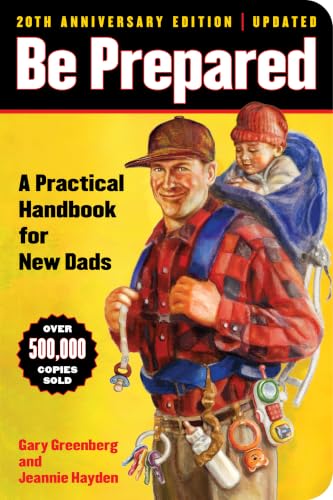
Most dad books thin out considerably once the baby arrives, which is exactly when a nervous first timer wants instructions. Be Prepared by Gary Greenberg and Jeannie Hayden is the survival manual for that stage, laid out in short practical entries with illustrations.
If you are buying two books, a pregnancy handbook plus a first year manual covers more ground than two pregnancy books. Our gifts for an expecting dad page covers what pairs well with a book.
Frequently Asked Questions
Which one book should I buy if I only buy one? For a reader, the month by month guide. For anyone else, the short handbook. If he is definitely going to be at the birth, the labor manual beats both.
Are these books actually different from general pregnancy books? Mostly in framing rather than facts. They spend more time on the partner’s role, on what to say, and on the practical preparation, and less on symptoms.
Is an audiobook a better bet for a reluctant reader? Often yes, particularly for a commute. Our audiobooks page covers which titles work in that format.
Is a dad book a good gift? It is a safe one, especially paired with something small and practical. Keep the tone light unless you know he reads guides.
What if he is not a dad but a partner? Several of these assume a father specifically. Our books for partners page covers the titles written for a wider range of families.
Will these books tell him what to do medically? No, and they should not. Anything specific to this pregnancy is a question for the midwife or OB-GYN at the next appointment.
Books help a partner understand what is happening, not decide anything clinical. Questions about the pregnancy itself belong with the midwife or OB-GYN.
The Bottom Line
Buy for the reader in front of you. A month by month guide for someone who reads, a short handbook for someone who does not, and a labor manual for whoever will be in the room. Add a first year book and you have covered more than most people manage. Read next: books for partners who are not dads and the full pregnancy books guide.