Last updated: August 23, 2026
The partner’s bag is the one nobody packs until the night before, and it is the one that determines whether somebody spends two days in the same shirt eating vending machine crackers. The pattern in the stories is consistent: the birthing parent’s bag is planned for weeks and the partner throws a phone charger in a tote bag on the way out the door.
It does not need to be a big bag. It needs to be a separate one, packed for a person who will sleep badly on a fold out chair, walk a lot of hallway, and be the only one able to leave the room. Everything below is chosen with that job description in mind.
This article contains affiliate links. If you buy through them, we may earn a commission at no extra cost to you. Learn more.
Quick Answer
What goes in the partner’s hospital bag?
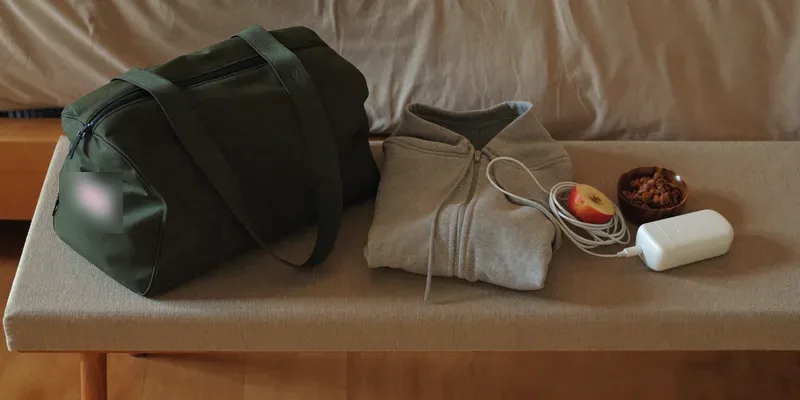
- Two changes of clothes and a hoodie, because hospital rooms run cold at night.
- A power bank and a long cable, since you will be the one keeping two phones alive.
- Toiletries in a hanging bag, plus a small towel if you want a real shower.
- Cash and coins for parking and vending, and snacks that do not need a fridge.
Bottom line: pack a separate small bag for yourself, and keep the parking money and the chargers in the outside pocket.
Why the Partner Bag Is Separate
Sharing one bag sounds efficient and turns into a problem the first time you need a clean shirt from underneath somebody else’s carefully arranged layer. A separate bag also means you can grab yours and go, whether that is home to feed the dog, out to the car, or down to the cafeteria.
It should be small enough to sit under the fold out chair. A backpack or a compact duffel is the right size, and it stays out of the way in a room that fills up quickly with equipment, a bassinet and visitors.
What Your Bag Also Carries
In practice the partner ends up holding the shared items too: the paperwork, the car keys, the parking ticket and the phone that is taking photographs. Give those a fixed pocket. It saves the search that always happens at discharge.
Clothes for a Room That Runs Cold
Hospital units are kept cool and the chair you will sleep on is not designed for sleeping. The combination that people land on is layers: a t shirt, a hoodie or zip up you can also use as a pillow, and something loose to sleep in that is presentable enough to answer the door in.
Two changes is the honest number for a typical stay, three if a longer one is expected. Slip on shoes matter more than they sound like they should, because you will be in and out of the room constantly and nobody wants to tie laces at four in the morning.
The Bag That Fits Under the Chair
A compact weekender holds two changes, toiletries and the electronics without taking up floor space, and it carries in one hand while the other hand has the car seat in it.

Power Is the Job You Own
Two phones, a camera, possibly a tablet, and one outlet that is behind the bed. Keeping everything charged quietly becomes the partner’s responsibility, and it is the single most mentioned frustration in stories about the first night.
The solution is a power bank plus a long cable, so the phone can charge in a hand rather than on a table across the room. Charge the power bank when the bag gets packed and top it up monthly while the bag waits by the door.
The Item That Prevents the Most Small Arguments
A high capacity power bank charges both phones more than once, and it travels on afterward to strollers, road trips and airports.

Toiletries, Showers and Feeling Human
Many rooms have a shower and many partners never use it because they did not bring anything to use. A small toiletry kit with a toothbrush, deodorant, face wash and a travel towel changes the second day noticeably, and it takes almost no space.
A hanging toiletry bag is the practical shape here, since hospital bathroom shelves are small and often wet. Hang it on the door hook and everything stays dry and findable rather than spread across a counter.
The Bag That Keeps the Bathroom Usable
A hanging organizer with a hook is the version people keep using for every trip afterward, which makes it an easy buy.

Food, Money and Getting Out of the Building
Cafeteria hours are limited and the good coffee is somewhere else. Pack the snacks that survive a warm bag, keep a refillable water bottle with you, and carry some cash and coins because parking machines and vending machines are stubbornly analog in a lot of hospitals.
Parking is worth checking in advance. Ask your hospital where partners park overnight, what the rates and the validation look like, and whether there is a different entrance after hours. That question saves a genuinely bad ten minutes.
Something to Drink That Does Not Get Knocked Over
An insulated bottle with a handle and a straw lid gets shared with the person in the bed, which is half the reason to bring one.

The Partner Bag at a Glance
Four groups, packed in this order. Anything that does not fit one of them is probably going home unopened, a pattern our skip list goes through in detail.
| Group | What goes in it | Why | Where it lives |
|---|---|---|---|
| Clothes | Two changes, hoodie, slip on shoes | Cold room, constant in and out | Main compartment |
| Power | Power bank, long cables, wall block | One outlet, four devices | Front pocket |
| Wash kit | Hanging toiletry bag, travel towel | Day two feels very different | Side pocket |
| Logistics | Cash, coins, keys, paperwork | Parking and vending are analog | Outside pocket |
The Jobs That Come With the Bag
Packing is the easy part. The useful preparation is knowing where to park, which entrance is open at night, who is being called and in what order, and whether the car seat is installed and understood. Those four things remove most of the avoidable stress on the day.
Write the phone list somewhere other than your own phone, since your phone will be busy and possibly flat. A note in the bag with names, numbers and who is handling the dog is unglamorous and gets used.
Have an Answer Ready About the Bag Itself
If a bag is still on the shopping list, our bag comparison covers which shapes work in a small room, and when to pack covers the timing.
Frequently Asked Questions
Do partners really need a separate bag? Yes, and it is the single change people recommend most. A shared bag means digging through someone else’s things for a clean shirt, and it cannot be grabbed on the way out without unpacking half of it.
How many days should I pack for? Two changes covers a typical stay, and a third in the car covers a longer one. Longer stays are more common with a planned C-section or with twins, so pack the car bag accordingly.
Can I sleep in the room? Usually yes on a chair or a small sofa, but policies differ by hospital and by unit and can change. Ask your hospital rather than assuming, and bring a hoodie either way.
What is the most forgotten item? Cash and coins, followed by a phone charger long enough to be useful. Both are trivial to pack and genuinely annoying to be without.
Should I bring my own pillow? A cheap one you do not mind losing, in a bright pillowcase so it comes home again. Good pillows disappear into hospital laundry carts.
What about a camera? A phone is enough for most people, and a dedicated camera means another charger. If you bring one, bring the spare battery, because you will not want to hunt for a charger.
The Bottom Line
Pack a small separate bag with two changes of clothes, a power bank and long cables, a hanging wash kit, and cash for parking. Then do the four jobs that matter more than the packing: install the car seat, learn the parking, know the entrance, and write the phone list down somewhere other than your phone. Read next: the full hospital bag checklist and what to bring to eat.