
Last updated: August 23, 2026
The hospital bag question that gets asked at midnight is not what goes in it. It is whether it is too early to pack, followed shortly by whether it is now too late. Both worries come from the same place: the date on the chart is an estimate, and nobody gets a warning.
The honest answer is that packing early costs nothing and packing late costs a scramble, so the timing question is really a question about how to pack in stages. Below is a simple two stage approach, what to do about the items you are still using every day, and how to make sure the bag can leave the house without you.
This article contains affiliate links. If you buy through them, we may earn a commission at no extra cost to you. Learn more.
Quick Answer
When should you pack your hospital bag?
- Start early in the third trimester with everything you are not using daily.
- Add a short list of daily items on a note taped to the bag, so they can be grabbed in one sweep.
- Pack sooner if you are expecting twins, if a C-section is planned, or if your provider has suggested it.
- Ask your own provider what timing they suggest for you, since it is the only answer that fits your situation.
Bottom line: pack it early enough that being early feels silly, then keep a note on the handle for the last few items.
Why Early Beats Perfect
A packed bag is not a prediction, it is an insurance policy against having to think. Nothing in it spoils, nothing is needed elsewhere, and the only cost of packing too soon is that the bag sits by the door looking slightly ridiculous for a few weeks.
The cost of packing late is being asked to make decisions at the worst possible time, or leaving with nothing and having a partner guess later. Early in the third trimester is the point most people land on, and if you want a specific week for your situation, ask your midwife or OB-GYN.
The Bag Does Not Have to Be Finished
A partly packed bag is far better than an unpacked one. Put in everything you are certain about, leave it open, and add items as they occur to you rather than waiting for a single perfect packing session that never gets scheduled.
Pack in Two Stages
Stage one is everything you are not using every day: the going home outfits, the baby clothes, the spare charger, the toiletries you bought duplicates of, the socks, the paperwork copies. This is most of the bag and it can be done in one evening.
Stage two is the short list of daily items that cannot go in yet, which is usually a phone, a charger you use nightly, glasses, medication, a pillow and a water bottle. Write that list on a card and tape it to the bag handle. Then anybody can complete the bag in two minutes.
The Note on the Handle Is the Whole Trick
The list exists so the person completing the bag does not have to be you, and does not have to remember anything. It is the single most useful thing in this article and it costs a piece of paper.
Who Should Pack Sooner
Some situations shift the timing earlier, and the common ones are twins or other multiples, a planned C-section with a scheduled date, a longer travel distance to the hospital, and any situation where your care team has suggested being ready ahead of the usual point.
Your provider is the person who knows which of those apply to you. Ask at a prenatal visit rather than working it out from a checklist, and take the same opportunity to ask what the hospital wants you to bring and what it supplies.
Packing for a Longer Stay
Where a longer stay is likely, the change is in the car bag rather than the room bag. Our guides to packing for twins and packing for a C-section cover what those stays need.
A Simple Packing Timeline
Three stages, in the order people actually do them. The timing column is deliberately general, because the specific week depends on you and belongs in a conversation with your provider.
| Stage | Roughly when | What goes in | Where it sits |
|---|---|---|---|
| Buy and decide | Late second trimester | The bag itself, going home outfits | Closet |
| Main pack | Early third trimester | Everything not used daily | By the door or in the car |
| Final sweep | On the day | The taped note list | Grabbed on the way out |
If your provider has suggested a different timeline for your situation, that one wins over this table every time.
Where the Bag Should Live
By the door is the classic answer and the car is the better one for anyone with a drive ahead of them. A bag in the trunk cannot be forgotten in a rush, and it means the house does not need to be visited on the way.
The compromise most people use is the room bag by the door and the overflow bag already in the car. That split also stops the door bag growing, which is the pattern our skip list exists to prevent.
If the Bag Is Living in the Car
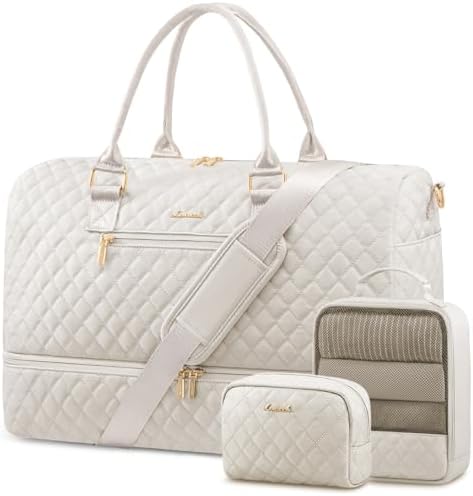
A soft weekender copes with a trunk better than a hard case, packs flat when it is empty, and can be squeezed around a stroller box that is also waiting in there.
Things to Do at the Same Time
Install the car seat, confirm the parking and the after hours entrance with your hospital, and put the phone list somewhere other than a phone. Those three jobs take an afternoon and remove most of the avoidable panic. Our partner bag guide covers the rest of that side.
Keeping the Bag Ready Once It Is Packed
A packed bag slowly unpacks itself. The charger gets borrowed, the lip balm migrates to a coat pocket, the phone battery in the power bank goes flat. A quick check every couple of weeks keeps it honest and takes almost no time.
The other drift is size. Things get added and nothing gets removed, and by the end the bag is too heavy to be useful. Check it against a short list rather than reopening the whole decision, using our hospital bag checklist as the reference.
Packing in Stages Without Losing Track
Cubes make a staged pack workable, because stage one goes into its own cube and the half empty one is a visible reminder of what is still outstanding.

Frequently Asked Questions
Is it bad luck to pack early? No, and it is the approach almost everyone recommends afterward. The bag sitting by the door for a few weeks is the whole downside, and having it ready is the entire point.
What week should I pack in? Early in the third trimester is the common practice, and your own timing depends on your situation. Ask your midwife or OB-GYN what they suggest for you, particularly with multiples or a scheduled date.
What if I have not packed and things start happening? Take the paperwork, a phone charger, and whatever clothes are within reach. Everything else can be brought later by somebody else, which is exactly why the note on the handle matters.
Can I keep the bag in the car the whole time? Yes, and many people do. Keep anything temperature sensitive out of it, and remember to swap out the seasonal clothing if the weather turns while you wait.
How do I handle the things I use every day? Do not pack them. List them on a card taped to the bag handle so the final sweep takes two minutes and can be done by anyone in the house.
Should the partner pack at the same time? Yes, and separately. A partner bag that gets packed the night before is how somebody ends up in the same shirt for two days. Our partner bag guide covers it.
The Bottom Line
Pack the bulk of the bag early in the third trimester, tape a short list of daily items to the handle, and let the car hold the overflow. Ask your midwife or OB-GYN whether your situation calls for being ready sooner, since multiples, a scheduled date or a long drive all move the timing. Read next: the full checklist and which bag to buy.