Last updated: August 23, 2026
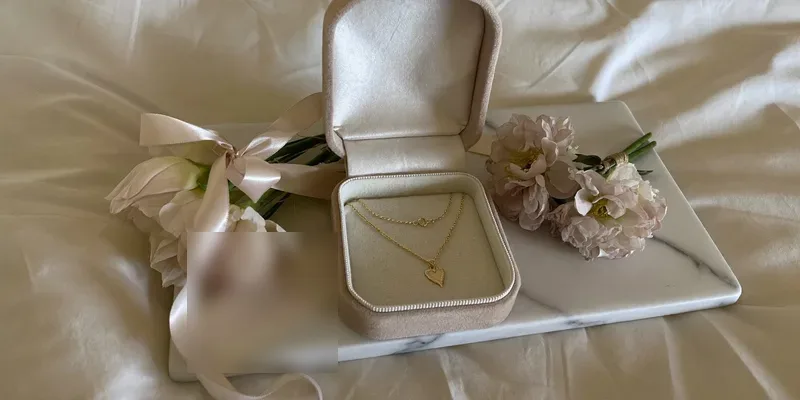
A push present is a gift from one parent to the other to mark the birth. The name is blunt and a lot of people dislike it, which is why it also turns up as a birth gift or a new mom gift. Whatever it is called, the idea is the same: one thing that marks the day, given to the person rather than to the baby.
It is also a gift with a trap in it. Buy the wrong kind and it becomes an object she feels obliged to display; buy the right kind and it is worn or used every day for years. The difference is almost never how much it cost, and this guide is organized around what actually stays in circulation.
This article contains affiliate links. If you buy through them, we may earn a commission at no extra cost to you. Learn more.
Quick Answer
What makes a good push present?
- Something she can wear or use daily. Jewelry works because it stays on; ornaments do not.
- Personalized, but lightly. A date or an initial ages better than a full sentence.
- Practical counts. Plenty of people would rather have the thing they have been eyeing than a necklace.
- Give it after the birth, not before, and keep it out of the delivery room itself.
Bottom line: choose something worn or used every day, keep the personalization small, and hand it over once things are calm.
What a Push Present Is Meant to Do
It marks the day for the person who is otherwise about to disappear behind the baby. That is the entire brief. It does not need to be expensive, it does not need to be a surprise, and it does not need to follow anyone else’s version of the tradition.
Because the point is the marking rather than the object, the gift benefits from a date, a name or a note more than from an upgrade in materials. A modest engraved piece given with a written line outperforms an anonymous expensive one almost every time.
If the Name Bothers Her
Plenty of people find the phrase off putting. Call it a birth gift, hand it over without ceremony, and the objection disappears. Nobody has ever refused the gift itself over the terminology.
Jewelry, and Why It Dominates
Jewelry is the default for one practical reason: it is worn rather than stored. A necklace or a ring stays in daily circulation, survives a house move, and does not need a shelf. It is also easy to personalize without it becoming a novelty.
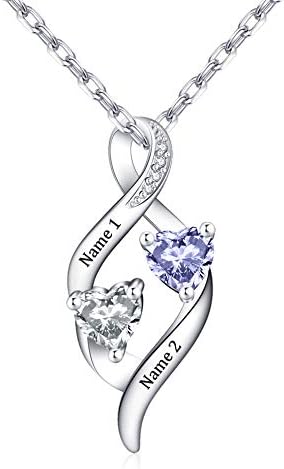
Within jewelry, three formats cover almost everything. Birthstone pieces tie the gift to the birth month, initial and name pieces tie it to the child, and engraved bars or discs tie it to the date. All three are widely available in plated and sterling versions.
The Birthstone Route
A birthstone necklace links the piece to the month without spelling anything out, which is the subtle version of personalization. It also extends naturally, since stones can be added if there is another baby later.
The Initial or Name Route
A small initial pendant is the most worn of all the options, because it works with everything and reads as ordinary jewelry to anyone who does not know the story. Choose a dainty chain if she wears fine jewelry and something sturdier if she does not.

The Engraved Date Route
A bar bracelet or pendant engraved with the birth date is the least fussy option and the easiest to get right when you are unsure of her taste. Keep the engraving to a date or a name; long inscriptions crowd the metal and date quickly.

Rings and Stacking Pieces
Rings are the trickier category because sizing changes around pregnancy and can take a while to settle. Stacking rings sidestep some of that by being cheap enough to resize or replace, and they suit people who already wear rings daily.
If you are unsure about size, buy a necklace instead and keep the ring idea for a later anniversary. A ring that does not fit sits in a drawer, which is the failure mode this whole category is trying to avoid.
The Safer Version of a Ring
A simple stackable band in sterling silver or a plated finish, bought in a size she currently wears, is easy to add to later and easy to swap. Anything with stones set all the way around is harder to resize.

Not Jewelry at All
A large share of people would rather have something they will use than something they will wear, and that is a completely legitimate push present. The rule is the same: daily use, and given as a marker rather than as household equipment.
The versions that work are personal rather than practical. A monogrammed robe, a good watch, a camera for the first year, a piece of art. What does not work is anything that would have been bought anyway, since a stroller with a bow on it is not a gift to her.
The Comfort Version
An embroidered robe is the non jewelry option people mention most, since it gets worn constantly in the first weeks and still reads as a present rather than as supplies.

The Keepsake Version
A photo locket bridges the two categories: it is jewelry, and it holds something. It suits people who like the idea of jewelry but find plain pendants impersonal.

The Options Compared
| Option | Worn or used daily | Sizing risk | Suits |
|---|---|---|---|
| Birthstone necklace | Yes | None | Subtle personalization |
| Initial pendant | Yes, the most worn | None | People who wear fine jewelry |
| Engraved bracelet | Yes | Low, most are adjustable | Unsure of her taste |
| Stacking ring | Yes, if it fits | High, size shifts | Existing ring wearers |
| Embroidered robe | Yes, in the early weeks | Low, sizing is generous | Anyone who does not wear jewelry |
If you are choosing under time pressure, the engraved bracelet and the robe are the two hardest options to get wrong.
Timing and Delivery
Give it after the birth, when things have settled and there is a moment that is not being interrupted. The delivery room is not the place: nobody wants to open a box in the middle of it, and a small item is easily lost among hospital bags and paperwork.
Buy it in advance, though. Personalization takes time, and engraved and made to order pieces routinely take longer than expected, so ordering in the third trimester avoids handing over a screenshot. Keep it at home rather than in the hospital bag, which has enough in it already.
Write Something
The note is the part that gets kept. A few honest lines about the day, written by hand, outlast whatever it is attached to, and it costs nothing.
Frequently Asked Questions
How much should a push present cost? There is no expected amount, and the range in practice is enormous. Personalization and daily wearability do far more for how a gift lands than the material does.
Is a push present expected? No. It is a tradition some couples keep and others have never heard of. If it is not something either of you cares about, food, help and a note cover the same ground.
Should the other parent get one too? Some couples exchange gifts, which sidesteps the awkwardness of the name entirely. Our gifts for an expecting dad guide covers what works in that direction.
What if she does not wear jewelry? Then buy in the other category. A robe, a watch, a camera, a print, or something she has wanted for a while and would not buy herself all work as long as they are for her rather than for the house.
When should I order it? During the third trimester if it is engraved or made to order, since personalization adds time and nobody wants to be chasing a delivery that week.
Can it be something for both of you? It can, but be careful with anything that is really household equipment. A shared gift that would have been bought anyway tends to read as a purchase rather than as a present.
The Bottom Line
Choose something worn or used every day, personalize it lightly with a date or an initial, order it early enough that engraving is not a problem, and hand it over once the room is calm. Write the note by hand, because that is the part that gets kept. Read next: gifts from a partner during pregnancy, and gifts for a new mom for the practical side.