Last updated: August 23, 2026
Bio-Oil is the most recognized bottle in this entire corner of the store, and it arrives in a pregnancy with a lot of expectation attached to it. Someone gave you one at a baby shower, or your sister swore by it, or you saw the amber bottle a hundred times before you had any reason to pick it up.
This page is deliberately narrow. It covers what is in the bottle, how the two versions differ, how the oil behaves on skin, and where we part company with the marketing. What it does not do is repeat the brand’s positioning as if it were our recommendation.
This article contains affiliate links. If you buy through them, we may earn a commission at no extra cost to you. Learn more.
Quick Answer
What is Bio-Oil and where does it fit in pregnancy?
- It is a light body oil, not a butter. It absorbs quickly and covers a lot of skin with very little product.
- There are two formulas. The standard one lists retinyl palmitate and added fragrance; the natural one is built on plant oils without them.
- As a moisturizer for a dry, tight bump it does the job that any decent oil does.
- We make no claims about marks, and we do not repeat the ones on the packaging.
Bottom line: judge it as an easy to apply body oil, and choose the formula that matches what you want on the panel.
What Is Actually in the Bottle
The standard Bio-Oil Skincare Oil is a blend of mineral and plant oils carrying vitamin E, chamomile and lavender oil, with retinyl palmitate on the ingredient list and an added fragrance. It is thin, it spreads easily, and it is the version in the amber bottle everyone recognizes.
The Natural version is a different formulation. It is built around plant oils including rosehip and jojoba, with no added fragrance, dyes or synthetic additives, and no retinyl palmitate. The bottles look similar enough that people buy the wrong one, so it is worth checking the front label.
Why the Retinyl Palmitate Matters to Some Buyers
Retinyl palmitate is an ester in the retinoid family, and the retinoid family is the group most consistently named on pregnancy avoid lists. Whether an ester in a body oil belongs in that conversation is a question for your own provider rather than for a website, and our ingredient guide explains why we send it there.
Where We Part Company With the Marketing
Bio-Oil is sold on scars and marks. That is the brand’s own positioning, printed on the box and repeated in retail listings, and it is the reason the product is as well known as it is. We do not repeat it, endorse it, or soften it into a maybe.
Our position across this whole site is that a topical product is a moisturizer, judged on how skin feels rather than on what it might do to marks over months. The full reasoning, including what the available evidence actually supports, sits in what these products can and cannot do.
How It Behaves on Skin
Light, fast, and slippery for a minute before it settles. A few drops cover a whole bump, which makes a small bottle last far longer than the size suggests, and it is easy to apply when you can no longer see what you are doing.
The trade is that it does not stay on the surface the way a balm does, so people who want that heavy overnight feeling are usually happier with a butter. It also transfers to fabric, which is why most people apply it at night or before something they do not mind marking.
The Scent Question
The standard formula has a distinctive perfumed smell that people either associate fondly with pregnancy or cannot tolerate at all. If nausea is still around, the Natural version without added fragrance is the one to look at, or a fragrance free butter instead.
The Two Formulas Compared
| Version | Key ingredients | Fragrance | Suits |
|---|---|---|---|
| Bio-Oil Skincare Oil | Mineral and plant oils, vitamin E, retinyl palmitate | Added fragrance | People who want the classic product |
| Bio-Oil Natural | Plant oils including rosehip and jojoba | No added fragrance | Panel readers and sensitive noses |
Same brand, same bottle shape, genuinely different ingredient lists. Read the front label before you order, because the two are easy to confuse in a search result.
Which Bottle to Buy
The Standard Formula
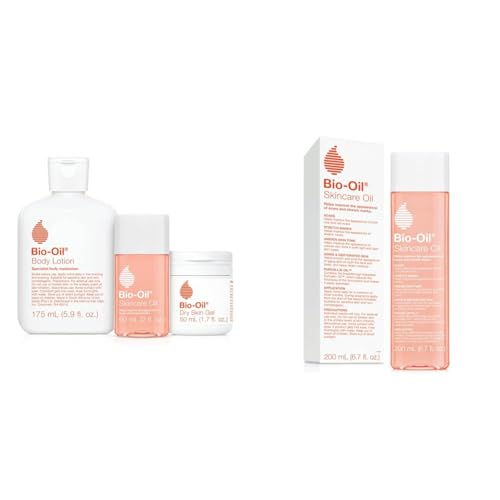
The original amber oil in the mid size bottle, which is the one most people picture. Choose it if you like the familiar scent, do not mind the fragrance, and want the widely stocked version you can replace anywhere.

The Natural Formula
Same idea, different panel: plant oils, no added fragrance, no retinyl palmitate. This is the one to pick if you have decided to avoid the retinoid family entirely or if perfume is the thing that puts you off oils.

The Small Bottle for Trying It
A small bottle is enough to find out whether you like an oil at all before committing to a large one. Given how far a few drops go, plenty of people never need to size up.
Who Should Choose Something Else
Anyone who wants a thick product that sits on the skin overnight will be happier with a cocoa or shea butter balm. Anyone avoiding fragrance and the retinoid family in one decision may find it simpler to buy a plain fragrance free butter rather than hunting the right Bio-Oil variant.
And anyone shopping because of what the box promises should read our belly butter guide instead, where the products are sorted by texture and scent rather than by claim.
Frequently Asked Questions
Can I use Bio-Oil while pregnant? Plenty of people do, and it is sold openly for that market. If you have decided to avoid the retinoid family, note that the standard formula lists retinyl palmitate and the Natural version does not, and take any specific concern to your midwife or OB-GYN.
What is the difference between Bio-Oil and Bio-Oil Natural? Different ingredient lists. The standard oil is built on mineral and plant oils with vitamin E, chamomile, lavender, retinyl palmitate and added fragrance. The Natural version uses plant oils such as rosehip and jojoba with no added fragrance.
Is it better than a belly butter? It is lighter, spreads further and absorbs faster, which makes it better for daytime and worse for overnight. Our oil versus butter comparison lays out which format suits which moment.
Will it help with an itchy bump? It moisturizes, and dryness is behind most ordinary bump itch. If the itching is intense, keeps you awake, or spreads beyond the bump, that is a call to your provider rather than a product question.
How long does a bottle last? Longer than people expect, because a few drops cover a large area. The small bottle is a reasonable way to find out whether you like the format before buying a big one.
Can I use it after the birth? It is an ordinary body oil and many people carry on with it. Keep oils off the chest area while nursing unless your lactation consultant or provider has said otherwise.
If you are weighing up any ingredient in either formula against your own pregnancy, ask your midwife, OB-GYN or dermatologist rather than a comment thread.
The Bottom Line
A light, fast absorbing body oil that is easy to apply and easy to find, sold in two genuinely different formulas. Buy it as a moisturizer, pick the panel you prefer, and treat everything on the box about marks as the manufacturer’s claim rather than ours. Read next: oil or butter and the four brands compared.