Last updated: August 23, 2026
It starts as a background nuisance and turns into the thing that wakes you at two in the morning. The skin across the bump feels tight and papery, the waistband of your leggings leaves a line that itches for an hour, and scratching makes it worse rather than better. Ask around and you will hear the same sentence: nobody warned me about this part.
Most of the time this is dry, stretched skin behaving the way dry, stretched skin behaves, and the fixes are boring and free before they are anything you buy. Some of the time it is not, and knowing where that line sits is more useful than any product on this page.
This article contains affiliate links. If you buy through them, we may earn a commission at no extra cost to you. Learn more.
Quick Answer
What helps an itchy belly during pregnancy?
- Start with the free changes: cooler showers, patting dry instead of rubbing, a cooler bedroom, loose cotton over the bump.
- Then a plain, thick, fragrance free moisturizer, applied while the skin is still slightly damp.
- Fragranced products are the most common thing people quietly react to, so unscented is the safer default.
- Intense itching, itching on the palms and soles, itching that keeps you awake, or a spreading rash is a call to your midwife or OB-GYN, not a shopping decision.
Bottom line: treat ordinary dryness with routine and moisturizer, and hand anything beyond ordinary to your provider.
What the Ordinary Version Feels Like
The common complaint is a tight, dry itch across the front of the bump, worse in the evening, worse in a heated or air conditioned room, and worse after a hot shower. It usually eases for a while after moisturizing and comes back when the skin dries out again. Skin that is being stretched simply loses water faster.
That pattern is what the rest of this page is about. Anything that does not follow it, especially itching without visible dryness or itching in places that are not stretching, belongs in the last section.
The Free Fixes to Try First
Before buying anything, change the routine that is drying your skin out. Long hot showers strip the surface, rubbing with a towel irritates it further, and a warm bedroom keeps the itch running all night. These four adjustments cost nothing and are what most people notice first.
Turn the shower temperature down and keep it short. Pat dry rather than rub. Moisturize while the skin is still slightly damp, which holds more water in than applying to bone dry skin. Sleep cooler and in something loose.
What Your Clothes Are Doing
A tight synthetic waistband sitting across the driest part of your skin is a reliable way to keep an itch going. Loose cotton over the bump, and a maternity waistband wide enough to spread pressure rather than cut a line, tends to make the evenings easier. Our guides to maternity pajamas and maternity leggings cover the fabrics and panels people find most comfortable.
The Products Worth Owning
Once the routine is sorted, the useful purchases are simple: something thick and unscented for the skin, and something soft and breathable to sleep in. That is genuinely the whole list. Nothing here is a remedy, and none of it is a substitute for the conversation in the final section.
A Thick, Fragrance Free Butter for Bedtime
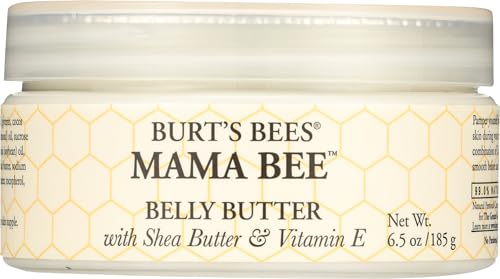
Heavier than a pump lotion and designed to stay on the skin overnight. The fragrance free version matters twice over here, once because perfume is a common irritant and once because a strong scent is unbearable if nausea is still hanging around. Burt’s Bees makes its belly butter as a fragrance free formula with shea, cocoa and jojoba butters.
A Plain Body Cream for the Rest of You
The itch rarely stays neatly on the bump, and a large tub of ordinary fragrance free cream is cheaper per ounce than anything sold as a pregnancy product. This is the one to keep by the shower for legs, hips and lower back.

Something Loose and Cotton to Sleep In
Breathable fabric with nothing tight across the belly makes a measurable difference to how much you notice the itch at night. A cotton nightgown or a soft maternity sleep set does the job, and both stay useful in the first weeks after birth.

What Each Change Actually Addresses
| Change | What it targets | Cost | When you notice it |
|---|---|---|---|
| Shorter, cooler showers | Surface drying out | Free | Same evening |
| Moisturize on damp skin | Water loss after washing | Free with product | Same day |
| Fragrance free formula | Perfume as an irritant | Similar to scented | Within days |
| Loose cotton at night | Friction and heat | Low | First night |
| Cooler bedroom | Heat driven itch | Free | First night |
The pattern is that the free changes act fastest and the products keep the effect going. Buying first and changing the routine second is the common mistake.
What Not to Do
Do not scratch with your nails, since broken skin itches more and takes longer to settle. Do not reach for a fragranced body scrub or an exfoliant on already irritated skin. And do not start a new active skincare ingredient on your bump without checking it first, which our page on pregnancy safe skincare ingredients covers.
Do not keep buying tubs, either. If three different products have made no difference, the answer is not a fourth product.
When It Is Not a Comfort Question Anymore
Some itching in pregnancy is a medical matter rather than a dryness matter, and it is not something to work out from a website. Two names come up often in searches, PUPPP and cholestasis of pregnancy, and both are conditions that a clinician diagnoses. We are not going to describe how to tell them apart, because that is exactly the job of your midwife or OB-GYN.
Contact your provider if the itching is intense, if it keeps you awake, if it is on your palms or the soles of your feet, if there is a rash spreading beyond the bump, or if anything about it worries you. Getting it checked costs a phone call.
Frequently Asked Questions
Is an itchy belly normal in pregnancy? Dry, tight, mildly itchy skin over a growing bump is extremely common and usually behaves like ordinary dry skin. Itching that is severe, that keeps you awake, or that appears on the palms and soles is the version to ask your provider about.
Does belly butter stop the itch? It addresses dryness, which is what is behind most of the ordinary version, and many people find the relief lasts a few hours. It is a moisturizer rather than a remedy, and it does nothing for itching that is not caused by dry skin.
Why is it worse at night? Warmth, fewer distractions and skin that has dried out over the course of the day all stack up in the evening. A cooler bedroom, loose cotton and moisturizing right before bed are what most people find helps.
Can I use anti itch cream from the drugstore? Ask your midwife or OB-GYN before applying any medicated product during pregnancy, including the ones sold over the counter. Plain moisturizer is the part you can decide on your own.
Will it stop after the birth? Skin that was itching because it was stretched generally settles once it is no longer being stretched. If itching continues after birth, mention it at your postpartum check.
If the itch is more than ordinary dryness, or if you are simply not sure, call your midwife or OB-GYN rather than trying another product.
The Bottom Line
Cooler showers, damp skin moisturizing, unscented products and loose cotton solve most ordinary bump itch, and a thick fragrance free butter is the only purchase most people need. Anything beyond ordinary belongs with your provider. Read next: which belly butter to buy and what to leave off your skin.