Last updated: August 23, 2026
Sleep is already broken by the time pajamas become a shopping problem. You are up twice a night, you are warmer than you have ever been, and the shirt you have worn to bed for years now ends somewhere above the bump. Buying maternity pajamas feels like a small purchase until you realize how many hours you spend in them.
The decision that actually matters is not the print. It is whether the set opens for feeding, how it handles heat, and what size it will be after the birth, when your body is somewhere between where it was and where it is going. Buy for that middle period and one set does the work of three.
This article contains affiliate links. If you buy through them, we may earn a commission at no extra cost to you. Learn more.
Quick Answer
Which maternity pajamas should you buy?
- Buy nursing access even if you are unsure about feeding plans, since a button or crossover front is useful for skin to skin and for night checks either way.
- Go lighter than feels right. Overheating at night is the complaint that comes up most, and it gets worse in the first weeks after the birth.
- Choose a set that will fit a softer, changed middle afterward. Elastic waists that sit high and loose beat anything fitted.
- Two sets is the honest number. One in the wash, one on you, and pajamas get washed more often than you expect.
Bottom line: light fabric, a front that opens, and a waistband that does not care what size you are this week.
What Makes a Pajama Set Maternity
Three things separate a maternity set from a large regular one: a top cut long enough to still cover the bump, a waistband that either sits above it or under it without digging, and a front that opens for feeding. Extra length in the top is the detail people miss and then miss badly.
Everything else is comfort preference. There is no technical reason a well chosen regular set cannot work, and many people get through the first two trimesters in exactly that. The maternity cut earns its money in the last stretch and in the weeks right after.
Nursing Access: Buttons, Crossover, or Drop Cup
A button front is the most flexible option because it opens as far as you want and doubles as a normal shirt. A crossover or wrap front pulls aside quickly in the dark, which matters at three in the morning. Drop cup tops are the most discreet and the fiddliest to work one handed.
If you are not sure whether you will be breastfeeding, buy the access anyway. Buttons are useful for skin to skin, for checks by a nurse, and for anyone who runs hot, and they cost nothing extra. Our nursing tops guide covers the same mechanisms in daywear.
The One Handed Test
Owners consistently mention doing everything with one arm occupied. Try opening the front with one hand before you commit to a style. Small slippery buttons and stiff new fabric are much harder in the dark than they look on the hanger, and a snap front is easier than a button front for most people.

Fabric and the Overheating Problem
Pregnancy runs warm, and the nights after the birth run warmer still. That makes fabric the single biggest satisfaction factor. Light cotton jersey, modal, and bamboo derived viscose all breathe well. Fleece and heavy brushed knits look cozy in photos and turn into a problem by two in the morning.
Night sweats are common in the first weeks and they soak whatever you are wearing, so a set you can wash often and dry fast is worth more than a luxurious one you have to baby. If yours is a winter baby, layer a robe over a light set rather than buying a heavy one.
Sizing for the Body You Will Have Afterward
Buy your usual size in maternity pajamas. Maternity sizing already builds in the room, and going up a size mostly produces a set that falls off your shoulders. The exception is the bottoms, where a high loose elastic waist is worth more than a precise fit.
The afterward question is the one people get wrong. Your middle stays soft for a while, and anything with a fitted waistband or a tie that sits at the natural waist becomes unwearable. A waistband you can wear high, over the belly, or folded down is the one that survives.
Maternity Pajamas by Situation
If You Want One Set to Do Everything
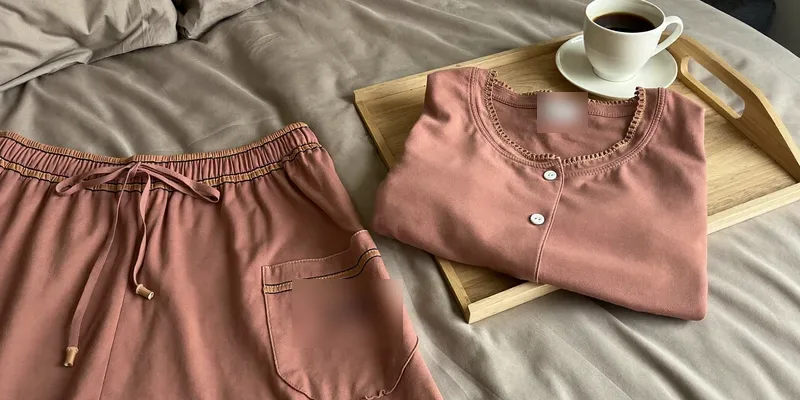
A short sleeve button front top with long loose bottoms covers most of the year, opens for feeding, and looks enough like normal clothes that you can answer the door in it. This is the set most people wear until it wears out.

If You Overheat at Night
A bamboo derived or modal set moves moisture better than cotton and feels cool to the touch, which is the difference between waking up damp and staying asleep. Shorts sets in the same fabrics are the summer version.

If You Are Shopping for Winter
A long sleeve set in a light knit plus a separate robe beats one heavy set, because you can shed the top layer at night and keep it for the hallway. Look for cuffs that push up easily.

If You Want Shorts and a Longer Top
Shorts sets with a tunic length top solve the summer problem without leaving the bump uncovered. Check the inseam in the listing, since maternity shorts are often cut shorter than the photo suggests.

The Four Options Compared
| Option | Access | Fabric feel | Suits |
|---|---|---|---|
| Short sleeve button set | Full front opening | Cotton jersey, mid weight | Year round, one set does most |
| Bamboo or modal set | Crossover or buttons | Cool, moisture moving | Anyone who sleeps hot |
| Long sleeve set plus robe | Buttons, pushable cuffs | Light knit, layered | Winter and cold bedrooms |
| Shorts and tunic top | Buttons or drop cup | Lightest option | Summer and late pregnancy heat |
Whatever the row, check the top length in the size chart rather than the photo, since a short hem is the fault that cannot be fixed.
What Owners Complain About
The top is too short is the first complaint, and it appears even in sets marketed as maternity. Late in pregnancy the bump takes length out of the front hem, so a top that just covered you in month five rides up in month eight. Buy for the longest hem the size chart offers.
The second is a waistband that digs in. Narrow elastic under a bump becomes uncomfortable quickly, and it is worse again over a C-section incision. A wide soft band that can be worn high or folded is what owners describe keeping. If a hospital stay is what you are shopping for, our hospital pajamas guide has a different set of priorities.
Frequently Asked Questions
Do I need maternity pajamas at all? Not strictly. Plenty of people get by with an oversized shirt and soft shorts. The maternity version earns its place in the last trimester, when a regular top stops covering the bump, and afterward if you want a front that opens.
Will they still fit after the birth? If you buy a high loose elastic waist and a longer top, yes, and most people wear the same sets for months afterward. Fitted waistbands and drawstrings at the natural waist are the ones that get abandoned.
Should I size up? Usually no. Maternity sizing already includes the extra room, and sizing up mostly gives you a sloppy shoulder and a neckline that gapes. If you are between sizes, take the larger one in the bottoms only.
Are nursing pajamas worth it if I am not sure about breastfeeding? Yes, because a front that opens is useful regardless: skin to skin, checks in the hospital, and simply cooling down. It is not a commitment to anything.
What fabric is best if I sweat at night? Bamboo derived viscose and modal are what people who run hot tend to settle on, with light cotton close behind. Avoid fleece and heavy brushed knits even in winter, since a robe is easier to take off than a pajama top.
How many sets do I need? Two. Sleepwear gets washed a lot in the early weeks, and a third set usually sits in the drawer. Spend the difference on better fabric rather than more sets.
The Bottom Line
Light fabric, a longer top, a front that opens, and a waistband that does not care what week it is. Get two sets in that description and skip the rest. Read next: nursing nightgowns if a two piece set is not your thing, and what you actually need in maternity clothes before the cart grows.