
Last updated: August 23, 2026
Shopping for a plus size nursing bra means running into the same wall twice. First the range stops at a size that is not yours, and then the one style that does go far enough turns out to be a shapeless tube in a single beige. Neither of those is a fitting problem. It is a stocking problem.
The good news is that the ranges have widened considerably, and the useful ones publish band and cup sizes separately instead of hiding everything behind an XXL label. Knowing which numbers to look for, and which part of the bra will actually fail you, makes the search much shorter.
This article contains affiliate links. If you buy through them, we may earn a commission at no extra cost to you. Learn more.
Quick Answer
What should you look for in a plus size nursing bra?
- Band size first: check where the range actually stops before you look at anything else.
- Several rows of hook and eye, so the band can follow you as your ribcage changes.
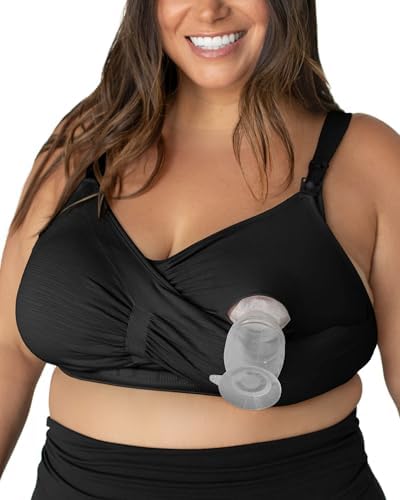
- Wide straps and structured side panels, not spaghetti straps on a stretch tube.
- Ranges that publish band plus cup beat ranges that only offer S to XXL.
Bottom line: buy on band size and closure rows, and treat lettered sizing as a warning sign.
Band Size Is the Real Constraint
Cup size and body size are two different problems and the internet keeps mixing them up. A plus size shopper may or may not need a large cup, but almost always needs a band that fits comfortably around a larger ribcage, with enough closure adjustment to handle the changes that come with pregnancy and after birth.
Start by finding where each range stops. Brands built for a wider span publish band sizes explicitly, and some extend the band well beyond what the mainstream multipacks offer. If a listing only tells you S through XXL, it has averaged the band and the cup together, which is exactly the shortcut that produces a bad fit.
Closures, Rows and Extenders
A band that fits today may not fit next month, and the number of hook and eye rows determines whether the same bra can follow you. Three rows is the useful minimum. Two rows on a firm band gives you almost no room, and a fully stretchy band with no hooks gives you room but no support.
Extenders are the cheap fix and they are a legitimate one. A set of hook and eye extenders adds width to a band you otherwise like, and they cost almost nothing next to buying another bra. They will not fix a cup that is wrong, only a band that is close.

Where the Band Digs
Digging at the underband usually means the band is too narrow rather than too small. A wider band spreads the same tension over more skin, which is why plus size ranges build wider underbands rather than just longer ones. Momcozy, for example, describes its plus size bras as using wider bands and reinforced support zones in place of underwires.

Straps and Side Panels
Thin straps concentrate weight on a small area of shoulder, and the wider the band and cup, the more that shows up by evening. Wide, adjustable, cushioned straps are worth prioritizing over almost every other comfort feature, and they are one of the clearest signals that a bra was designed rather than scaled up.
Side panels matter for the same reason. A tall panel under the arm keeps everything contained and stops the band riding up at the back, which is the most common complaint when a bra is nearly right but not quite. Flat panels made of a single stretch layer will not do it.
Where the Multipacks Stop
Seamless multipacks now run further up the size range than they used to, and several publish charts covering larger band and cup combinations. That makes them a reasonable buy for home wear and for nights, which is the same conclusion this category reaches at every size.
What they still cannot do is give real support at the top of their range, because a stretch band has nothing to anchor against. If your daytime complaint is that nothing holds, more stretch is not the answer, and our article on the support problem above a D cup covers why.

The Options Compared
| Option | Sizing published as | Band and closure | Best for |
|---|---|---|---|
| Extended band ranges | Band plus cup | Wide band, several hook rows | Daytime, out of the house |
| Plus size seamless | Lettered with a size chart | Stretch band, no hooks | Home, nights, early weeks |
| Plus size sleep bra | Lettered | Soft wide underband | Sleeping and leaking |
| Standard bra plus extenders | Whatever you already own | Adds band width only | Stretching a bra you like |
The bottom row is the cheapest experiment in this whole category and it is worth trying before you replace a bra that fits everywhere except the band.
Buying Around a Changing Body
Your ribcage and cup size both move, at different times and by different amounts. Buying several expensive bras before birth is how people end up with a drawer of near misses. Buying soft and cheap early, then one well fitted bra once things settle, wastes far less.
When you do buy the good one, buy it with the loosest hook row fastened, so there is somewhere to go as the band settles. Our guides to measuring and when to buy cover the sequence in more detail.
Frequently Asked Questions
Is plus size the same as large bust? No, and confusing the two is why so many recommendations miss. Plus size is mainly about band and body size, large bust is about cup volume, and plenty of people need one without the other. Our large bust guide covers the cup side.
Which brands go furthest? The ones that publish band and cup sizes separately rather than selling S to XXL. Kindred Bravely publishes extended band ranges, and several mainstream brands now run plus size lines with wider bands.
Do extenders really work? For a band that is close but tight, yes, and they cost a fraction of a new bra. They do nothing for a cup that is the wrong size or a strap that digs.
Should I size up? In stretch fabrics, generally yes. In structured bras with hook rows, buy the band that fits on the loosest row instead, so the bra can tighten as you change rather than only loosen.
Why does the band ride up at the back? Usually because the band is too loose or the side panels are too short, so the weight pulls the front down and the back up. A firmer band with taller panels fixes it more reliably than tightening the straps.
Is there anything decent that is not beige? More than there used to be, though the range narrows as sizes go up. Sleep bras and seamless styles offer the most color, structured bras the least.
Fit advice here is about garments. If a bra is leaving sore areas, if feeding is uncomfortable, or if something feels wrong rather than badly fitted, speak to a lactation consultant or your midwife.
The Bottom Line
Shop on band size and closure rows first, take wide straps and tall side panels seriously, and treat S to XXL sizing as a sign the maker has not really designed for you. Cheap and soft for home, one properly fitted bra for the days out, and extenders for the one you already like. Read next: the full nursing bra guide and the support problem above a D cup.