Last updated: August 23, 2026
Nobody has an opinion about maternity pads until the week they need them, at which point everybody has one. The two facts worth knowing before that week are that the hospital will hand you a supply and that regular period pads are not really the same product, whatever the aisle layout suggests.
Bleeding after birth, which you will see called lochia on discharge sheets, is heavier at first and changes over time, and the practical result is a stack of laundry decisions rather than a shopping problem. This guide covers what to buy, the difference between maternity pads and everything else, and how the pads and the briefs work together instead of separately.
This article contains affiliate links. If you buy through them, we may earn a commission at no extra cost to you. Learn more.
Quick Answer
What pads and briefs do you actually need?
- Long, thick maternity pads for the start, not slim period pads with wings.
- High waisted briefs that hold a pad flat, since a pad only works if it stays put.
- Lighter pads and liners for later, because the heaviest ones become uncomfortable once they are overkill.
- Ask the ward what it supplies before you order a case of anything.
Bottom line: buy heavy first, light second, and buy the briefs at the same time. Anything about how much bleeding is normal for you goes to your midwife or doctor.
Maternity Pads Are Not Period Pads
Maternity pads are longer, thicker, softer on the top sheet and usually have no wings. That combination is deliberate: more length and volume for the heaviest days, and a gentler surface for skin that may be sore. Regular pads are designed to be discreet, which is the wrong priority here.
Plenty of people do use ordinary overnight pads and get on fine, particularly later on. The difference matters most in the first days, when volume is the whole point and a slim pad simply is not enough of a pad.
Absorbency, Length and the Top Sheet
Three specifications decide whether a pad works: how much it holds, how long it is, and what its surface feels like. Length is the one people overlook. A short pad in a high waisted brief leaves gaps at both ends and moves when you do, which is what causes most of the problems people blame on absorbency.
The top sheet is the comfort variable. A soft cotton feel top sheet sits quietly; a plastic feeling dry weave one can be scratchy and hot. Reviewers mention this far more than they mention capacity, which tells you which one actually gets noticed hour to hour.
Best for the heaviest days
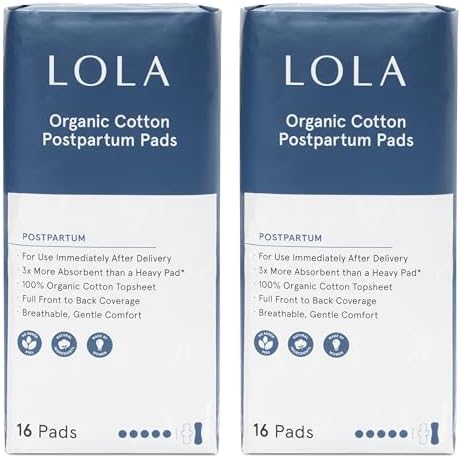
Long, thick maternity pads with a soft top sheet handle the start of the period when volume matters more than anything else. Buy these first and buy more of them than the lighter ones.
The Briefs Are Half the System
A pad without a brief that holds it flat is a pad that folds. This is why the hospital mesh works so well despite looking like nothing: it is high, wide and snug across the whole area, so the pad has nowhere to travel. A low rise brief with narrow gussets does the opposite.
The pairing to aim for is a long pad in a high waisted brief with a full cut back. Buy them together rather than solving one problem and discovering the other. Our postpartum underwear guide goes through the three types of brief in detail.
Best if you want the pad to stay where you put it
Disposable mesh briefs are the hospital solution in a pack: high, stretchy and wide enough to hold a long pad flat. Ask the ward for extras before ordering, then top up if you run short.

Later On, Lighter Is Better
The mistake in the second half of this period is staying on the heavy pads too long out of caution. Once the volume has dropped, a thick pad is warm, bulky and less comfortable than a thinner one, and people usually switch a few days after they should have.
Buying a mixed supply avoids the awkward trip to the store. A pack of heavy pads, a pack of regular ones and a pack of liners covers the whole stretch, and anything left over gets used eventually.
Best for the second half
Regular maternity pads or overnight pads without wings take over once the heaviest days are past, and they are much more comfortable to sit and sleep in.

Reusable Cloth Pads
Cloth pads exist for this period too, and the people who like them really like them: soft, breathable, no plastic feel, and nothing to buy again. The catch is obvious, which is that they need washing at a moment when the laundry situation is already out of hand.
The households that make it work tend to have a large stack, a bucket and someone else doing the washing. As a partial solution, a few cloth pads for the calmer end of the period alongside disposables for the start is the more realistic version.
Best if you would rather wash than throw away
Reusable cloth pads in a heavy absorbency, bought in a large enough set to survive a slow laundry week, suit people who already use cloth and know what they are taking on.

What to Buy, in Order
| Item | When it gets used | Buy how | Watch out for |
|---|---|---|---|
| Long heavy maternity pads | The first days | Several packs | Length, not just absorbency |
| High waisted or mesh briefs | Throughout | Packs, sized up | Low rise cuts that let pads fold |
| Regular pads and liners | Later on | One or two packs | Wings and plastic top sheets |
| Reusable cloth pads | Optional, calmer days | A large set or none | The laundry reality |
The hospital covers the beginning of the first row for most people, so ask before you order in bulk.
What Owners Complain About
Bunching is the complaint that comes up everywhere, and it is nearly always a brief problem rather than a pad problem. A pad that folds down the middle has been squeezed by underwear that is too narrow or too low, and switching briefs fixes what switching pad brands does not.
The other is the noise and feel of plastic backed pads. In a quiet house at night, a crinkly pad is genuinely irritating, and the softer cotton feel versions are what reviewers recommend to each other for that reason as much as for comfort.
The Case Bought in Advance
Ordering a huge supply before the birth is the classic overbuy here. The hospital gives you a stack, everyone’s needs differ, and the store is still open next week. Our honest essentials list covers the rest of the things that stay in the packet.
Frequently Asked Questions
How many pads should I buy? Enough that you are not counting, and no more, because the hospital supplies the start and needs vary hugely. Two or three packs of heavy plus a pack of lighter ones is a sensible starting order rather than a rule.
Can I use tampons instead? No. Pads are what is used after birth, and anything internal is a question for your midwife or doctor, who will tell you when and whether that changes.
Can I use regular overnight pads? Later on, comfortably. At the start, maternity pads are longer and thicker for a reason, and most people who try to make slim pads work switch within a day.
Do I need pads after a C-section? Yes, bleeding happens after either kind of birth. What differs is the underwear and the waistband height, which is covered in our comparison of the two lists.
What goes with them in the bathroom? A peri bottle and cold packs, usually in the same basket. See our guides to the peri bottle and perineal ice packs.
When to Ask a Professional Instead
How much bleeding is expected, what a change in it means, and anything involving clots, a smell, a fever or pain that is getting worse are questions for your midwife, your OB-GYN or your doctor, and they are worth asking the same day rather than the next week. No pad choice has any bearing on any of that.
The Bottom Line
Buy long, thick, soft topped maternity pads for the start and lighter ones for afterwards, and buy the high waisted briefs at the same time, because the two only work as a pair. Take everything the hospital offers and top up rather than stockpiling in advance. Read next: which postpartum underwear to buy, and the full recovery kit.