Last updated: August 23, 2026
Almost nobody puts a peri bottle on a registry, and almost everybody who has used one talks about it afterwards. It is a small squeeze bottle of warm water for the bathroom, and in the first days after a vaginal birth it turns the least appealing errand of the day into something manageable. The hospital usually hands one over. Whether that one is any good is the question that sends people to a search box at two in the morning.
The choice is narrower than it looks. There is the flat clinic bottle with a straight spout, and there is the angled bottle you can hold upside down without soaking your wrist. Everything else is packaging. This guide goes through the difference, the details that decide whether a bottle gets used or abandoned on the cistern, and which shape suits which bathroom.
This article contains affiliate links. If you buy through them, we may earn a commission at no extra cost to you. Learn more.
Quick Answer
Which peri bottle should you pack?
- An angled neck if you want to hold the bottle upside down without twisting your wrist or leaning forward.
- The straight clinic bottle if you want a spare, a second bathroom, or a backup that costs almost nothing.
- A wide fill opening, because filling at a bathroom faucet with one hand is the part people underestimate.
- A case or a bag if it travels to the hospital and back, since a wet bottle in a packed bag is nobody’s idea of a good time.
Bottom line: buy the angled one, keep the hospital one as a spare, and pack both in the bathroom bag. Anything about stitches, pain or how your recovery is going belongs with your midwife or doctor.
What a Peri Bottle Is For
A peri bottle is a squeeze bottle you fill with warm water and use to rinse the perineal area while you are on the toilet, instead of wiping. That is the whole job. It is standard issue on postpartum wards in the United States, it is used after a vaginal birth and often after a C-section as well, and it stays useful for as long as sitting down still requires thought.
What it is not is a medical device or a treatment for anything. It is a comfort item that replaces toilet paper at a moment when toilet paper is unappealing. Everything about stitches, tearing, healing or pain goes to the person who examined you, not to a product page.
Angled Neck or Straight Spout
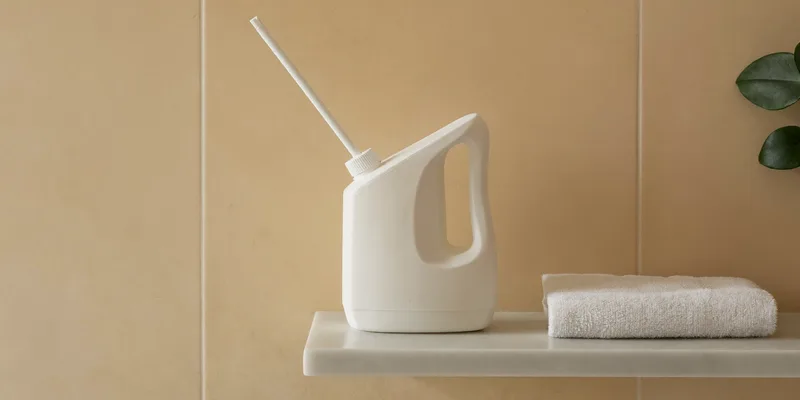
The angled bottle has a neck that bends back on itself so the nozzle points where you need it while the bottle is held upside down. The straight bottle points wherever the bottle points, which means reaching further, leaning forward, and often getting a wet forearm. That single design difference is why one of these costs a few times what the other does.
Owner feedback on this is unusually consistent. People who used the flat clinic bottle first and then bought an angled one describe the change in terms of not having to lean, and leaning is the movement that is uncomfortable in that first week. People who only ever used the straight bottle usually managed fine, but rarely enthusiastically.
Where the Straight Bottle Still Wins
It is flat, it stacks, it costs almost nothing, and hospitals give them away. As a second bottle for a downstairs bathroom, or as the one that lives in the hospital bag so the good one stays home, it does the job perfectly well. Plenty of households end up with one of each without ever planning to.

The Details That Decide Whether It Gets Used
Three things separate a bottle that stays in rotation from one that ends up under the sink: the size of the fill opening, the stability of the base, and the firmness of the bottle wall. A narrow opening means a slow fill at an awkward faucet. A rounded base means it tips. A stiff bottle needs a strong squeeze, and strong squeezing is not what tired hands are best at.
Capacity matters less than people expect. A larger bottle means fewer refills but a heavier thing to hold at arm’s length, and a warm refill is not much of a hardship when the sink is a step away. Most people settle on something that fits one hand comfortably rather than the biggest bottle available.
Best if you want one bottle that does everything well
A full size angled bottle with a wide mouth and a soft squeeze body covers the whole job: easy to fill, easy to aim, easy to empty without a strong grip. This is the version most people mean when they say the peri bottle was the best thing they packed.

Travel Size and the Second Bathroom
A peri bottle is only useful in the bathroom you are actually in. Households with a bathroom on each floor almost always end up with two, and people who go back to work or leave the house early want something that closes and fits in a bag without leaking on everything else.
Collapsible and travel versions solve that, at the cost of a smaller capacity and a slightly fiddlier fill. They also come with a case or a pouch more often, which is the actual reason to buy one. A wet bottle loose in a bag is a small misery that repeats.
Best if it needs to go in a bag
A compact or collapsible bottle with a closing cap and a pouch travels without soaking the rest of the bag, and it is the one that ends up in the car and the diaper bag rather than on the cistern at home.
The Two Shapes Compared
| Option | How you hold it | Fill and grip | Suits |
|---|---|---|---|
| Angled neck bottle | Upside down, no reaching | Wide mouth, soft squeeze | The main bottle for the first weeks |
| Straight clinic bottle | Tilted, more reaching | Narrow neck, firmer wall | Spare, second bathroom, hospital bag |
| Travel or collapsible | Upside down, smaller volume | Cap and pouch, more refills | Bags, cars, going back out |
| Two bottle setup | Whichever room you are in | One good, one spare | Houses with more than one bathroom |
None of these changes anything about your recovery. They change how far you have to lean while you use warm water instead of paper.
What Owners Complain About
The most common complaint has nothing to do with the bottle and everything to do with water temperature: too hot is unpleasant and too cold is worse, and a bathroom faucet that swings between the two makes the whole exercise a lottery. People solve it by filling in the sink and testing on a wrist before sitting down, exactly the way you would test a bath.
The second complaint is mold in the neck of bottles that never dry out. Bottles with a removable nozzle or a wide opening dry properly; sealed narrow necks do not. Empty it, shake it, and leave it open rather than capped between uses.
The One That Gets Left Behind
Reviewers regularly mention buying a peri bottle, packing it, and then using the hospital’s because theirs was still in the bag in the trunk. If yours is going to the hospital, it goes in the small bathroom bag with the toothbrush, not in the main case. Our hospital bag checklist puts it in the right pocket.
Frequently Asked Questions
Doesn’t the hospital give you one? In the United States, usually yes, and it is normally the flat straight bottle. Most people who buy an angled one still take the hospital bottle home and use it as the spare. Ask your hospital what they provide if you would rather not duplicate.
How long do people keep using it? As long as it is more comfortable than paper, which varies a lot from person to person. There is no fixed point, and how your own recovery is going is a question for your midwife or doctor rather than for a buying guide.
Can I use it after a C-section? People do, and it is a common item in a C-section bathroom bag too. Whether it suits your situation is worth asking on the ward. Our C-section hospital bag guide covers what else changes.
Should I put anything in the water? Warm water on its own is what most people use. Anything you are thinking of adding is a question for your midwife or doctor first, since that is a care decision and not a shopping one.
Is it worth having two? If you have more than one bathroom, yes, and it is the cheapest upgrade in the whole postpartum kit. One stays upstairs, one goes wherever you are.
What else belongs next to it? Most people keep pads, briefs and a cold pack in the same basket. The full list is in our postpartum recovery kit guide.
When to Ask a Professional Instead
A peri bottle is a comfort item, and comfort items have a hard boundary. Anything to do with stitches, tearing, bleeding that changes, a smell, a fever, or pain that is getting worse rather than better is a call to your midwife, your OB-GYN or your doctor, and it is a call worth making early rather than late. Nothing on this page is a substitute for that conversation, and no bottle changes what is going on underneath.
The Bottom Line
Buy the angled bottle, keep the hospital one as a spare, and choose the version with the widest fill opening you can find. It is a small purchase that gets used more times a day than almost anything else in the recovery basket, and the only real upgrade over the free one is not having to lean. Read next: what goes in a postpartum recovery kit, and which postpartum underwear to buy.