
Last updated: August 23, 2026
These two books get recommended in the same breath and they are not the same kind of object at all. One is a collection of birth stories followed by a manifesto, written by a midwife who spent decades attending births in one community. The other is a modern, heavily illustrated guide organized around the choices you may be offered, written by a journalist and birth campaigner.
Pick the wrong one and you will not finish it. People who want options presented neutrally find the first one preachy, and people who want inspiration and a sense of what birth can feel like find the second one flat. This page describes what each book argues and how it is put together, so you can tell in advance which reaction is going to be yours.
This article contains affiliate links. If you buy through them, we may earn a commission at no extra cost to you. Learn more.
Quick Answer
Ina May’s Guide or The Positive Birth Book, which one fits you?
- Ina May Gaskin’s book if you want birth stories and a strong case for physiological birth, and you are already drawn to that route.
- The Positive Birth Book if you want your options laid out, including a C-section, without a house position.
- Ina May is text heavy and story led. Milli Hill’s book is illustrated and easy to dip into.
- Neither is a substitute for the conversation with your midwife or OB-GYN about your own birth.
Bottom line: a manifesto with stories versus a map of the choices. Both are well loved, for opposite reasons.
What Each Book Argues
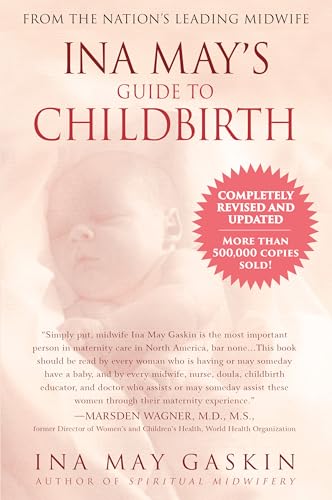
Gaskin’s Guide to Childbirth argues that birth is a physiological process that tends to go better when a woman is undisturbed, supported and not frightened, and that much of what is routine in hospital settings works against that. She sets out her reasoning as a midwife with long experience in one community.
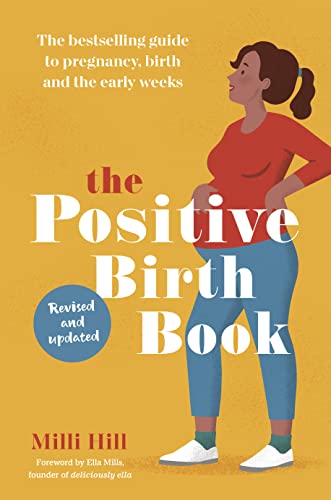
Milli Hill’s The Positive Birth Book argues something narrower: that a positive birth is one where you understood the choices and were involved in them, whatever route the day took. It covers home birth, hospital birth and C-sections with the same seriousness, which is the reason it travels well.
The Structure Difference You Will Feel Immediately
Ina May’s book opens with roughly half its length in birth stories, told by the women themselves. That is either the best part of the book or the part you skip, and readers split cleanly. The second half sets out her practical view of what supports a labor.
The Positive Birth Book is built to be dipped into. Illustrations, boxes, diagrams and short sections, with a chapter structure that follows the decisions rather than a narrative. If you are reading in ten minute chunks in the third trimester, that format is much easier to keep up with.
Which Format Survives a Tired Reader
Most people are choosing a birth book late, when reading energy is low. The illustrated one usually wins on that criterion alone. The story led one wins if what you actually want is not information but a different picture of what the day could be like.
How Each Handles a C-Section
This is the sharpest practical difference. The Positive Birth Book gives a C-section real space and treats it as a birth with its own choices, which is why readers with planned surgery so often name it as the book that did not make them feel written off.
Ina May’s book is focused on physiological birth, and readers who end up with a C-section or an epidural sometimes report feeling judged by its framing. That is the reaction, honestly reported, rather than a claim about the author’s intent. If a surgical birth is likely in your case, that is worth knowing before you buy, and our C-section hospital bag guide covers the practical preparation.
Who Each Book Is Written To
Gaskin writes to a reader who is already interested in unmedicated birth and wants depth, conviction and the experience of a midwife. It is the reference point in that conversation, which is why it gets recommended even by people who disagree with parts of it.
Hill writes to a reader who has not decided, or whose plan may change, and who wants to walk into the room knowing what the words mean. That makes it the easier recommendation for a first pregnancy and the safer gift for someone whose views you do not know.
Side by Side
| Feature | Ina May’s Guide | The Positive Birth Book | Which matters |
|---|---|---|---|
| Position | Strong case for physiological birth | Choice led, no single route favored | Whether you have decided |
| Format | Stories plus text | Illustrated, boxes, dip in | Reading energy in month eight |
| C-section coverage | Limited | Substantial | Likelihood of surgery |
| Best used as | Inspiration and depth | A map of the decisions | What you want from a birth book |
This describes each author’s approach and how the books are built. We are not endorsing either set of claims, and what applies to your birth is a conversation with your midwife or OB-GYN.
Reading Either One Without Setting Yourself Up
A birth book can quietly turn into a performance standard. If you finish one convinced there is a right way to do this and a wrong way, that is a sign to put it down and read the partner book instead, which is about what happens rather than what it should mean.
Both authors would agree on one thing worth carrying: knowing the vocabulary in advance changes how the conversations go on the day. Take the questions the book raises to your midwife or OB-GYN, who can tell you what applies to you. Our childbirth books guide covers the neutral handbooks if neither of these fits.
Frequently Asked Questions
Can I read both? Plenty of people do, usually the illustrated one first for the map and the story led one afterward for the perspective. Reading them in the other order tends to produce disappointment with the second.
Is Ina May’s book only for home birth? No, but the framing is built around undisturbed physiological birth, and readers planning a hospital birth with pain relief often find parts of it unsympathetic to their plan.
Which is the better gift? The Positive Birth Book, unless you know the recipient is already committed to an unmedicated birth. A book with a position is a strong thing to hand someone unasked.
Are they useful for a second birth? The illustrated one less so, since the vocabulary is familiar. The story led one is often reread, which says something about what people actually get from it.
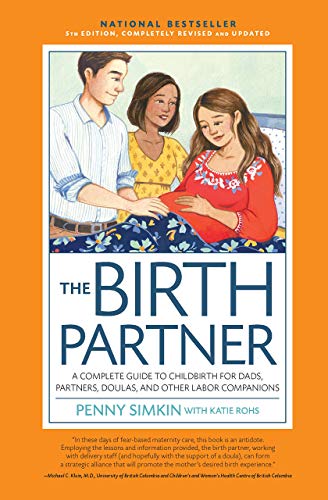
What should my partner read? Neither, at least not first. A dedicated partner book is written for the support role and is the one that gets used in the room. Our books for partners guide covers them.
The Bottom Line
Ina May Gaskin’s book is a manifesto with stories, for a reader already drawn to physiological birth. The Positive Birth Book is a map of the choices, for a reader who has not decided or whose plan may change. Read next: our childbirth books guide for the neutral handbooks, and hypnobirthing books if the relaxation approach is what interests you.