
Last updated: August 23, 2026
Somewhere around month seven the reading changes. Pregnancy stops being the subject and birth becomes the subject, and the shelf of books on offer turns out to be much more opinionated than the pregnancy shelf was. Some of them are calm handbooks. Some of them are arguments. A few are arguments dressed as handbooks.
That is the thing to sort out before you buy, because a birth book you disagree with on page ten does not get finished, and a birth book that matches how you want to approach the day gets read twice. What follows sorts the main titles by approach and tone rather than by ranking, since the right one depends entirely on the kind of reader and the kind of birth you are preparing for.
This article contains affiliate links. If you buy through them, we may earn a commission at no extra cost to you. Learn more.
Quick Answer
Which childbirth book should you read?
- Want a neutral handbook that covers every route through the day: a general birth reference written for both hospital and home.
- Want the physiological, unmedicated approach described in detail: Ina May Gaskin is the reference point people mean.
- Want options laid out without a house style: Milli Hill’s book is built around choices rather than a philosophy.
- Buying for the support person: get the partner book, not a second copy of yours.
Bottom line: pick by approach first and length second. What the book believes matters more than how highly it is rated.
What a Childbirth Book Is Actually For
A birth book does three things: it describes how labor tends to unfold, it names the choices you may be offered, and it gives the person supporting you something to do. What it cannot do is tell you how your own birth will go, and the better books say so early. Treat any book that promises a particular outcome with suspicion.
The practical value is vocabulary. Walking into a birth room already knowing what the words mean, and having thought about your preferences in advance, is most of what preparation buys you. Anything your book raises that sounds relevant to your situation belongs in a conversation with your midwife or OB-GYN, not in a decision you make alone at eleven at night.
The Four Approaches, and How to Tell Them Apart
Birth books cluster into four camps. Neutral handbooks describe every route and pick none. Physiological birth books focus on unmedicated labor and the conditions the authors say support it. Choice led books lay out the options and hand you the pen. Partner books are written for whoever is holding the water bottle.
You can identify the camp in about two minutes in the store. Read the contents page and the first three pages of the introduction. If the introduction argues, it is a book with a position. If it explains how to use the book, it is a handbook.
Why the Camp Matters More Than the Rating
Ratings on birth books measure agreement, not usefulness. A book with a strong position collects glowing reviews from readers who share it and frustrated ones from readers who do not, and the average tells you nothing. Reading the one star reviews is a faster way to work out what a birth book actually claims than reading the blurb.
The General Handbook: One Book That Covers Everything
If you want a single book that explains the stages, the common interventions, the pain relief options and what a C-section involves, without steering you toward one of them, a general handbook is the pick. These are usually thick, plainly written, and organized so you can find a section rather than read straight through.
This is also the right choice if you do not yet know what kind of birth you are planning, or if your plan may change for medical reasons. A book that only covers one route becomes useless on the day it stops applying, which is a bad thing to discover in the third trimester.
The Physiological Birth Books
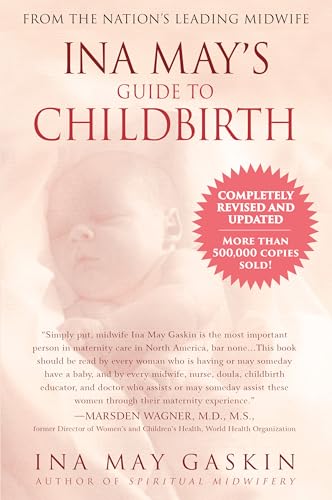
Ina May Gaskin’s Guide to Childbirth is the anchor title in this camp and probably the most quoted birth book in English. Roughly the first half is birth stories collected from the community where she worked as a midwife, and the second half sets out her view of what helps a labor progress. The stories are the reason people love it.
Understand what you are buying. Gaskin writes from a strong position about unmedicated birth, and readers who end up with an epidural or a C-section sometimes report feeling judged by the framing. We describe what the author argues without endorsing it, and what applies to you is a question for your own midwife or OB-GYN. Our comparison of Ina May and The Positive Birth Book sets the two side by side.
The Choice Led Books
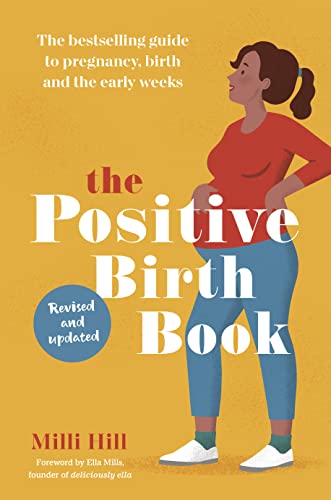
The newer generation of birth books is organized around decisions rather than around a philosophy. Milli Hill’s The Positive Birth Book is the best known of these: it covers home birth, hospital birth, C-sections and everything in between with the same tone, and it is heavily illustrated and easy to dip into.
These books suit readers who bristle at being told what a good birth looks like. They are also the easier gift, because you are not handing someone a philosophy along with the wrapping paper. If a friend is expecting and you do not know her views, this is the safer shelf.
The Partner Book, Which Is the One Nobody Buys
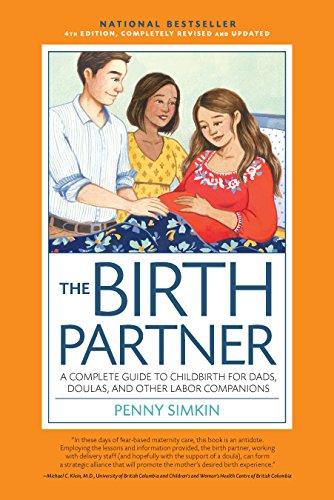
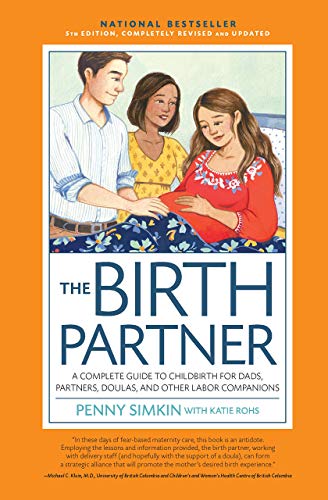
Penny Simkin’s The Birth Partner is written for the support person, and it is the one purchase in this category that reliably gets used by someone other than the pregnant reader. It is organized around what to do at each stage, which is exactly what a nervous partner in a birth room wants.
Buy it early enough that it gets read. A partner book handed over in week thirty nine is decoration. Our books for partners guide covers the wider set, including the ones written for the pregnancy rather than the day itself.
The Four Camps Compared
| Type | Tone | Covers | Suits |
|---|---|---|---|
| General handbook | Neutral, reference style | Every route including C-section | Undecided plans, first births |
| Physiological birth | Strong position, story led | Unmedicated labor in depth | Readers already set on that route |
| Choice led | Even handed, illustrated | Options presented without ranking | Readers who dislike being steered |
| Partner book | Practical, task by task | What the support person does | The person in the room with you |
Descriptions here are of each book’s approach and structure, not of its medical content. Anything you read that seems to apply to your own pregnancy is a question for your midwife or OB-GYN.
Reading a Birth Book Without Scaring Yourself
Skip the complications chapter unless something specific has been raised with you. It is written to be complete, not to be probable, and reading it cold at thirty four weeks is a common route to a bad night. The same goes for the birth story sections in books that include the difficult ones.
Read the stages chapter twice instead, and read it out loud with your partner once. Knowing the shape of the day is the part that carries over into the room. If a chapter leaves you worried about your own situation, bring that specific worry to your midwife or OB-GYN rather than reading further.
Frequently Asked Questions
Do I need a birth book if I am taking a class? They do different jobs. A class gives you practice and a room full of people at the same stage; a book gives you something to re-read at midnight. Most people who take a class still keep one book, usually the partner one.
Which birth book is right if I am planning an epidural? A general handbook or a choice led book. The physiological birth titles spend most of their pages on the unmedicated route, and reading a book that treats your plan as second best is not a good use of the third trimester.
Is a birth book useful for a planned C-section? Yes, but check the contents page first. Some devote a full chapter to it, others a few pages. Our C-section hospital bag guide covers the practical side of packing for one.
When should I start reading? Most people find the third trimester is the natural moment, when birth stops being abstract. Earlier than that and it tends to be re-read anyway.
Should my partner read the same book as me? One shared book plus one partner book works better than two copies of the same title. The partner book is written to be acted on, which is a different job from the one your book is doing.
The Bottom Line
Choose by approach, not by star rating. A neutral handbook if the plan may change, a physiological birth book only if you are already committed to that route, a choice led book if you want the options without the sermon, and the partner book regardless. Read next: our pregnancy books guide for the full shelf, and what to read in which trimester for the timing.