
Last updated: August 23, 2026
Working through a pregnancy on your feet is a different problem from being pregnant at a desk. Nurses, teachers, servers, retail staff, hairdressers, and warehouse workers all describe the same arc: the first half of the shift is fine, the second half is a negotiation, and the drive home is when you find out how the day really went.
A support belt is the standard piece of gear for that, and the requirements are specific. It has to stay in place while you move constantly, it has to survive being worn under a uniform, and it has to be bearable in a building that is warmer than your house. Those three things narrow the field more than any brand ranking does.
This article contains affiliate links. If you buy through them, we may earn a commission at no extra cost to you. Learn more.
Quick Answer
Which belly band works for a shift on your feet?
- A structured underbelly belt is the one that matters at work, because the problem is the weight, not the waistband.
- Prioritize breathability over firmness. Heat under a uniform is the reason most work belts get abandoned.
- Buy two if you wear one daily, so laundry never leaves you without it.
- Take it off during breaks. Owners who keep wearing theirs long term describe using it for the moving parts of the shift, not continuously.
Bottom line: structured belt, breathable panel, low placement, and a spare. That combination is what survives a work week.
What a Working Day Demands From a Belt
A belt worn at work has to do three things a belt worn for a weekend walk does not. It has to stay put through hundreds of position changes, it has to sit invisibly enough under a uniform that you are not adjusting it in front of people, and it has to be tolerable in heat for the length of a full shift.
That rules out a fair amount of the category. Heavy multi strap belts hold beautifully and cook you by mid afternoon. Soft seamless bands are cool and invisible and do nothing for weight. The workable middle is a structured underbelly belt with a breathable panel.
Heat Is the Real Enemy
The single most common reason a work belt ends up in a locker is temperature. A belt is a compressive layer across your middle, worn under clothing, in a building you do not control the thermostat of. Owners in warm environments describe that as the deciding factor far more often than support.
Look for a perforated or mesh backed panel, less total material, and a strap system that does not double up fabric across the front. A slightly less firm belt you keep wearing beats a firmer one you take off after an hour, which is the trade almost every review in this group is making.
Under a Uniform
Scrubs and thin uniform fabrics show outlines. A slimmer belt with a smooth front panel disappears better than one with wide overlapping straps, and darker colors show less through light fabric. If your workplace has a fitted uniform, this is worth thinking about before you order rather than after.
Placement, and Why Belts Slip at Work
A belt that slides down all shift is nearly always fastened too high. The structured panel belongs under the bump, resting against the top of the pubic bone, with the strap across the hip bones rather than around the waist. Placed correctly it has something to sit on, which is the whole reason it stays.
Constant bending and lifting still loosens hook and loop over a day, so expect to readjust. Owners who wear one at work describe checking it a couple of times per shift as normal rather than as a defect, and the full method is in how to wear a belly band.
Belts for Working Pregnancies
The Standard Shift Belt
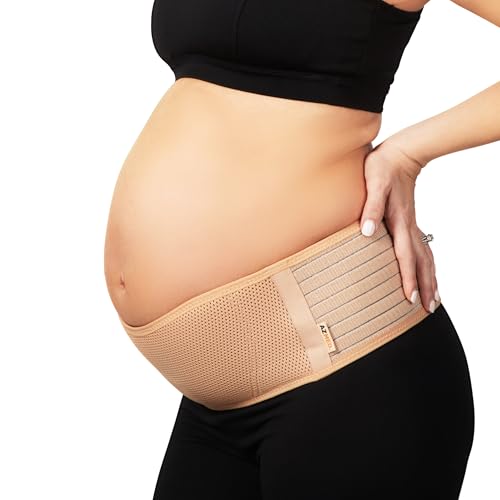
AZMED’s maternity belt is the most bought underbelly belt in the category, with a single wide strap that is quick to loosen and retighten. That speed matters when you are adjusting between tasks rather than at leisure.
When the Building Is Always Warm
NeoTech Care’s pregnancy support belt uses a lighter, more breathable panel and less material overall. It is the sensible pick for kitchens, warehouses, salons, and anywhere you are already too warm before the belt goes on.

Long Days With a Heavy Bump
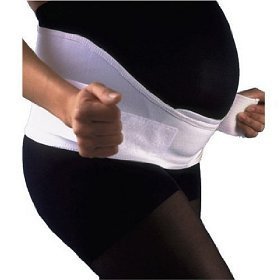
Gabrialla’s elastic maternity support belt spreads support across a wider rear panel instead of one narrow strap, which owners on long shifts often prefer because nothing concentrates in a single line across the back.
The Clothing Half of the Problem
If your work clothes are the issue rather than the weight, a soft seamless band keeps unbuttoned pants closed and covers the gap under a short top. Many people wear one under the uniform and keep the structured belt for the busiest shifts.

Matching the Belt to the Job
| Work situation | Main constraint | What to prioritize | Practical note |
|---|---|---|---|
| Hospital or care shifts | Constant movement | Fast adjustment, low profile | Shows under scrubs if bulky |
| Kitchens and warehouses | Heat | Breathable panel, less material | Accept slightly less firmness |
| Retail and teaching | Standing in one place | Wider back support | Take it off on breaks |
| Office with a commute | Sitting then walking | Soft band daily, belt for travel | Belts are awkward when seated |
Whatever the row, ordering two of whichever you settle on is the practical move once you are wearing one every day.
The Rest of the Working Wardrobe
A belt is one part of getting through a working pregnancy. Over the bump leggings and pants with a proper panel do more for comfort during seated hours than any belt, and they solve the waistband problem permanently rather than covering it. The options are in maternity leggings.
Compression legwear is the other thing people on their feet consistently mention. It is a different product with a different purpose, and it is worth raising with your provider rather than treating as a straightforward purchase, particularly if you have noticed swelling.
Frequently Asked Questions
Can I wear a support belt for a whole shift? There is no single correct answer and nobody should invent one for you. Most owners describe wearing it for the active parts of a shift and taking it off on breaks. Follow the instructions that came with your belt and ask your midwife if you are unsure.
Will it show under scrubs? A slim underbelly belt is barely visible; a wide, multi strap belt shows as an outline under thin fabric. If your uniform is fitted, choose the lower profile option.
My belt slides down every shift. What am I doing wrong? Almost certainly fastening it too high. It should sit under the bump on the hip bones, not around the waist. If it still slips after repositioning, it is probably a size too large.
Do I need a band as well as a belt? Plenty of working pregnancies end up with both, because they solve different problems. The distinction is in band versus belt.
What about my rights at work? Workplace accommodations vary by employer and by where you live, so ask your employer directly and your provider for supporting information. It is not something a product page can answer.
When to Ask a Professional Instead
A belt makes a shift more comfortable. It is not a reason to push through something that is telling you to stop. Speak to your midwife or OB-GYN about what your working day involves, especially if it includes heavy lifting, long standing, or night shifts, and see a pelvic floor physical therapist if the discomfort is sharp, one sided, or getting worse week by week.
The Bottom Line
For work, choose a structured underbelly belt with a breathable panel, wear it low, buy a second one for laundry days, and take it off on breaks. Then fix the clothing half separately with a soft band or proper over the bump pants, because trying to make one product do both is what leaves people uncomfortable. Read next: maternity support belts and the belly band guide.