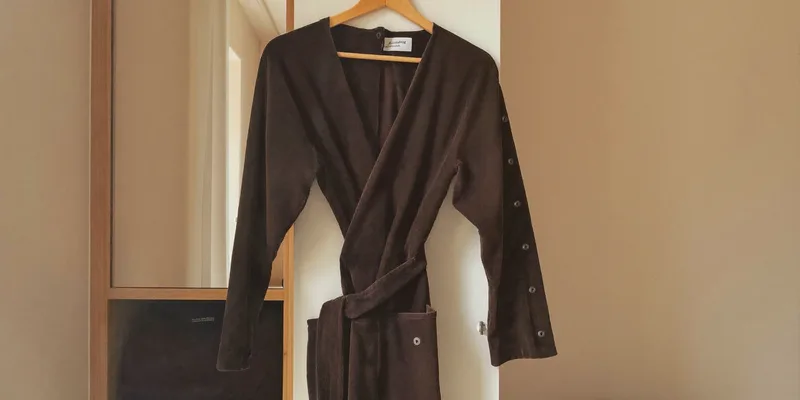
Last updated: August 23, 2026
The hospital gown is free, it is already there, and nobody has to wash it afterwards. That is a genuinely strong argument, and it is the reason a lot of people who bought their own gown never took it out of the bag. It is also not the whole story, because the hospital gown is a one size garment designed around access rather than around you.
So the question is not which gown is nicer. It is whether the specific things a bought gown does better are things you care about, and whether the one you are looking at actually does them. Plenty of gowns sold for this are pretty nightdresses with the wrong openings.
This article contains affiliate links. If you buy through them, we may earn a commission at no extra cost to you. Learn more.
Quick Answer
Should you buy a labor and delivery gown?
- Only if it has real access: an open or snap back, snap shoulders, and side openings for monitor leads. Without those it is just a nightdress.
- Buy dark. Births are messy, and a pale gown is a gown you will look at once and put in a bag.
- Check with your hospital. Some units ask you to change into theirs at certain points, and policies differ.
- Sizing runs on your current shape, not your pre pregnancy one. Loose is the point.
Bottom line: worth it for the access and the color, not worth it for the print. The hospital gown is a perfectly good default.
What the Hospital Gown Already Does
A hospital gown opens fully at the back, has short wide sleeves that clear a blood pressure cuff and a line in the arm, and is made to be removed without going over your head. It is cheap, it is disposable in the practical sense, and staff know how it works. Those are all real advantages.
What it does not do is fit, cover you at the back when you walk to the bathroom, or look like something you would be photographed in. Whether those matter is personal, and they matter more to some people than to others.
The Four Openings That Make a Gown Useful
A gown sold for labor and delivery earns its place through openings, not fabric. There are four to look for, and a gown that has all four is doing something a nightdress cannot. Check the product photos for each one rather than trusting the title.
Back Access
A full opening or a run of snaps down the back is what allows access to your spine without the gown coming off. Wrap style gowns and tie backs both work; a solid back does not.
Shoulder Snaps
Snaps on both shoulders let the front of the gown drop for skin to skin and for feeding afterwards, without pulling anything over your head. This is the feature people who used their own gown mention most often.
Side Openings
Slits or snaps at the sides let monitor leads and lines run out of the gown rather than under the hem. Not every gown has them, and it is the detail most often missing.
Sleeves That Clear a Cuff
Short, wide, loose sleeves. A fitted sleeve with a cuff around the bicep gets in the way of blood pressure readings and of anything in the arm.

Fabric, Color and Length
Choose a mid weight knit that is soft, opaque and not clingy. Very thin jersey goes see through under bright lights, and anything stiff is uncomfortable to lie in for hours. Cotton blends breathe better than polyester in a warm room.
Dark colors, patterns and prints hide what solid pale fabric does not, which is the single most practical piece of advice here. Length is a matter of taste: knee length is easier to move in, longer feels more covered when you walk the corridor.
Sizing and How Many
Size on your late pregnancy shape and expect to want it loose. A gown that is snug across the bust before the birth will not be comfortable afterwards, when everything about that fit changes. Most brands size these generously on purpose, so read the size chart rather than assuming your usual letter.
One gown is enough for a short stay if you also pack something to change into. Two makes sense for a longer stay or a planned C-section, where you are in the room for more days and laundry is not an option.

The Options Compared
| Option | Access | Afterwards | Suits |
|---|---|---|---|
| Hospital gown | Full back, wide sleeves | Handed back | Anyone who does not want another decision |
| Labor and delivery gown | Back, shoulders, sides | Yours to keep | Wanting fit, color and coverage |
| Nursing nightgown | Front or shoulder only | Used for weeks | The days after, not the birth itself |
| Robe over hospital gown | Adds coverage only | Used at home | Walking the corridor and visitors |
Manufacturer listings describe their own snap layouts, and the layouts vary between brands even within one range, so check the photographs for the specific item.
What to Skip
Skip anything sold as a gown that has no back opening. Skip matching mother and baby sets bought for photographs if the gown itself fails the access test, because you will be changing out of it. Skip white.
Skip buying three. The most common report from people who packed a full outfit rotation is that they wore one thing, then changed into the softest thing they owned. Our guide to what not to pack covers the rest of the overpacking pattern.

Check With Your Hospital First
Policies differ. Some units are entirely happy for you to wear your own gown throughout, some ask you to change into theirs for certain procedures, and a planned C-section usually means a hospital gown for the operating room regardless of what is in your bag.
Ask the birth unit directly rather than assuming, and ask your midwife or OB-GYN if you are unsure how it fits with your particular plan. Local policy is not something a product page can tell you.
Frequently Asked Questions
Do I need my own gown at all? No. The hospital gown does the job, and plenty of people never open the one they packed. Buy one if fit, coverage and color matter to you, not because a list said to.
Can I wear a nursing nightgown instead? For the days afterwards, yes. For the birth itself most nursing nightgowns lack back and side access, which is exactly what is wanted during labor.
What size should I order? Size on your late pregnancy measurements and go loose. Check the brand’s chart, since gowns in this category are cut generously and the letters do not translate across brands.
What color is best? Dark or patterned. This is the one recommendation nearly everyone who has used their own gown repeats.
Will I get it back if it goes in the hospital laundry? Assume not. Keep your own gown out of hospital laundry bags, and pack a plastic bag for taking it home.
Can I wear it for a C-section? Usually not for the operating room itself. Ask your provider, because this is decided by the unit rather than by the garment.
The Bottom Line
Back access, shoulder snaps, side openings, wide sleeves, dark fabric, sized loose. A gown with those things is worth packing; anything else is a nightdress with a hopeful title, and the hospital gown is a perfectly respectable default. Read next: what to wear for the days after and the hospital bag checklist.