Last updated: August 23, 2026
You already own a belly band. It got you through the last months of work, it lives in the bedside drawer, and now the obvious question is whether it can carry on doing a job after the birth. The listings do not help: half of them describe the same product as both, and the search results mix the two categories together as though they were interchangeable.
They are not, and the reason is simple. A pregnancy band is built to lift a bump from underneath. A postpartum wrap is built to hold a middle firmly all the way around. Those are different shapes solving different problems, and this comparison lays out which one does what, when your old band will do fine, and when it will not.
This article contains affiliate links. If you buy through them, we may earn a commission at no extra cost to you. Learn more.
Quick Answer
Can you keep wearing your pregnancy belly band after birth?
- A stretchy tube style band, yes, as a soft layer under clothes. It holds very little.
- A pregnancy support belt, usually not, because the lifting panel sits under a bump that is no longer there.
- A postpartum wrap or binder is taller, firmer and wraps all the way around rather than cradling from below.
- After a C-section the position relative to the incision decides everything, and that is a question for your doctor.
Bottom line: the tube band carries over, the support belt does not. If you want real hold after birth, that is a different garment. Anything about pain, an incision or your pelvic floor goes to your provider.
What Each One Is Built To Do
A pregnancy band or belt works upward. The wide part sits under the bump and the straps pull from above, so the load is carried from underneath while the belly itself is left room. A postpartum wrap works inward. It is a tall panel that closes around the whole circumference and holds the middle evenly, with nothing to cradle and nothing to leave space for.
That is why swapping one for the other disappoints people. Wearing a lifting belt after birth means a curved panel with nothing to sit under, and wearing a flat postpartum binder during pregnancy means even pressure across a bump, which is the opposite of what a bump wants.
The Pregnancy Band and the Support Belt
Two very different products share the pregnancy shelf. The tube band is a seamless stretchy loop, mostly used to bridge unbuttoned jeans and to smooth layers. The support belt is a structured belt with hook and loop straps and a contoured under bump panel, and it is the one people buy when standing all day is the problem.
The tube band survives into the postpartum period perfectly well as a soft layer over the waistband of whatever you are wearing. The support belt generally does not, because its geometry is built entirely around a bump. Our guides to the pregnancy belly band and the maternity support belt cover each in depth.
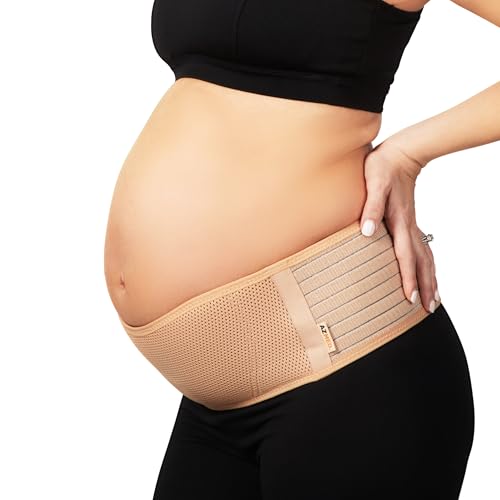
The pregnancy side of the comparison
A contoured under bump belt with adjustable straps is the archetype of pregnancy support: it lifts rather than compresses, and the panel is shaped for a belly rather than flat.
The Postpartum Wrap and Binder
Postpartum garments are taller, flatter and firmer. The design goal is even hold from below the ribs to the hips while you move around the house, and the features that matter are panel height, grip at the top edge and whether there are flexible stays to stop the whole thing folding at the waist.
Owners describe the effect as feeling held rather than supported from below, which is a genuinely different sensation. Whether it suits you, and how you use it, belongs with your doctor, midwife or a pelvic floor physical therapist. Our postpartum belly wrap guide works through the three types on sale.
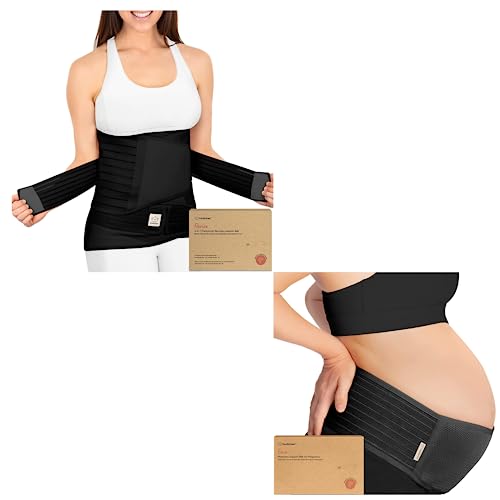
The postpartum side of the comparison
A tall wrap set that closes around the belly, waist and hips gives even hold and lets each area be adjusted separately, which is the main thing a pregnancy belt cannot do.
Differences at a Glance
| Feature | Pregnancy belt | Postpartum wrap | Why it matters |
|---|---|---|---|
| Direction of hold | Upward, from underneath | Inward, all the way around | Decides whether it fits your body now |
| Panel shape | Contoured for a bump | Flat and tall | A curved panel gapes once the bump is gone |
| Height | Narrow at the front | Ribs to hips | Height is what stops rolling |
| Adjustment | Straps over a fixed panel | One or several closures | Sizes change quickly after birth |
The one product that genuinely crosses over is the plain stretchy tube band, because it never did much holding in the first place.
Which Sentence Sounds Like Yours
If the sentence in your head is “my jeans do not close and my shirts ride up”, the tube band is still the answer and you already own it. If it is “everything feels loose when I stand up and I want something firm”, that is a postpartum wrap and your old belt will not do it.
If it is “I am still pregnant and my back and pelvic area feel heavy at the end of the day”, you are shopping in the pregnancy aisle, and our guides to bands for back pain and bands for pelvic pressure are the right starting point. Pain that is new, sharp or one sided is a call to your midwife or doctor rather than a purchase.
Best if you want one garment for both periods
A plain seamless tube band is the honest answer to that wish. It smooths layers before and after, it costs very little, and nobody should expect firm hold from it in either period.

After a C-section the Rules Change
With an abdominal incision the only question that matters is where the garment sits and whether wearing anything there is appropriate yet. That is decided by your doctor, not by the product description, and the wrong height is uncomfortable at best. Some hospitals provide a binder before discharge, which makes buying one in advance unnecessary.
What a buying guide can say is that C-section specific belts are cut to sit clear of the usual incision line and tend to use softer inner fabrics. Our C-section recovery belt guide covers that, and the two shopping lists compared shows what else changes.
Frequently Asked Questions
Is it a waste of money to buy both? Not if you want real support in both periods, since they are built differently. Plenty of people buy a pregnancy belt, use it for months, then buy a postpartum wrap only if they find they want one.
Will my pregnancy belt fit at all after birth? It will fasten, on a smaller setting, but the contoured panel is designed to sit under something. Most people who try it describe it as gaping or sliding rather than uncomfortable.
Can I wear a postpartum binder while still pregnant? Even compression across a bump is not what pregnancy support garments are designed for, and this is a question for your midwife or doctor rather than a shopping decision.
Which is better for standing all day? During pregnancy, the support belt. After birth, a wrap or high waisted compression garment. Different bodies, different tasks, different products.
Do either of these change your shape? No, and it is worth being clear about that. They are comfort garments. Questions about your abdominal muscles or pelvic floor belong with a pelvic floor physical therapist.
When to Ask a Professional Instead
If you are shopping because something hurts, that is the signal to talk to someone rather than to order a garment. Your midwife, your OB-GYN, your doctor or a pelvic floor physical therapist can look at what is actually going on, and a band worn over a problem is not the same as having the problem looked at. Ask before you buy, not after the second wrap disappoints you.
The Bottom Line
The stretchy tube band crosses over and the structured pregnancy belt does not, because one holds nothing and the other is shaped around a bump. If you want firm, even hold after birth, buy a postpartum wrap designed for it and choose on height and grip. Read next: the postpartum belly wrap guide, and the pregnancy belly band guide.