
Last updated: August 23, 2026
Somewhere in the last stretch the bump stops sitting out front and starts sitting down. People describe it as a weight low in the pelvis, a heaviness that arrives after being on their feet, and a distinct feeling that everything is pressing toward the floor. The phrase that turns up over and over in reviews is that the baby has dropped low.
The product people reach for is a support belt, and there is a real distinction to understand: a belt that cradles the bump is not the same as a belt that sits across the pelvis. Both exist, both are sold under similar words, and which one suits you depends on where the heaviness actually is.
This article contains affiliate links. If you buy through them, we may earn a commission at no extra cost to you. Learn more.
Quick Answer
Which belt makes sense when the pressure is low and heavy?
- An underbelly maternity belt lifts the bump from below, which is what most people want when the weight feels forward and down.
- A low pelvic belt sits around the hips rather than under the bump, and suits heaviness that feels like it is in the pelvis itself.
- The soft seamless band does nothing here. It stretches, so it cannot carry weight.
- Low pelvic heaviness in late pregnancy is worth mentioning at your next appointment, and anything sudden or severe is worth a call today.
Bottom line: lift from under the bump if the weight is forward, wrap the hips if it is lower, and tell your midwife what you are feeling either way.
Two Different Sensations, Two Different Belts
Owners use one vocabulary for two experiences. Some describe a bump that hangs forward and drags everything down with it. Others describe a heaviness that sits squarely low in the pelvis, most noticeable when walking or standing after a long day. The first responds to lift, the second to a snug band around the hips.
Getting that distinction right is the whole decision. An underbelly belt cradles from below and takes forward pull off the back. A pelvic belt sits lower, across the hips, and holds rather than lifts. They feel completely different to wear.
What a Belt Can and Cannot Do Here
A belt changes how weight is distributed while you have it on. Many pregnant people find that makes standing and walking easier to get through in the final weeks, and that is the entire honest claim. Take it off and everything is exactly as it was.
What it does not do is change what is happening inside, and no amount of strap tension is a plan for it. A belt is a comfort tool that sits alongside the advice you get at your appointments rather than one that substitutes for it.
The Free Things That Change How the Day Feels
Break up standing time, because heaviness in this pattern is almost always cumulative. Sit with your hips supported rather than perched forward. Keep your knees together getting in and out of the car, and avoid standing with your weight parked on one hip, which almost everyone does by default late in pregnancy.
At night, side sleeping with support between the knees keeps the hips level instead of letting the top leg drop across the body, and that is a cheaper intervention than any belt. The setups are in the pregnancy pillow guide.
Belts by Where the Weight Sits
The Bump Hangs Forward and Down
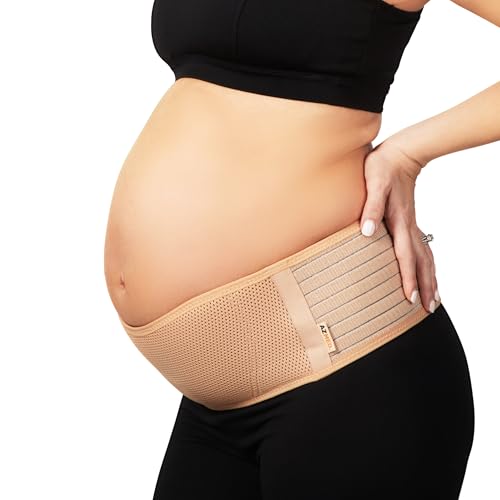
A firm underbelly panel with a hip strap is the standard answer. AZMED’s maternity belt is the most bought design of this type, cradling the bottom of the bump and anchoring across the hip bones, and it is the sensible first belt for most people in this situation.
The Heaviness Feels Lower, in the Hips
A low pelvic support belt is a narrower band worn around the hips rather than under the bump, so it holds instead of lifting. Owners who found an underbelly belt sat too high and did nothing for them often describe this as the one that finally made sense.

You Want Both Lift and a Wider Hold
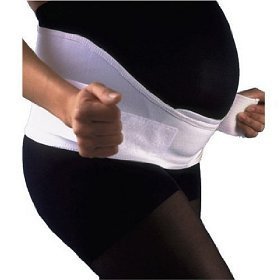
Gabrialla’s elastic maternity support belt uses a broader rear panel and more adjustment range, which covers a middle case: some lift under the bump plus a wider band around the back and hips.
A Wrap Instead of a Strap
Belly Bandit’s Upsie Belly wraps rather than buckles, spreading tension over a wide overlap. It suits people who find a defined strap uncomfortable across a low, heavy bump.

The Four Compared
| Option | Where it sits | What it does | Suits |
|---|---|---|---|
| Underbelly maternity belt | Below the bump | Lifts and cradles | Weight that hangs forward |
| Low pelvic belt | Around the hips | Holds, does not lift | Heaviness low in the pelvis |
| Wide panel belt | Under bump plus back | Some of both | Mixed pattern, long days |
| Wrap style | Broad overlap | Even tension | Straps feel uncomfortable |
If you genuinely cannot tell which row you are in, that is a good question to bring to a pelvic floor physical therapist rather than to guess at.
Fit Problems Owners Run Into
The most reported issue is a belt riding up. An underbelly belt fastened above the hip bones will migrate within minutes, and a pelvic belt worn too high stops being a pelvic belt at all. Both belong lower than most people first assume, which is covered in how to wear a belly band.
The second is tension. Tighter is not better, and a belt cranked down hard becomes unwearable long before it becomes more supportive. Owners who keep using theirs describe snug, breathable, and readjusted several times a day rather than set once and forgotten.
Frequently Asked Questions
Will a belt take the low, heavy feeling away? It changes how weight is carried while you wear it, and many pregnant people find that makes standing and walking easier. It does not change anything once it is off, and it is not a response to why the pressure is there. Mention the feeling to your midwife.
Which belt if the pressure is very low? Usually a pelvic belt worn around the hips rather than an underbelly belt worn beneath the bump. If an underbelly belt already felt like it was sitting too high to matter, that is the signal.
Can I wear it while walking or exercising? Many owners do, and a belt is at its most useful during upright activity. Movement specific points are in belly bands for walking and exercise.
Will a soft belly band do? Not for this. A seamless band holds clothing and covers skin, and it has no structural element at all. See band versus belt.
Should I be worried about pelvic pain rather than pressure? Pressure and pain are different reports and deserve different answers, so describe yours in your own words to your midwife or OB-GYN rather than sorting it out from a product page.
When to Ask a Professional Instead
Tell your midwife or OB-GYN what you are feeling, particularly in the last weeks, and contact them straight away if the pressure is sudden, severe, accompanied by regular tightening, bleeding, fluid, or a change in the baby’s movements. A pelvic floor physical therapist is the person who can assess where the load is going and tell you which style of belt, if any, fits your situation.
The Bottom Line
Work out whether the weight feels forward or low, because that decides between an underbelly belt and a pelvic belt, and nothing else about the purchase matters half as much. Wear it low, keep it snug rather than tight, and raise the sensation at your next appointment. Read next: maternity support belts and the belly band guide.