Last updated: August 23, 2026
Postpartum lists have a length problem. They are written to be comprehensive, which means nothing gets left off, which means you end up with a cart of thirty items and no sense of which four actually matter. Then most of it sits in a cupboard while you send someone out for the one thing that was not on the list.
This page is the other version. It sorts the usual list into three piles: what the hospital hands you, what people genuinely buy and use, and what reliably goes unopened. There is almost nothing to buy on this page, on purpose, and there is a link at the bottom to the page where the buying happens.
This article contains affiliate links. If you buy through them, we may earn a commission at no extra cost to you. Learn more.
Quick Answer
What do you actually need after the birth?
- Four things get used by almost everyone: a good peri bottle, high waisted underwear, a lot of pads, and loose dark clothes.
- The hospital covers more of the basics than most lists admit. Take home everything they offer.
- The most common regret is buying too many small comfort products and not enough of the boring bulk items.
- Buy the things you would hate to be without at midnight. Order the rest afterwards, when you know what you want.
Bottom line: four core items in quantity beats twenty products in singles.
What the Hospital Sends Home With You
In most US hospitals this covers more than people expect: pads, mesh briefs, a basic peri bottle, often cooling packs, and sometimes a bottle of skin cleanser. It is all yours, it is already paid for, and it is the exact category you will run through fastest.
The practical move is to ask a nurse partway through the stay what you can take, rather than at discharge. What is offered differs by hospital, so this is one of the few places on this site where the answer genuinely is call and find out.
The Four Things People Use
Strip every postpartum list down and the same four survive. They survive because they get used constantly rather than occasionally, which is a different test from whether something is nice to have.
A Peri Bottle That Aims Properly
The angled neck version is the one people describe as the single best purchase of the whole category. The straight bottle the hospital supplies works, but it makes you do the aiming. Buy one before the birth and see the peri bottle guide for the differences.
High Waisted Underwear, in Quantity
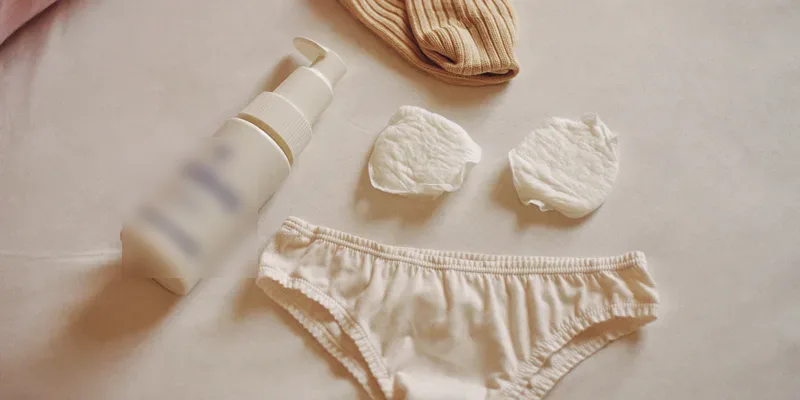
Disposable, reusable or a mix. What matters is that the waistband sits high, well above anything tender, and that you own enough not to be doing laundry. Two people who had different births will disagree about the type and agree completely about the quantity.
More Pads Than the List Says
The most boring item and the one most often underbought. Maternity pads are longer and thicker than overnight pads and they are the thing people send a partner out for at eleven at night, which is exactly the errand this list is trying to prevent.
Loose, Dark, Soft Clothes
Nothing with a waistband that lands anywhere interesting, nothing you have to pull over your head, nothing pale. One or two sets, not a wardrobe.
What Usually Goes Unused
The pattern here is consistent enough to be worth naming. Products bought in singles as a nice idea get opened once; bulk items get used until they run out. Anything that needs preparation loses to anything that does not.
Specifically: elaborate multi step skincare, anything requiring a freezer at a moment when the freezer is full, matching outfits, scented products, and gadgets that need charging. Also anything bought for a version of the birth that did not happen, which is a real category and not a criticism of anyone.
The Half Used Pile
Sitz baths, cooling sprays and specialty creams tend to end up half used rather than unused. They get opened, they get tried, and then routine settles on whatever is closest to hand. That is an argument for buying one of a thing rather than three, and topping up later.
The Three Piles
| Item | Usually supplied | Worth buying | Often unused |
|---|---|---|---|
| Pads and mesh briefs | Yes | Extra pads, yes | No |
| Peri bottle | Basic version | Angled version, yes | No |
| Cooling perineal pads | Sometimes | One pack | Second pack often |
| Sitz bath and sprays | Rarely | One, if you want it | Frequently half used |
What a hospital supplies varies by unit and by state, so treat the first column as a pattern rather than a promise and confirm it with your own hospital.
What Changes After a C-section
The core four still apply, with one shift: the waistband question becomes the whole question. High waisted underwear moves from useful to essential, and clothing that sits anywhere near an incision line comes off the list entirely.
Abdominal support belts enter the picture too, and whether one suits you and when you may start using it is something to ask your surgeon or midwife rather than decide from a listing. The C-section versus vaginal birth comparison sets the two lists side by side.
Things Nobody Puts on the List
A big water bottle with a straw, one per room. A phone charger with a genuinely long cable. A small lamp so you are not turning on the overhead light at night. Snacks within arm’s reach of wherever you sit. None of these are postpartum products and all four come up constantly.
Also: a written note of who to call about what. Not because anything is expected to go wrong, but because at three in the morning nobody wants to be searching an email for a phone number.
Buy Now or Buy Later
Buy in advance anything you would hate to be without at midnight on day two: the peri bottle, the underwear, the pads, the clothes. Everything else can be ordered when you know what you actually want, and delivery is fast enough that the case for stockpiling is weaker than it looks.
If someone asks what to send, this is the answer to give them. A basket of bulk basics is a far better gift than a curated set of small products, and our postpartum care package guide is written for the person doing the asking.
Frequently Asked Questions
How many pads should I have at home? More than one pack. Exact quantities differ so much between people that a number here would be invented, and the honest advice is to have plenty and top up rather than plan precisely.
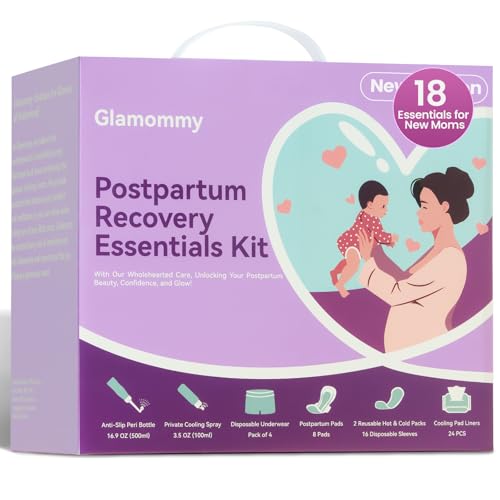
Are prebuilt kits a waste of money? No, they are a convenience. They will contain something you never open, and that is the trade you are making. See the recovery kit guide for what is in them.
Do I need special postpartum clothing? Not special, just loose, dark and high waisted. Things you already own often qualify, and that is a legitimate way to shorten the list.
What about anything I take by mouth? Not from us, and not from a list. Anything you swallow, including over the counter products, is a conversation with your midwife, OB-GYN or pharmacist.
When should I buy the breastfeeding items? Before, if you are planning to breastfeed, since sore nipples in the first week are common and are not the moment to be ordering. A lactation consultant is the right person for anything about latch or supply.
What did people wish they had bought sooner? The angled peri bottle, more pads, and a second water bottle. That trio comes up over and over.
All of the above is about comfort and logistics. Anything to do with pain that is getting worse, heavy bleeding, fever, or an incision or repair that concerns you belongs with your midwife or OB-GYN the same day, not on a shopping list.
The Bottom Line
Four items in quantity, the hospital’s supplies taken home in full, and everything else ordered later once you know what you want. That is the whole list, and it is much shorter than the ones you have been reading. Read next: the full recovery kit and postpartum underwear.