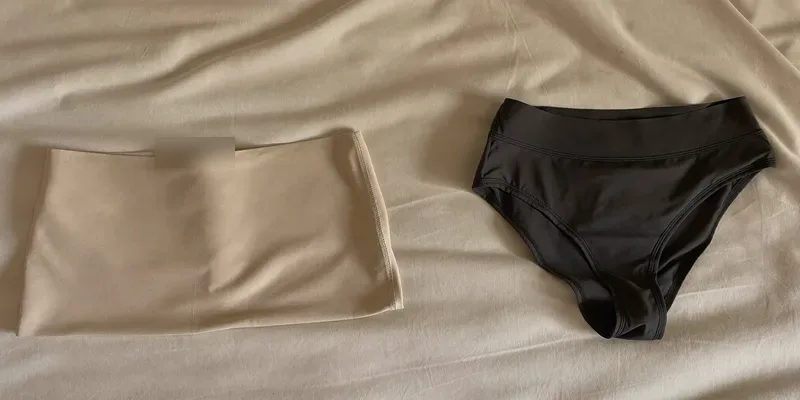
Last updated: August 23, 2026
Somewhere around the middle of the second trimester the same thought arrives for almost everyone: the bump has started to feel heavy at the end of the day, and something needs to hold it. The obvious answer is a belly band. The answer plenty of people land on instead, quietly, is a pair of over the bump compression shorts that do a similar job without any hardware.
They are not interchangeable. One is a piece of equipment you put on for a task and take off after, the other is underwear you get dressed in. Which one suits you comes down to what you are wearing over it, how much support you actually want, and whether you can face fastening a belt in a work bathroom.
This article contains affiliate links. If you buy through them, we may earn a commission at no extra cost to you. Learn more.
Quick Answer
Belly band or compression shorts?
- A structured belly band or belt gives the most concentrated support and is adjustable as the bump grows.
- Compression shorts spread lighter, even support and disappear under clothes, with nothing to fasten.
- Shorts win for desk days, dresses, and anyone who hates the feel of hook and loop on the skin.
- The belt wins on days spent standing, walking, and lifting.
Bottom line: shorts for everyday invisible comfort, a belt for the days your lower back notices.
What Each One Actually Does
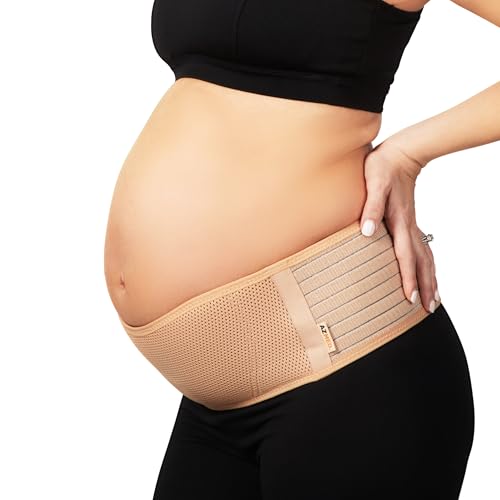
A structured belly band or support belt puts a narrow reinforced panel under the bump and a wide panel across the lower back, then lets you tighten the two together. That is concentrated, adjustable, upward support in one place. It is the most direct answer to a bump that feels heavy when you are upright.
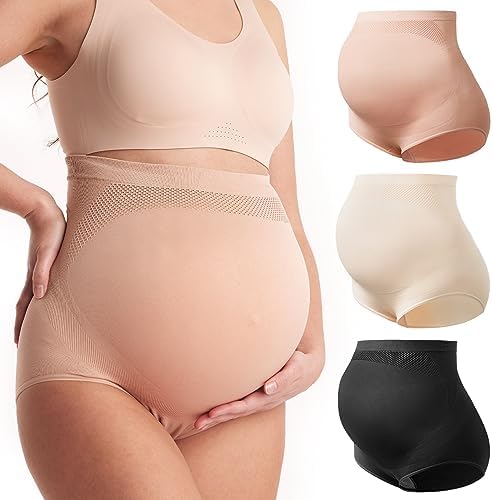
Over the bump compression shorts do something gentler and broader. A stretch panel comes up over the whole bump and the leg sections grip the upper thighs, so the support is spread out and even rather than aimed at one spot. Nothing is adjustable, which is both the drawback and the entire appeal.
Under Clothes, the Shorts Win
Compression shorts are invisible. There is no strap edge printing through a dress, no rectangle of hook and loop showing under a fitted top, and nothing that shifts when you sit down at a meeting. For anyone whose workwear is more formal than leggings, that alone often settles the question.
A belt can be hidden, but it takes effort. The usual trick is a soft seamless band pulled over the top of the belt to smooth the outline, which works well and adds a layer of warmth you may not want in July. Our guide to wearing a band covers the layering in detail.

For a Heavy Bump, the Belt Wins
When the bump feels genuinely heavy by mid afternoon, the adjustable belt is the tool with more to give. It concentrates the lift where you want it and lets you add tension on the days you need more, which a fixed stretch panel cannot do. Owners on their feet all day reach for the belt, not the shorts.
The other advantage is that a belt keeps working as your shape changes. Adjustable models cover a wide range of measurements, so the belt you buy at twenty weeks is usually still the belt you are wearing at thirty six. Shorts get outgrown, sometimes twice.
Some People Buy Both
This is less indulgent than it sounds. Shorts become the default everyday layer and the belt comes out for the days with a lot of standing, a long walk, or a shift at work. They also stack: the belt goes over the shorts perfectly well, which gives you the even base layer and the targeted lift together.
Heat, Laundry and the Practical Stuff
Compression shorts are laundry, which means you need several pairs and they go in with everything else. A belt is equipment, which means one is technically enough but two is far more livable, and it needs a gentle cycle and air drying so the elastic and hook and loop survive.
Heat is the recurring complaint on both sides. A laminated belt over a warm shirt in summer is genuinely uncomfortable, and full length compression shorts add a layer to your whole lower half. Mesh panel bands and lighter knit shorts are the versions people keep wearing once the weather turns.
The Third Option Nobody Mentions
Between the two sits belly support underwear: briefs with a built up front panel that lifts a little without the leg coverage of shorts. It is the lightest of the three and the easiest to wear all day, and for a lot of people in the second trimester it is enough on its own.
It is also the cheapest way to find out whether gentle even support is what you want before committing to a belt. Our articles on belly support underwear and maternity underwear cover the panel heights and how they sit.
The Three Options Compared
| Option | Type of support | Under clothes | Suits you if |
|---|---|---|---|
| Structured support belt | Concentrated, adjustable, aimed under the bump | Visible outline unless layered | You are on your feet and your lower back notices |
| Over the bump compression shorts | Even and light across bump and thighs | Invisible | Office clothes, dresses, all day wear |
| Belly support briefs | Gentle lift at the front only | Invisible | Second trimester, mild heaviness |
| Soft seamless band | Almost none, bridges clothing | Worn as a visible layer | You mainly want to keep wearing your jeans |
Note the last row. A soft seamless band sells under the same search term as the belt but belongs in the wardrobe column, which our band versus belt comparison unpacks properly.
Which Sportswear Counts
Regular non maternity compression shorts are not the same thing and are worth avoiding once the bump is established. They compress inward across the abdomen rather than lifting from underneath, which is the opposite of what you want, and the waistband sits in the one place nobody wants a tight waistband.
If you are moving and want support, look for maternity specific over the bump construction, and check the leg length, since short inseams ride up and roll. Our guide to maternity leggings covers the same over the bump versus under the bump question for full length pieces.
Frequently Asked Questions
Can I wear a belt over compression shorts? Yes, and a lot of people do. The shorts act as a smooth base layer so the belt does not sit against skin, and the belt adds the adjustable lift the shorts cannot. It is the most comfortable version of wearing a belt for a long day.
Are compression shorts strong enough on their own? For many people through the second trimester, yes. They are gentler by design, so if you want concentrated lift under a heavy bump you will likely want a belt as well rather than instead.
Do compression shorts help with swelling? Swelling is a topic to raise with your midwife or OB-GYN rather than a garment question, particularly if it is sudden, one sided, or in your face and hands. For general leg comfort on long days, our article on maternity compression socks covers the garment side.
What size do I buy as the bump grows? Shorts are usually bought at your pre pregnancy size in maternity ranges, since the panel is designed to stretch, while belts are chosen on your current under bump measurement. Our sizing guide covers the belt side.
Can I wear either one to exercise? Both get worn for walking, and shorts are the easier of the two to move in. Whether a particular activity suits you at this stage is a conversation for your provider, not for a product page.
Do I keep wearing them after birth? Postpartum compression is a separate category with a different shape and different guidance, covered in postpartum compression leggings.
Support garments are comfort items rather than a treatment. If the discomfort is sharp, one sided, or getting worse, or if you are unsure whether compression suits your pregnancy, speak to your midwife, your OB-GYN, or a pelvic floor physical therapist.
The Bottom Line
Compression shorts are the everyday, invisible, nothing to fasten option, and they are enough for a lot of people. A structured belt is the tool for the heavy days and the standing days, and it keeps adjusting as you grow. Buying both is a perfectly rational answer. Read next: choosing a belly band and over the belly versus under the belly.