Last updated: August 23, 2026
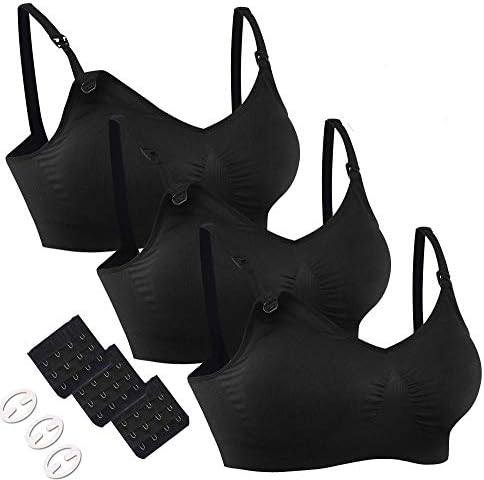
The story repeats itself in review after review. Someone above a D cup buys the seamless three pack everybody recommends, wears it for a week, and reports that it gives almost no support, that tightening the straps changes nothing, and that they have gone back to their old regular bra and are just dealing with the inconvenience.
That is not bad luck and it is not the wrong brand. It is a design limit. The bestselling nursing bras are built as stretchy loungewear, and stretch is the one thing that cannot hold weight. Buying well above a D cup means shopping in a different part of the category entirely.
This article contains affiliate links. If you buy through them, we may earn a commission at no extra cost to you. Learn more.
Quick Answer
Which nursing bra works for a large bust?
- Skip the seamless multipacks for daytime; the fully stretchy band is what fails you.
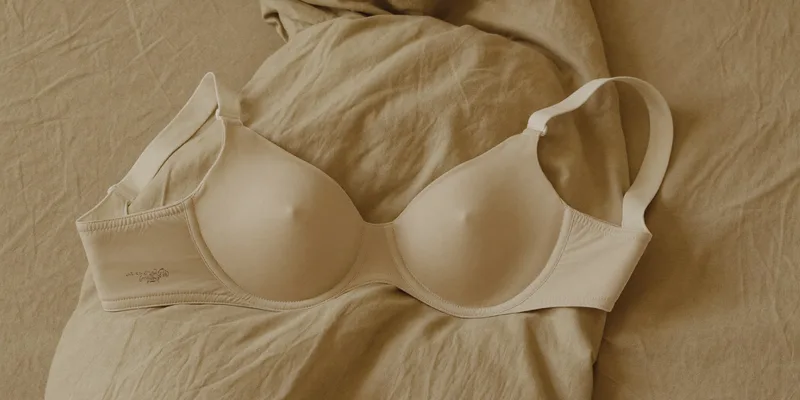
- Look for a firm band, multiple hook and eye rows, wide straps and shaped cups.
- Buy from ranges that publish real cup sizes rather than S, M, L.
- Sizing up is standard advice, but a bigger stretch bra is still a stretch bra.
Bottom line: buy one properly structured bra in a true cup size instead of three soft ones that will not hold.
Why the Popular Bras Fail Above a D Cup
Support in any bra comes from the band around your ribcage, not from the straps over your shoulders. A seamless nursing bra has a band made entirely of stretch knit, so there is nothing rigid to anchor against. Below a certain cup size that is fine. Above it, the band rides up and the weight moves onto the straps.
This is why the standard advice of tightening the straps does not work and why reviewers describe it so consistently. Straps carrying the load is precisely the setup that makes shoulders ache and leaves red grooves, and it is a structural outcome rather than a fitting error.
What to Look For Instead
Four features separate a bra that holds from one that merely feels nice. A firm band with several rows of hook and eye adjustment. Straps that are wide rather than spaghetti thin. Cups made from more than one piece, so they have shape rather than just stretch. And side panels with some structure to stop everything migrating sideways.
Brands that build for larger cups say so in their own product copy. Kindred Bravely, for example, describes its busty range as using snugger bands, expanded cup fabric, wider straps and a tighter knit for added support, which is a fair summary of what the whole category should be doing.

Real Cup Sizes Beat Letters
If a bra is sold as S, M, L and XL, its makers are averaging across cup sizes, and averages are exactly what fails a large bust. Ranges that publish band and cup sizes separately are the ones that have engineered for the difference. Kindred Bravely publishes busty sizes for E cups and above and a super busty range covering I through K cups across a span of band sizes.
The Wire Question
Wire free is the default in nursing bras, and for a large bust that removes one of the usual sources of support, which is part of why the category struggles here. Well constructed wire free bras compensate with band strength, cup seaming and panel structure rather than with a wire.
Whether an underwire suits you personally comes down to fit rather than to the wire itself, and a badly fitted wire is a different problem from a wire. If you want a real answer for your own situation, ask a lactation consultant, who can look at the fit rather than guess from a size label.

Where the Multipacks Still Earn a Place
Not in the bin. A soft seamless bra is genuinely the right thing for lying on the couch in the first weeks, for nights, and for any time support is not the point. HOFISH, one of the big multipack brands, advises considering one size larger while pregnant or breastfeeding, which is sensible for that use.
The mistake is asking that bra to work for a school run, a shift at work, or an afternoon carrying a baby around. Buy the multipack for home and one structured bra for everything else, rather than trying to make one product cover both.
Sizing When Your Size Will Not Sit Still
Cup size moves through pregnancy, moves sharply in the first days after birth, and moves again as feeding settles. That is uncomfortable news when a well built structured bra costs several times what a multipack does, and it is the reason so many people default to buying stretchy and hoping.
The workable compromise is to buy soft and cheap for the earliest weeks, then measure and buy one good bra once things have settled. Our guides to measuring and when to buy cover the timing, and a bra with several rows of hooks gives you room to move as the band changes.
The Options Compared
| Option | Band and cups | Sizing system | Use it for |
|---|---|---|---|
| Structured busty range | Firm band, shaped cups, wide straps | Band plus cup, E and above | Daytime, leaving the house, carrying |
| Full bust seamless | Stretch band, wider side panels | Lettered with a cup chart | Home wear at the lower end of large |
| Standard seamless multipack | All stretch, minimal structure | S to XL | Nights, couch, early weeks only |
| Sleep bra | Soft, low compression | S to XL | Sleeping and leaking |
The gap between rows one and three is the entire problem with the bestseller lists in this category.
Pumping With a Large Bust
Hands free pumping bras are where fit problems get worse rather than better, because the garment has to hold flange weight away from your body. The most popular hands free pumping bra on Amazon has one of the lowest ratings in the top of the category, and the complaints cluster on side panels that do not keep flanges in position.
Look for models with reinforced side structure and check which pump they are designed around, since flange size and weight vary considerably. Our guide to flange fit by pump breaks that down, and hands free pumping bras covers the all in one versus overlay designs.

Frequently Asked Questions
Should I just buy a bigger seamless bra? A larger stretch bra is still a stretch bra, and the band is what is failing rather than the size. Going up helps with comfort and not with support, which is why the complaint survives the size change.
Are there nursing bras above a G cup? Yes. Ranges built for larger busts publish band and cup sizes separately, and some extend into I, J and K cups across a span of band sizes. Ranges sold only as S to XL generally do not go there in any real sense.
Can I wear an underwire? Plenty of people do, and fit is the part that matters. Ask a lactation consultant if you want an answer for your own situation rather than a rule of thumb from a product page.
How many structured bras do I need? One to start with, worn on the days you leave the house, plus soft bras for home and nights. Add a second once you know the first one is right, since your size may still move.
Why do my shoulders ache? Usually because the band has stopped doing its job and the straps are carrying the weight. A firmer band, correctly fitted, changes that more than adjusting straps ever will.
Is Kindred Bravely on Amazon? Some models are, and the brand also sells heavily through its own site, so availability by size and color differs between the two. Check both if a specific size matters. Our brand guide covers the range.
If your bra is uncomfortable in a way that is affecting feeding, or if you have sore spots, blocked feeling areas, or persistent tenderness, speak to a lactation consultant or your midwife rather than buying your way through the problem.
The Bottom Line
The seamless multipack is not built for a large bust and no amount of strap adjustment changes that. Buy one properly structured bra in a real cup size for the days you are out of the house, keep the soft ones for home and nights, and buy the good one once your size has settled. Read next: the full nursing bra guide and how to measure.