Last updated: August 23, 2026
An induction bag is packed for a different kind of day. You know when you are going in, you will very likely be there a while before anything else happens, and a good part of that time is spent waiting in a room with a television you did not choose. That is a completely different packing problem from the one every standard checklist solves.
Nothing here is about induction itself. What it involves, how long it takes and what your options are all belong with your own care team, and our article on what to know before you ask your midwife gathers the questions worth putting to them. This is only about the bag, and specifically about packing for a longer, slower stay.
This article contains affiliate links. If you buy through them, we may earn a commission at no extra cost to you. Learn more.
Quick Answer
What do you pack in a hospital bag for an induction?
- Everything on a standard list, plus more of your own basics for a longer stay.
- Things to pass the time: headphones, downloaded shows, a charged tablet, a card game.
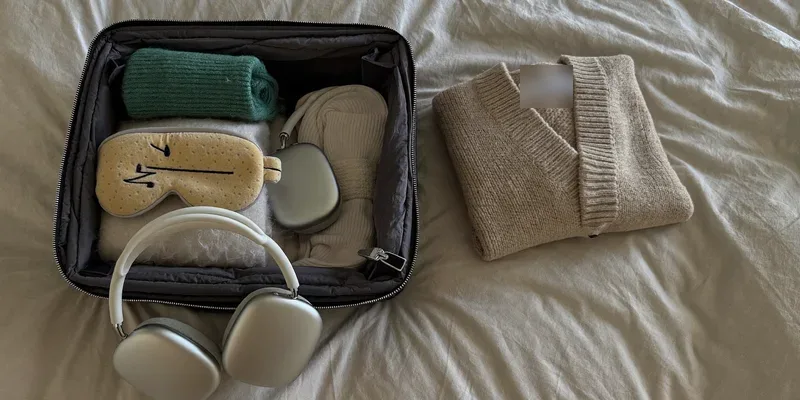
- Sleep gear for a bright room: an eye mask, ear plugs and your own soft layers.
- Power for all of it, since the outlet situation does not improve on day two.
Bottom line: pack the normal bag, then add a day of entertainment, a sleep kit and a second charger.
What Makes This Bag Different
A scheduled arrival changes two things. You get to walk in calmly with everything you planned, rather than grabbing a bag at an unhelpful hour. And the stay commonly starts with a waiting phase, which is the part that catches people out because no standard checklist is written for it.
So the induction bag is the standard bag plus a comfort and boredom layer. Our hospital bag checklist is the base list, and everything below is what gets added on top of it.
Ask How Your Hospital Runs It
How long people typically stay, whether a partner can stay overnight, and whether you can move around all differ between hospitals and between situations. Ask your own care team what to expect, because those answers shape the bag far more than any general advice.
Packing for the Waiting
Time is the thing you are packing for. Downloaded shows rather than streamed ones, since hospital wifi is unreliable, plus headphones for each of you so one person can sleep while the other watches something. A card game or a puzzle book fills the gaps that screens do not.
People also mention wanting something to do that is not a screen at all, because eyes get tired long before the day is over. A book you have already started, a crossword, or a playlist you can lie back and listen to all come up in accounts of long waits.
Two Sets of Headphones, One Charger Situation
Everything you brought to pass the time runs on a battery, and there is one outlet behind the bed. A power bank means the entertainment does not end when the wall socket is being used by something else.

Sleeping in a Bright Room
Hospital units are lit and busy at all hours, and a scheduled induction means you may be trying to rest in a room where the lights come on regularly. An eye mask and ear plugs are small, cheap and mentioned constantly by people who have done a long stay.
Your own soft layers do the rest. A hoodie or a light robe over a gown, warm socks, and a pillowcase from home on a hospital pillow make more difference to a long night than anything expensive in the bag.
The Sleep Kit That Fits in a Pocket
A mask and plug set costs almost nothing and is the item people say they would repack first.

Comfort and Moving Around
Whether and how much you can move about depends on your situation and on the monitoring involved, so this is a question for your care team rather than an assumption to pack around. If you are able to move, the usual comfort items apply: grip socks, a robe, and something to lean on.
Many labor and delivery units keep birth balls on hand, and some people prefer to bring their own to sit on during a long wait. It is a comfort choice rather than anything else, and our birthing ball guide covers the sizing and the anti burst rating if you want your own.
If You Would Rather Bring Your Own
Bringing a ball means it is the right size for you and it comes home afterward for sitting on during the feeding months. Ask your hospital first, since policies on what you can bring in differ.

What to Add to a Standard Bag
The table shows only the additions. Everything on the standard list still applies, and nothing here replaces it.
| Addition | Why an induction bag needs it | Who uses it | Where it lives |
|---|---|---|---|
| Downloaded entertainment | Long wait, unreliable wifi | Both of you | Room bag |
| Eye mask and ear plugs | Bright, busy unit at night | Both of you | Room bag |
| Power bank and second cable | One outlet, many devices | Partner keeps it | Front pocket |
| Extra change of clothes | Longer stay than average | Both of you | Car bag |
| More snacks | Cafeteria hours do not cover it | Mostly the partner | Car bag |
The Partner Bag Matters More Here
A longer stay with a slow start means the partner is on duty for longer, and a hastily thrown together bag shows up faster. Two changes of clothes, a wash kit, their own snacks and their own charger are the minimum, and a hoodie is close to essential in a cool room.
It is also worth sorting out the practical questions before the day: parking for a multi day stay, the after hours entrance, and whether they can stay overnight. Our partner bag guide and our snack guide cover both sides of that.
Everything Else About the Induction Itself
Questions about the process, the timing and your options belong with your midwife or OB-GYN, and they are the right people to raise anything you are unsure about. We keep those questions in one place in what to know before you ask about starting things off, which is deliberately product free.
Frequently Asked Questions
How long should I pack for? Longer than a standard stay, with the surplus in the car rather than in the room. Ask your care team what they typically plan for, since it depends on your situation and on the hospital.
Can my partner stay the whole time? That is a hospital policy question and policies differ, including between units in the same hospital. Ask yours directly rather than assuming, and plan the partner bag around the answer.
What is the most useful non obvious item? An eye mask, followed by downloaded entertainment. Both exist because of the specific thing an induction bag is packed for, which is time in a bright room.
Should I bring my own birth ball? Many units have them, so ask first. Bringing your own means the right size and something you keep afterward. It is a comfort choice, nothing more, and our birthing ball guide covers the sizing.
Can I eat while I wait? That is set by your care team and your hospital and it varies. Ask at a prenatal visit, and pack the snack bag mostly for your partner. Our snack guide covers what travels well.
Do I pack differently in case it becomes a C-section? A high waisted pair of underwear and a longer top cost nothing and cover that outcome. Our C-section bag guide covers what else changes.
The Bottom Line
Pack the standard bag, then add the layer that suits a long, slow, brightly lit stay: downloaded entertainment, headphones, an eye mask, a power bank and an extra change of clothes in the car. Take every question about the induction itself to your midwife or OB-GYN, since that part is theirs and not ours. Read next: the full checklist and when to pack.