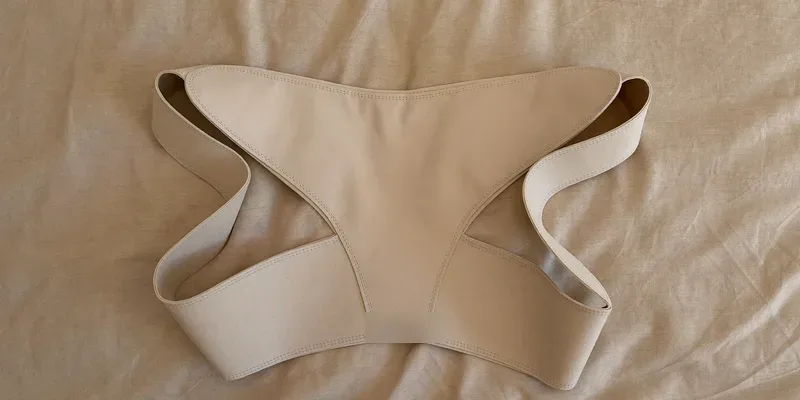
Last updated: August 23, 2026
If you have searched for a maternity belt at any point in the last few years, you have seen this one. The AZMED belt is the most reviewed product in the category on Amazon by a wide margin, and it is the default recommendation in half the pregnancy forums, usually with no explanation of why beyond the fact that everyone else bought it too.
It deserves the position more than most bestsellers do, but not for every body and not for every complaint. This is a structured belt with a specific shape, one size, and a set of things it does not do. Here is who it fits and who should look elsewhere.
This article contains affiliate links. If you buy through them, we may earn a commission at no extra cost to you. Learn more.
Quick Answer
Is the AZMED maternity belt the right belt for you?
- It is a structured under bump support belt, not a soft wardrobe band, and the two are not interchangeable.
- One adjustable size, which AZMED lists as fitting waists up to 46 inches.
- Best for standing, walking and long days on your feet.
- Runs warm under clothes in summer, which is the most consistent owner complaint.
Bottom line: buy it if you want structured under bump support on active days, not if you want something invisible under a fitted dress.
What You Are Actually Buying
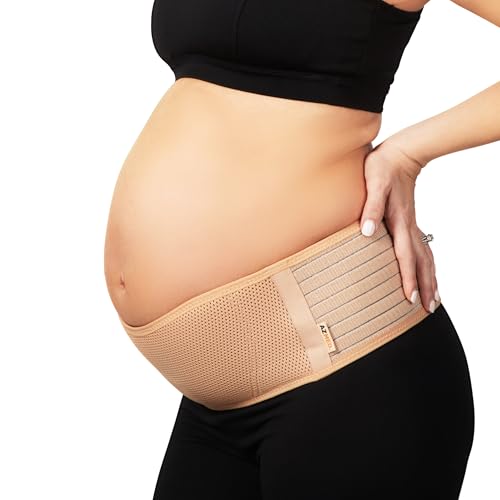
The AZMED belt is a single piece of lightweight fabric with a narrow front section, a wider back panel, and a hook and loop closure that lets you tighten it to your shape. There are no stays, no laces, and no second garment. It sits under the bump so the belly rests on top of the front panel.
AZMED describes it as a breathable, adjustable, one size design intended for wear through pregnancy and after birth, in beige and black. That simplicity is the reason it is cheap to produce, easy to put on, and the reason it also has clear limits.
The One Size Question
One size is a real constraint dressed up as a convenience. AZMED lists the belt as fitting waists up to 46 inches through its hook and loop closure, which covers a wide span, and the adjustment means most people buy it once and keep using it as the bump grows. That is the belt’s biggest practical advantage.
The edge cases are the two ends. Measure under the bump, standing, before you order, and if you are already close to the top of the range in the second trimester, plan for a model that goes further instead. Our sizing guide covers taking the measurement, and plus size belly bands covers the ranges beyond it.
Short Torsos and Hip Bones
The other fit issue is height rather than circumference. On a shorter torso, a belt worn correctly under the bump can land close to the hip bones, and a narrow front panel concentrates its pressure there. Some people solve it by wearing it over a thin layer, some by loosening a notch, and some by moving to a wider contoured belt.
What Owners Say It Does Well
The consistent theme in owner reports is standing. People describe wearing it for shifts, errands, walking and days on their feet, and finding the lower back noticeably easier by the evening than it was without it. The belt takes some of the bump’s weight off the front, which is exactly what it is designed to do.
Owners who describe discomfort in the mid back, hips, or nerve type discomfort down one leg frequently report the belt making those days more manageable, and just as frequently report that it does nothing at all for other kinds of discomfort. Comfort gear is not treatment, and if you are dealing with something like sciatica, the person to ask is your midwife, your OB-GYN, or a pelvic floor physical therapist.
What Owners Complain About
Heat is the complaint that never goes away. The belt is lightweight but it is still a full band of fabric plus a layer of clothing, and in summer or in a warm workplace it gets noticed. The workaround most owners settle on is a thin cotton layer underneath rather than a different belt.
The second is visibility. The closure creates an outline under fitted clothes, so the belt is hard to hide under anything smooth. The usual fix is a soft seamless band pulled over the top, which flattens the profile and adds a layer you may not want in July.
Riding Up
Reports of the belt migrating upward are common and are usually a wearing problem rather than a product fault. A belt closed while sitting, or started too high, will climb within minutes of walking. Our guide to wearing a band correctly goes through the positioning that stops it.
AZMED Against the Obvious Alternatives
| Option | Type | Sizing | Suits you if |
|---|---|---|---|
| AZMED maternity belt | Structured under bump belt | One adjustable size | You want simple structured support for active days |
| NeoTech Care support belt | Structured, wider back panel | Multiple sizes | A narrow belt digs at your hips |
| KeaBabies belly band | Soft breathable band | Lettered sizes | You want something soft and near invisible |
| Belly Bandit Upsie Belly | Structured, softer fabric | Multiple sizes | You want a premium feel and more adjustability |
Rows one and two are the same idea executed differently. Row three is a different product category entirely, which our band versus belt comparison explains.
Who Should Buy Something Else
If what you want is to keep wearing your unbuttoned jeans and cover the gap, this is the wrong product and a soft seamless band is the right one. If you need something invisible under office clothes, compression shorts or belly support briefs will serve you better. And if you are past the belt’s stated range, buy a belt sized for it rather than one stretched to its limit.
If you are buying because of specific, persistent discomfort, get the assessment first and the belt second. A pelvic floor physical therapist can tell you whether a belt is a sensible tool for your situation and how it should be fitted, which no product page can.

Frequently Asked Questions
Does the AZMED belt really fit everyone? It is adjustable across a wide span, listed by AZMED as fitting waists up to 46 inches, but one size is never truly everyone. Measure under the bump while standing and compare that to the published range before ordering.
Can I wear it after birth? AZMED markets it for use after birth as well as during pregnancy. Whether that suits your own recovery, and particularly after a C-section, is a question for whoever is looking after you. Our article on postpartum versus pregnancy bands covers the product differences.
Will it show under clothes? Under fitted or smooth fabrics, yes. Under a loose top, no. Pulling a soft seamless band over the belt is the workaround owners land on most often.
Is it comfortable in summer? Less so, and this is the most common complaint. A thin cotton layer underneath helps, and a mesh panel band is the cooler alternative if you are heat sensitive.
How do I wash it? Close the hook and loop onto itself, use a gentle cycle in a mesh bag, and air dry. Heat is what makes the elastic go slack, and a slack belt does nothing.
Is it worth buying two? If you wear one most days, yes, purely so there is always a dry one. That is the most common reason owners order a second.
This is a comfort product, not a treatment, and nothing here is advice about your body. If your discomfort is sharp, one sided, or getting worse, speak to your midwife, your OB-GYN, or a pelvic floor physical therapist before adding gear.
The Bottom Line
The AZMED belt earns its position: it is simple, adjustable across a wide range, and it does the one thing a support belt is meant to do on days you are upright. It runs warm, it shows under fitted clothes, and it is not the product for anyone who really wanted a soft wardrobe band. Read next: the full belly band guide and how the main brands compare.