Last updated: August 23, 2026
Anyone who has tried to keep moving with a bump knows the two complaints. The first is bounce: the bump moves independently of the rest of you, and by the end of a walk that motion is all you can think about. The second is that whatever you strapped on to deal with it has migrated, rolled at the edge, or rubbed a line across your skin.
Support belts get bought for exactly this, and they are a mixed success. Some designs hold beautifully while walking and fall apart the moment you break into anything faster. Knowing which is which, and being clear about what a belt is not for, saves a wasted order.
This article contains affiliate links. If you buy through them, we may earn a commission at no extra cost to you. Learn more.
Quick Answer
Does a belly band stay put while you walk or run?
- Walking: yes, a structured underbelly belt worn low generally stays where you put it.
- Running: often not. Repeated impact works most belts loose, and this is the most common complaint in that group of reviews.
- Chafing is a fabric and seam problem. Worn against skin under a smooth layer, with nothing bunched, it mostly goes away.
- Whether and how to exercise while pregnant is a conversation with your provider, not something any product decides for you.
Bottom line: a low, snug underbelly belt suits walking well. For running, expect to readjust, and talk to your midwife about the activity itself.
What a Belt Does While You Are Moving
A support belt cradles the bump from underneath and anchors on the hips, so while you are wearing it some of the forward weight is carried differently. During movement that shows up as less independent motion of the bump, which many pregnant people find makes a walk feel more manageable.
That is a comfort effect for the duration of the activity, and it is the whole of the claim. A belt is not conditioning anything, not changing what your body is doing afterward, and not a green light for any particular activity.
Walking Versus Running Is a Real Divide
Walking loads a belt steadily and in one direction, which is what these products are designed around. Owners who bought a belt for daily walks are broadly positive, and the ones who report failure usually describe a fit problem rather than a design one.
Running is different. Impact repeated hundreds of times works hook and loop loose, and a belt that starts snug is often noticeably slack partway through. Reviewers who run describe stopping to retighten as normal, and describe the wider, more heavily strapped designs as holding better than the minimal ones.
The Fit That Survives Movement
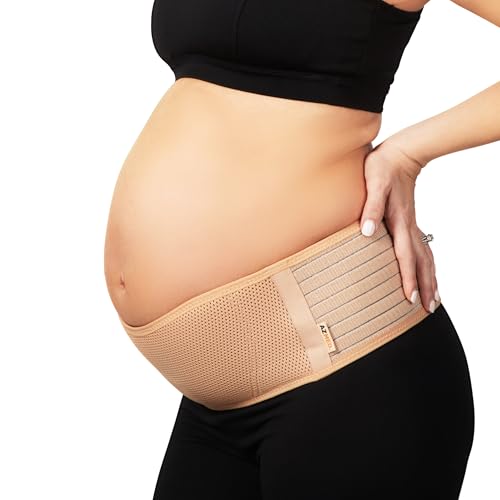
Low and snug. The panel under the bump against the top of the pubic bone, the strap resting on the hip bones, and no fabric bunched under the edge. If it is fastened around the waist it will slide within a few minutes of moving, which accounts for most of the negative reviews in this group.
Chafing, Heat and Skin
Rubbing comes from three sources: a seam sitting in a crease, a band worn over bunched clothing, and sweat. Worn directly against clean skin, or over one smooth flat layer, most of it disappears. A band with a rolled or curled top edge is usually a size too small rather than a bad product.
Heat is the other limiting factor, especially outdoors in summer. Lighter, more breathable panels are worth the small loss in firmness for anything longer than a stroll, and washing the belt regularly keeps the hook and loop gripping rather than sliding.
What to Wear for Which Activity
Daily Walks
A standard underbelly belt is enough, and the simplest one is usually the best tolerated. AZMED’s maternity belt is the most bought design in this shape, with a single wide strap that is quick to snug up before you head out.
Longer Sessions and Warm Weather
NeoTech Care’s pregnancy support belt is lighter and more breathable, which matters more than raw firmness once you are out for a while. It is the pick for summer walks and anything that has you sweating.

When You Want the Firmest Hold
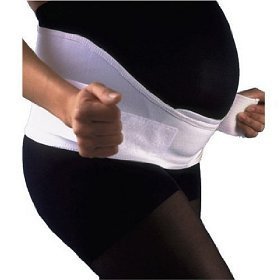
Gabrialla’s elastic maternity support belt uses a wider rear panel and more adjustment points, and owners who found simpler belts slipped during activity often move to something in this style rather than giving up on belts altogether.
The Clothing Layer Underneath
Over the bump leggings solve the bunching problem at the source and give the belt a smooth surface to sit on. Plenty of people find that combination more comfortable than a belt over loose shorts, and the options are in maternity leggings.
How the Options Hold Up
| Activity | Holds position | Heat | What owners report |
|---|---|---|---|
| Daily walking | Good when worn low | Manageable | Bump feels steadier |
| Long walks, hiking | Good, needs readjusting | Main limitation | Breathability decides it |
| Running | Often works loose | Significant | Stopping to retighten is normal |
| Gym and classes | Varies by movement | Moderate | Awkward on the floor |
The table is about how the product behaves, not about which activities are appropriate for you, which is a separate conversation entirely.
What a Belt Is Not For
A belt does not make an activity suitable, does not compensate for something that hurts, and does not do anything once it is off. If a movement produces pain, the answer is to stop and ask someone qualified rather than to strap it tighter, and no amount of tension turns a bad day into a good one.
It is also worth saying plainly that exercise recommendations during pregnancy are individual. What is sensible varies with your history, how the pregnancy is going, and what you were doing beforehand, and none of that is knowable from a review page.
Frequently Asked Questions
Can I run with a maternity support belt? Whether running is right for you is a question for your midwife or OB-GYN. As for the product, expect a belt to work loose with repeated impact and plan on readjusting; the wider, more strapped designs hold better than minimal ones.
Why does my belt roll at the top edge? Usually a size too small, or fabric bunched underneath it. Sizing runs off the measurement around the widest part of your bump, and the method is in belly band sizing.
Should I wear it over or under my clothes? Against skin or over one smooth flat layer stays put best and chafes least. Over loose or bunched clothing is where the rubbing usually starts.
Is a soft band enough for walking? Not if the reason is the weight of the bump, since a seamless band stretches and cannot support load. It is fine as a clothing layer under a belt. See band versus belt.
Can I use it for postpartum exercise? A pregnancy belt is shaped for a bump and will not fit. Returning to activity after birth is something to clear with your provider first, and the gear side is in postpartum belly wraps.
When to Ask a Professional Instead
Talk to your midwife or OB-GYN about what activity suits your pregnancy before you buy anything to do it in. Stop and contact them if movement brings on pain, regular tightening, bleeding, dizziness, or a change in the baby’s movements. A pelvic floor physical therapist is the right person to ask about staying active with a heavy bump, and about whether a belt has any place in your routine.
The Bottom Line
For walking, a low, snug underbelly belt with a breathable panel does the job well. For running, buy expecting to readjust and choose the wider strapped designs. Then treat the activity question itself as a conversation with your provider rather than something the belt answers. Read next: maternity support belts and the belly band guide.