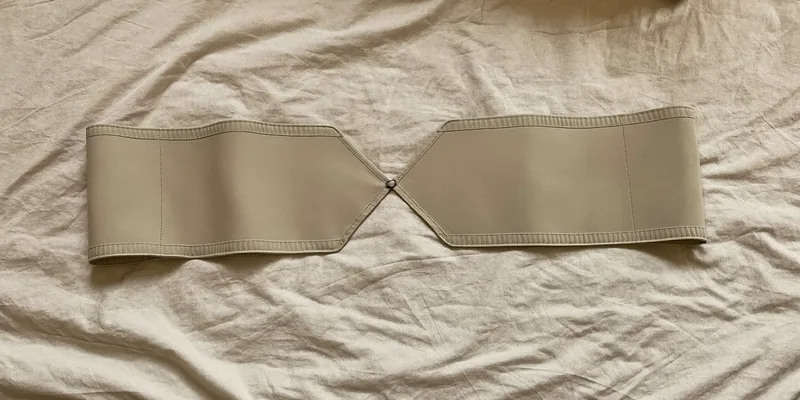
Last updated: August 23, 2026
There is a specific moment that sends people looking for a support belt rather than a soft band. It is not the day the pants stop buttoning. It is the day you notice you are bracing your lower back with one hand when you stand up, or that a walk around the block leaves your hips feeling like they have been carrying something all day. Which, of course, they have.
A maternity support belt is the structured half of this category: a firm panel that sits under the bump, straps that anchor around the hips, and enough tension to take some of the forward pull off your back. Choosing one comes down to four things, and none of them is the brand name on the box.
This article contains affiliate links. If you buy through them, we may earn a commission at no extra cost to you. Learn more.
Quick Answer
Which maternity support belt should you choose?
- A single strap underbelly belt is the simplest and the most bought, and it suits most bumps that just feel heavy.
- A wide back panel with multiple adjustment points suits anyone whose shape is changing fast or who wants firmer, more even hold.
- A lightweight breathable belt is the summer answer, because every belt is an extra layer across your middle.
- Size on the measurement around the widest part of your bump today, not on your pre pregnancy clothing size.
Bottom line: pick the structure your body needs, then check that the strap system can keep it in place all day.
What a Support Belt Actually Does
A support belt sits under the bump and transfers part of its weight onto the hips and lower back through a firm panel. That is a mechanical, comfort focused job: it changes how the load is distributed while you are wearing it, which many pregnant people find makes standing and walking feel steadier. It is not doing anything after you take it off.
Understanding that limit saves disappointment. The belt is a tool for getting through a shift, a shopping trip, or an afternoon on your feet. The soft alternative that only handles clothing is covered in the belly band guide, and the direct comparison sits in band versus belt.
Underbelly, Over the Bump, or Both
Most belts are underbelly designs: the structured section cradles the bottom of the bump and the strap crosses the lower back. A smaller group adds an over the bump strap that crosses the top, which some owners like for the feeling of being held and others find warm and restrictive.
The rule of thumb from reviews is that a low, forward hanging bump does better with a firm underbelly cradle, while a high, wide bump often prefers something with an upper strap or a wider back panel. If you are between the two, the underbelly design is the safer first purchase because it is the one almost everyone can wear.
Where the Panel Should Sit
The structured panel belongs below the bump, resting against the top of the pubic bone rather than across the middle of the belly. Fastened too high, the belt presses on the bump itself and slides down within minutes, which is the origin of most one star reviews about belts that will not stay put.
Adjustment, Straps and Staying Put
Adjustment range is what separates a belt you wear for a week from one you wear for a trimester. A single hook and loop strap is simple and works well until your shape changes enough that the useful range runs out. Multiple adjustment points, or an extension panel, keep the same belt usable much longer.
The other durability question is the hook and loop itself. It picks up lint, softens with washing, and eventually stops gripping, which owners report as the belt gradually loosening through the day. Following the wash instructions on the label, and fastening the strap closed before it goes in the machine, is the whole of the maintenance.
Support Belts by Situation
The Straightforward Heavy Bump
The classic underbelly belt with one broad strap is what most people should start with. AZMED’s maternity belt is the highest volume version of exactly this design, with a shaped front panel, one wide adjustment strap, and nothing else to think about.
Firmer Hold and More Adjustment
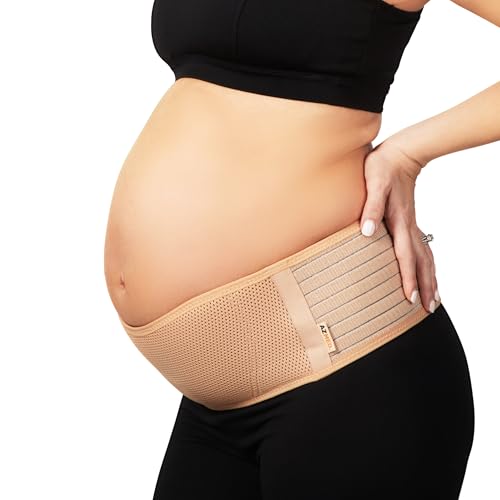
Gabrialla’s elastic maternity support belt uses a wider back section and a broader adjustment range, which suits people who found a basic belt either slack by lunchtime or concentrated too much pressure in one narrow line across the back.
Hot Weather and Less Bulk
NeoTech Care’s pregnancy support belt is the lighter, more breathable interpretation: less material, a simpler closure, and a lower profile under clothing. Overheating under a belt is one of the most common complaints in summer, and this is the usual answer to it.

A Wrap Instead of a Belt
Belly Bandit’s Upsie Belly wraps rather than buckles, so the tension is set across a wider area instead of one strap. Owners who dislike the feeling of a defined band across the back often prefer a wrap, and it is the route to take if you also want the brand’s postpartum pieces later.

The Four Designs Compared
| Design | Structure | Adjustment | Suits |
|---|---|---|---|
| Single strap underbelly | Shaped front panel | One wide strap | Most bumps, first belt |
| Wide back panel | Broad rear support | Multiple points | Fast changing shape |
| Lightweight breathable | Slim panel | Simple closure | Warm weather, low bulk |
| Wrap style | Full wrap tension | Wrap overlap | Even hold, brand continuity |
All four are sized from the measurement around the widest part of your bump, and every manufacturer lists that range on the packaging rather than a dress size.
What Wears Out and What Annoys People
Three things come up repeatedly. The hook and loop loses grip over months of daily wear. The belt rides up or slides down when it has been fastened above the hip bones. And the whole thing gets warm, particularly under a work uniform, because compression fabric does not breathe like a shirt does.
None of those are surprises once you know the design. Buying a size with room to grow, fastening it low, and having a second one for laundry days handles most of it, which is also why the belts sold in multipacks tend to keep better ratings over time.
Wearing It Correctly Matters More Than the Brand
Two people can buy the same belt and rate it one star and five stars, and the difference is usually placement and tension rather than the product. The step by step is in how to wear a belly band, and the timing question is handled in how long you can wear one.
Frequently Asked Questions
When should I start wearing a support belt? There is no fixed week, and anyone who gives you one is guessing. Most people start when the bump begins to feel heavy rather than just present, which varies enormously between first and later pregnancies. If you are wondering whether it is too early, ask your midwife.
Can I wear it over clothes? Yes, and plenty of people do, especially for a specific task like a long walk or a shift. Worn against the skin it stays put better and shows less; worn over a thin layer it is more comfortable in heat and easier to adjust.
Why does my belt keep sliding down? Almost always because it is fastened too high. The panel should sit under the bump and the strap should rest on the hip bones, not above them. If it still slips after repositioning, the belt is probably a size too large.
Do I need a different one after birth? Yes. A pregnancy belt is shaped around a bump and does not fit afterward. The postpartum equivalent is a different product entirely, covered in postpartum belly wraps.
Can I sleep in it? Manufacturers generally describe these as daytime products for activity rather than something to sleep in. For nighttime comfort most people are better served by a pregnancy pillow, which supports the bump without compression.
When to Ask a Professional Instead
A belt changes how weight sits while you wear it, and that is the whole of its job. If your back, hips, or pelvis hurt sharply, hurt on one side, or are making it hard to walk or turn over in bed, that is a question for a person rather than a product. Bring it up with your midwife, your OB-GYN, or a pelvic floor physical therapist, who can assess what is happening and say whether a belt belongs in the plan at all.
The Bottom Line
Start with a single strap underbelly belt unless you already know you need more adjustment, size from your current bump measurement with room to grow, and fasten it low. A belt that sits in the right place beats a more expensive one that does not. Read next: the belly band guide for the soft alternative, and the brand comparison if you want the shortlist side by side.