Last updated: August 23, 2026
The word turns up constantly in belly band reviews, usually in the same shape: it started somewhere in the second half of the pregnancy, it runs from one side of the lower back down into a hip or a leg, and it is worst when getting up from a chair or rolling over in bed. Owners who buy a support belt because of it are among the most vocal in the whole category, in both directions.
Here is the honest framing before anything else. Sciatica is a symptom description, not a diagnosis you should be making from a product page, and a belt is a comfort tool that changes how weight sits while you wear it. If leg symptoms are part of your picture, the belt is not the first thing to sort out. The appointment is.
This article contains affiliate links. If you buy through them, we may earn a commission at no extra cost to you. Learn more.
Quick Answer
Is a belly band worth trying for pregnancy sciatica?
- Get it looked at first. Symptoms that run into a leg deserve an assessment from your provider or a pelvic floor physical therapist before you buy gear.
- If a belt is going to be part of it, it is the structured kind with a firm underbelly panel, not the soft seamless band.
- Owners who report the biggest difference describe wearing it for specific activities, walking, standing, shopping, rather than continuously.
- Positioning at night matters at least as much, and a side sleeping setup with support between the knees is the cheap half of this.
Bottom line: assessment first, belt second, and expect a comfort tool rather than an answer.
What Owners Actually Report
Across support belt reviews the pattern is consistent. People describe symptoms that began partway through the pregnancy, a noticeable difference in how manageable walking and standing feel while the belt is on, and no change at all once it comes off. Nobody credible describes a belt making the underlying situation go away.
That is a useful expectation to carry into the purchase. A belt is worn support, so its effect is confined to the hours it is worn. Reviewers who bought one expecting more are the ones who describe it as a waste, and reviewers who bought one to get through a workday tend to keep using it.
Why This Is a Question for a Professional
Symptoms that travel from the back into the buttock, hip, or leg can come from several different things in pregnancy, and they are not all handled the same way. Some respond well to specific movement and positioning work. Some do not. A product page cannot tell them apart, and neither can a strap.
A pelvic floor physical therapist assesses exactly this kind of pattern, and in many places you can be referred by your midwife or OB-GYN. That appointment is the highest value thing on this page. Everything below it is about comfort while you wait for it and afterward.
The Free Adjustments Worth Making First
Change the mechanics that repeat all day. Roll to your side before sitting up out of bed rather than curling straight up. Keep your knees together when getting in and out of a car. Avoid standing on one hip with the other leg cocked, which is the default pose almost everyone falls into while pregnant.
Nighttime is the other half. Side sleeping with a pillow between the knees keeps the hips level instead of letting the top leg drop across the body, and many pregnant people find that single change makes the mornings noticeably easier. The options are in the pregnancy pillow guide and specifically in pillows for hip discomfort.
If You Are Going to Try a Belt
The Standard Structured Belt
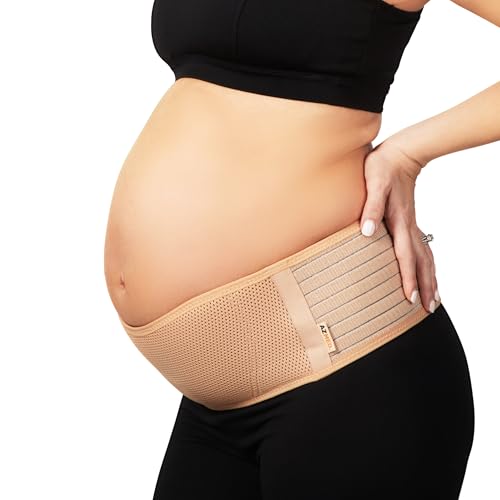
A firm underbelly panel with hip straps is the design that changes weight distribution. AZMED’s maternity belt is the most widely bought example, and its single strap makes it easy to loosen and retighten through the day, which matters more than it sounds when you are sitting and standing repeatedly.
Broader Support Across the Lower Back
Where a narrow strap concentrates everything into one line, a wider rear panel spreads it. Gabrialla’s elastic maternity support belt is built around that idea and gives more adjustment range, which suits people whose comfortable tension changes from morning to evening.
A Wrap Rather Than a Strap
Some owners cannot tolerate a defined band across the back at all. A wrap style support such as Belly Bandit’s Upsie Belly sets tension across a broad overlap instead, which is a different sensation for the same basic purpose.

Three Approaches Compared
| Approach | What it changes | When it applies | Cost to try |
|---|---|---|---|
| Assessment with a therapist | Identifies what is going on | First, before gear | An appointment |
| Positioning and movement habits | How you load one side | All day, every day | Nothing |
| Side sleeping support | Hip alignment at night | Overnight | A pillow |
| Structured support belt | Weight distribution while worn | Standing, walking, shifts | A belt |
The order of the rows is deliberate, because that is the order that makes sense to work through.
Getting the Fit Right
A belt bought for this reason is usually worn on and off many times a day, so the closure matters. Hook and loop that has picked up lint stops gripping, and a belt that quietly loosens after twenty minutes is doing nothing. Fasten it low, under the bump and across the hip bones, not around the waist.
Size from the measurement around the widest part of your bump rather than a clothing size, and take the larger option when you are between two. The full method is in belly band sizing, and the placement detail is in how to wear a belly band.
Frequently Asked Questions
Will a support belt make the leg symptoms stop? No one can promise that and this page will not. What owners describe is that the hours spent wearing it feel more manageable, and that nothing changes once it is off. Anything more than that belongs in a conversation with a clinician.
Should I get a band or a belt? A belt. The soft seamless band is a clothing product with no structural element and does not redistribute any weight, which is explained in band versus belt.
Can I wear it in bed? Manufacturers generally describe these as daytime products for activity. At night, side sleeping support between the knees is the more useful setup for keeping the hips level.
Does it matter which side the symptoms are on? It matters for assessment, not for buying, since belts are symmetrical. A one sided pattern is exactly the kind of detail worth mentioning at your appointment.
Can I keep using it after birth? A pregnancy belt is shaped for a bump and generally will not fit afterward. If support after birth is what you are thinking about, that is a separate product, covered in postpartum belly wraps.
When to Ask a Professional Instead
Please treat this one as the main recommendation on the page. Symptoms that run into a leg, that are severe, that are getting worse, or that come with numbness, weakness, or any change in bladder or bowel function need a clinician, not a product. Contact your midwife or OB-GYN, and ask about a referral to a pelvic floor physical therapist, who assesses this pattern routinely and can tell you whether a belt is worth adding at all.
The Bottom Line
Book the assessment, change the free things, sort out how you sleep, and treat a structured belt as the fourth item on that list rather than the first. Bought with realistic expectations it makes the standing hours easier to get through, and that is a fair reason to own one. Read next: maternity support belts and the belly band guide.